


What Is Digital Dentistry?
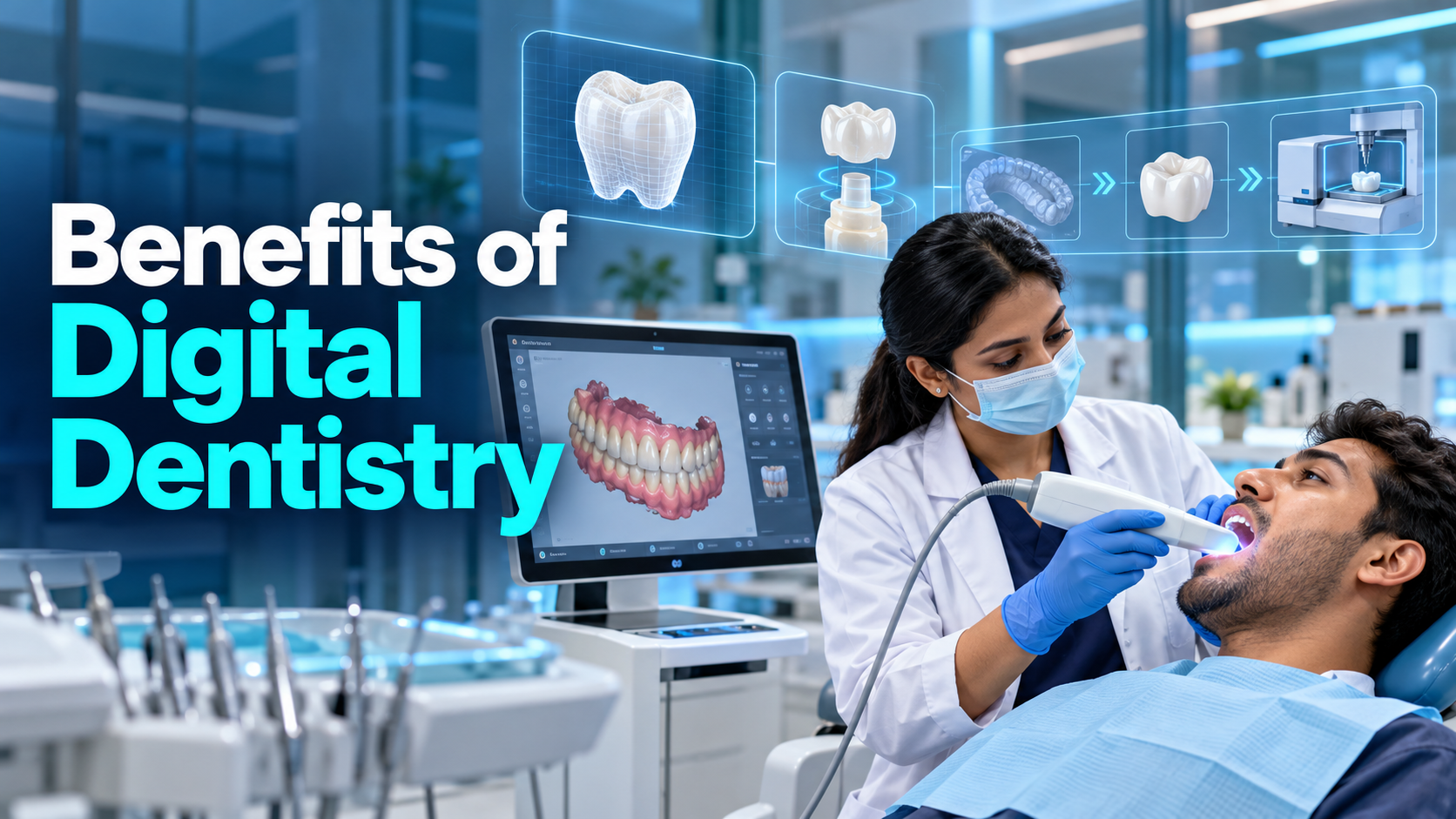
Digital dentistry uses computer-based tools to examine, diagnose, plan and deliver dental treatment. These technologies may include digital X-rays, intraoral scanners, 3D imaging, CAD/CAM restorations, digital smile planning and 3D printing.
Digital tools can improve clinical workflows and help patients understand their treatment. However, they support rather than replace the dentist’s examination, experience and professional judgement.
Common Technologies Used in Digital Dentistry
A digitally equipped dental clinic may use:
- Digital dental X-rays
- Intraoral cameras
- Intraoral scanners
- Cone beam computed tomography
- Computer-aided design and manufacturing
- Digital smile-planning software
- Computer-guided implant planning
- 3D-printed dental models and guides
- Digitally planned crowns and aligners
Not every patient or procedure requires every technology. The dentist should recommend a digital tool only when it is clinically appropriate.
1. Clearer and More Detailed Dental Images
Digital imaging allows dental professionals to examine teeth, roots and surrounding structures on a screen. Images can often be enlarged or adjusted to help evaluate specific areas.
Depending on the clinical need, digital imaging may assist with:
- Detecting tooth decay
- Evaluating bone levels
- Assessing impacted teeth
- Planning root canal treatment
- Reviewing dental injuries
- Planning implants
- Evaluating jaw structures
Three-dimensional CBCT imaging can provide information that may not be available from a conventional two-dimensional X-ray. Because CBCT uses ionising radiation, it should be prescribed only when its expected diagnostic benefit justifies the exposure.
2. More Comfortable Digital Impressions
Traditional impressions use trays filled with impression material. Digital intraoral scanners can create a three-dimensional record by capturing images of the teeth and gums.
For suitable procedures, digital impressions may provide:
- A more comfortable experience
- Less impression material in the mouth
- Immediate viewing of the scan
- Easier retakes of specific areas
- Digital transfer to a dental laboratory
- Support for crowns, aligners and other restorations
Scanning accuracy can depend on the treatment, area being scanned, equipment and operator technique.
3. Personalised Treatment Planning
Digital records help dentists analyse a patient’s teeth, gums, bite and jaw structures. These records may be combined to develop a treatment plan tailored to the individual case.
Digital planning can support treatments such as:
- Clear aligners
- Dental implants
- Crowns and bridges
- Smile design
- Root canal procedures
- Surgical guides
- Bite appliances
A digital simulation represents a proposed treatment plan and should not be interpreted as a guaranteed final result.
4. Better Patient Communication
Digital images can make it easier for patients to see and understand dental concerns. The dentist can display a scan, photograph or X-ray and explain the diagnosis and available treatment options.
This can help patients understand:
- Where the dental problem is located
- Why treatment may be recommended
- Which alternatives are available
- What the planned restoration may look like
- What follow-up care may be required
Clear information supports informed treatment decisions.
5. Efficient Dental Workflows
Digital records can be captured, stored and transferred without creating physical models for every procedure. This can reduce certain manual steps and improve communication between the dental clinic and laboratory.
Depending on the treatment and available system, digital workflows may reduce:
- Impression retakes
- Manual model preparation
- Communication delays
- Repeated data entry
- Time required for selected appointments
Digital dentistry does not guarantee same-day treatment. The timeline still depends on diagnosis, procedure complexity, healing requirements and laboratory processes.
6. Customised Dental Restorations
CAD/CAM technology uses digital records to design restorations such as crowns, inlays, onlays and bridges. The restoration can then be manufactured in a dental laboratory or through compatible in-clinic equipment.
Potential benefits include:
- Customised shape and fit
- Digital evaluation of tooth preparation
- Efficient communication with the laboratory
- Reproducible design records
- Natural-looking restorative options
Final quality depends on proper diagnosis, tooth preparation, material selection, manufacturing and clinical fitting.
7. Digital Monitoring and Treatment Records
Digital photographs and scans can create records that help dental professionals compare changes over time.
Digital monitoring may be useful for:
- Tracking orthodontic tooth movement
- Reviewing gum recession
- Monitoring tooth wear
- Comparing bite changes
- Assessing restoration condition
- Recording changes in a patient’s smile
The dentist decides how often new records are needed based on the patient’s condition and treatment plan.
How Digital Dentistry Supports Different Treatments
Clear Aligners
Digital scans can record tooth positions and support the planning of gradual orthodontic movements.
Dental Implants
Three-dimensional imaging and planning software may help assess bone and nearby anatomical structures. Digital information can also support the design of surgical guides in selected cases.
Crowns and Bridges
Intraoral scans can provide digital impressions for designing customised restorations.
Root Canal Treatment
Digital imaging and magnification may assist the dentist in evaluating tooth anatomy and performing precise treatment.
Cosmetic Dentistry
Digital photographs and planning software can help evaluate tooth colour, shape, proportion and visible alignment before treatment.
Are There Limitations to Digital Dentistry?
Digital technology has important limitations:
- Not every tool is needed for every patient
- Results depend on the clinician’s training and judgement
- Some scans may require conventional methods
- Digital simulations cannot guarantee exact outcomes
- Equipment alone does not determine treatment quality
- X-ray-based imaging must be clinically justified
- Complex cases may still require specialist evaluation
Patients should ask why a particular scan or technology is being recommended and how it will affect their treatment.
Digital Dentistry in Pondicherry
When choosing digital dental care in Pondicherry, look beyond the equipment list. Ask how the technology will help diagnose your condition, plan treatment or improve communication.
A proper consultation should include:
- Review of your medical and dental history
- Clinical examination
- Appropriate imaging when required
- Explanation of treatment options
- Discussion of benefits and limitations
- Written cost and treatment plan
Frequently Asked Questions
Does digital dentistry make treatment more accurate?
Digital tools can provide detailed records and support treatment planning. Accuracy still depends on the technology used, the clinical situation and the dentist’s training.
Are digital dental impressions more comfortable?
Many patients find intraoral scanning more comfortable than conventional impression material. Suitability depends on the procedure and condition of the mouth.
Does every patient need a 3D dental scan?
No. CBCT and other three-dimensional X-rays should be used only when the additional information is clinically necessary for diagnosis or treatment planning.
Can digital dentistry provide same-day crowns?
Some clinics can design and manufacture selected restorations on the same day. Suitability depends on the tooth, material, equipment and treatment requirements.
Experience Better-Informed Dental Care
Digital dentistry can support detailed diagnosis, personalised planning, comfortable impressions and clearer communication. The greatest benefit comes when appropriate technology is combined with careful examination and professional clinical judgement.
Book a dental consultation in Pondicherry to learn which digital tools may be useful for your specific treatment needs.