


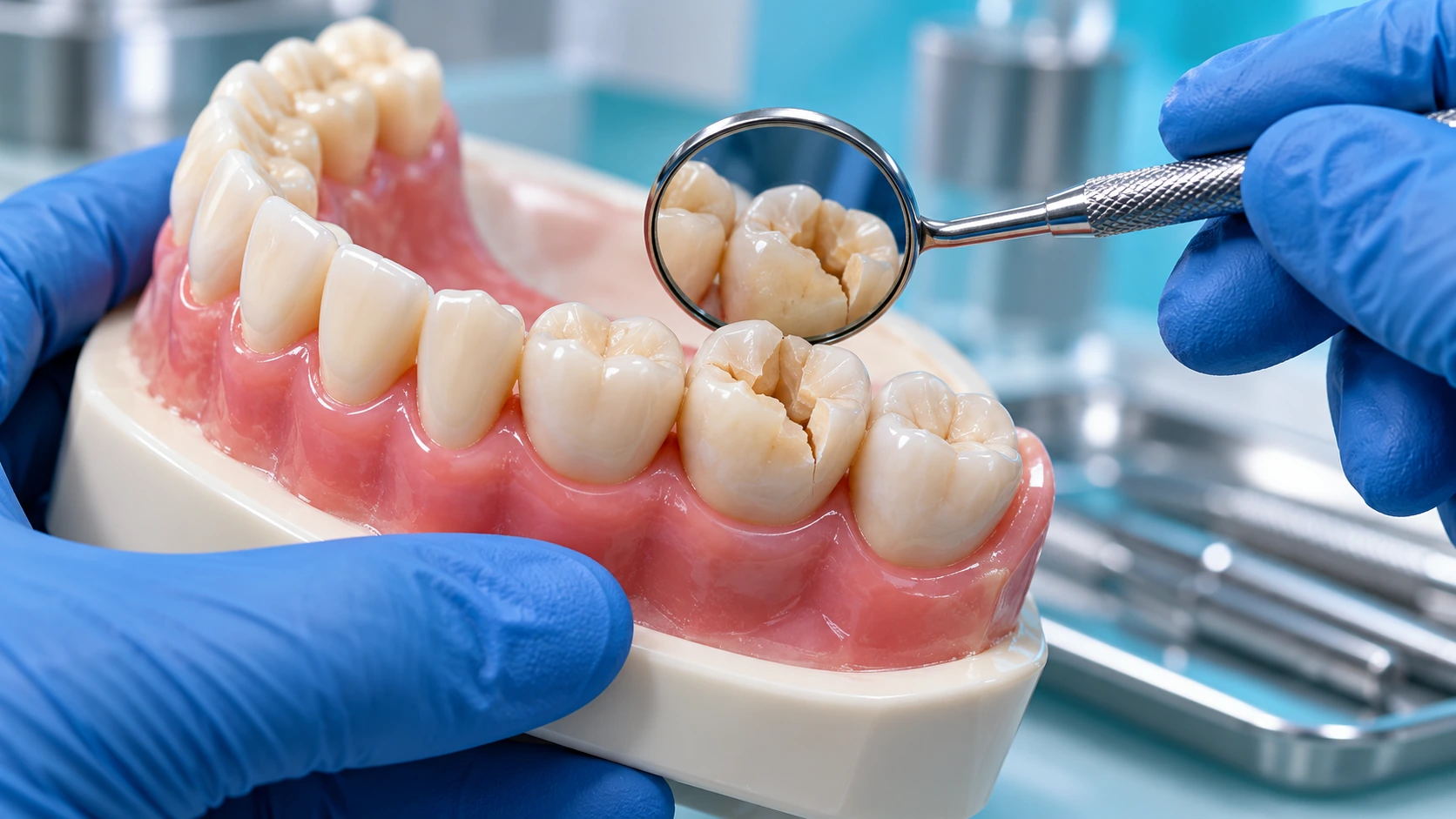
Broken Tooth Treatment in Pondicherry: Causes, Options and Dental Care
A broken tooth can happen suddenly because of an accident, biting something hard, tooth decay, an old filling, teeth grinding, or weakening of the tooth structure. The damage can range from a small enamel chip to a deep fracture involving the pulp or root.
The right treatment depends on how much of the tooth has been damaged and whether the nerve, root, gums, or surrounding structures are affected.
If you are searching for broken tooth treatment in Pondicherry, a dental examination is important even when the broken tooth does not initially cause pain.
What Is a Broken Tooth?
A broken tooth refers to damage involving part of the tooth structure.
It can include:
- Small enamel chips
- Fractured teeth
- Cracked teeth
- Broken fillings
- Large pieces of tooth breaking away
- Fractures extending toward the gumline
- Root fractures
- Teeth damaged by trauma
The treatment varies according to the location and severity of the damage.
What Causes a Tooth to Break?
A tooth can break for several reasons.
Common causes include:
- Tooth decay
- Biting hard foods
- Dental trauma
- Sports injuries
- Falls
- Road accidents
- Teeth grinding
- Large old fillings
- Weakened teeth after root canal treatment
- Enamel wear
- Age-related tooth wear
- Previous cracks
A dentist can determine why the tooth broke and whether other teeth are also at risk.
Can a Tooth Break Without Pain?
Yes.
A small chip or fracture may not initially cause pain.
However, the absence of pain does not necessarily mean that the tooth is healthy.
A crack can sometimes progress or expose deeper tooth structures.
A dental examination can determine whether the tooth requires treatment or monitoring.
Types of Broken Teeth
Chipped Tooth
A small portion of enamel may break away.
Minor chips can sometimes be repaired with:
- Tooth-coloured bonding
- Composite restoration
- Enamel reshaping
Cracked Tooth
A crack may extend through part of the tooth.
Treatment depends on whether the crack has affected the pulp or extends below the gumline.
Fractured Tooth
A larger portion of the tooth may break.
The dentist will determine whether the remaining tooth structure can be restored.
Root Fracture
A fracture involving the root requires careful evaluation.
The location and direction of the fracture influence the treatment options.
What Should You Do Immediately After Breaking a Tooth?
If you break a tooth:
1. Stay calm.
2. Rinse your mouth gently with water.
3. Avoid chewing on the affected side.
4. Save any broken tooth fragment if possible.
5. Protect the area from further injury.
6. Contact a dentist for an examination.
If there is significant bleeding, facial swelling, severe pain, or major trauma, seek urgent dental or medical care.
Should You Save the Broken Tooth Piece?
Yes.
If a piece of tooth has broken off, keep it safely and take it to the dentist.
The fragment may not always be reusable, but keeping it allows the dentist to examine it and determine whether it can be useful for treatment.
Broken Tooth After an Accident
Dental trauma can damage teeth even when the visible fracture appears small.
An accident can affect:
- Enamel
- Dentine
- Pulp
- Root
- Supporting bone
- Gum tissue
A dental examination after significant trauma can help identify hidden damage.
Broken Tooth From Tooth Decay
Decay can weaken the internal structure of a tooth.
As the cavity becomes larger, the remaining tooth structure may fracture under normal chewing forces.
A broken tooth caused by decay may require:
- Filling
- Inlay or onlay
- Dental crown
- Root canal treatment
- Extraction
The appropriate option depends on how much healthy tooth structure remains.
Broken Tooth From an Old Filling
Large fillings can sometimes leave less natural tooth structure around the restoration.
Over time, the tooth may become susceptible to fracture.
If an old filling has broken together with part of the tooth, the dentist may evaluate whether the tooth can be repaired with a new restoration or requires a crown or other treatment.
Broken Tooth After Root Canal Treatment
Root canal-treated teeth can become more susceptible to fracture because of loss of tooth structure.
A crown may be recommended for selected root canal-treated teeth to provide additional protection.
However, not every root canal-treated tooth automatically requires the same restoration.
The dentist should assess the remaining tooth structure and biting forces.
Broken Tooth and Tooth Pain
A broken tooth can expose dentine or the dental pulp.
Possible symptoms include:
- Sharp pain
- Cold sensitivity
- Hot sensitivity
- Pain while chewing
- Pain when releasing a bite
- Throbbing pain
- Gum tenderness
- Swelling
Severe or persistent pain should be evaluated promptly.
Broken Tooth With a Visible Nerve
If the fracture exposes the pulp, the tooth may become extremely sensitive.
The dentist will determine whether the pulp can be preserved or whether root canal treatment is required.
Do not attempt to cover or remove exposed tissue yourself.
Arrange professional dental treatment as soon as possible.
Broken Tooth and Dental Infection
A deep fracture can allow bacteria to reach the inner structures of the tooth.
Possible signs of infection include:
- Increasing toothache
- Swelling
- Gum tenderness
- Pus
- Bad taste
- Fever
- Facial swelling
Dental infection requires professional evaluation.
Treatment may involve root canal treatment, drainage, restoration, extraction, or other appropriate care.
Broken Tooth Treatment Options
Treatment depends on the extent and location of the fracture.
Possible treatments include:
- Dental bonding
- Composite filling
- Dental inlay or onlay
- Dental crown
- Root canal treatment
- Post and core restoration
- Tooth extraction
- Dental implant after extraction when appropriate
The dentist will choose the most suitable option after examination.
Dental Bonding for a Chipped Tooth
Small chips can sometimes be repaired using tooth-coloured composite resin.
The dentist may:
1. Clean the tooth.
2. Prepare the affected surface.
3. Apply bonding material.
4. Shape the restoration.
5. Adjust the bite.
6. Polish the repaired area.
Bonding can be useful for selected minor fractures.
Dental Filling for a Broken Tooth
A filling may be appropriate when the damaged area is relatively small and sufficient healthy tooth structure remains.
The dentist removes damaged material when necessary and restores the tooth with an appropriate filling material.
A filling may not be suitable for a severely fractured or structurally weakened tooth.
Dental Crown for a Broken Tooth
A dental crown is a custom-made restoration that covers the remaining tooth structure.
A crown may be considered when:
- A large part of the tooth is damaged
- The tooth has a large cavity
- A previous filling has failed
- The tooth has undergone root canal treatment
- The remaining structure needs additional protection
SmileKraft Dentaire currently describes crowns as restorations for damaged, decayed, weakened, fractured, or root-canal-treated teeth. It also lists digitally designed ceramic and zirconia crowns. :chatgpt-content-reference{index="1"}
Digital Dental Crowns for Broken Teeth
Digital dentistry can be used for selected crown cases.
A digital workflow may involve:
- Tooth examination
- Tooth preparation
- Intraoral scanning
- Digital crown design
- CAD/CAM fabrication
- Trial fitting
- Bite adjustment
- Final placement
Some cases may be completed using an accelerated workflow, while complex cases can require additional laboratory time.
Root Canal Treatment for a Broken Tooth
If the fracture has affected the pulp and the tooth can still be predictably restored, root canal treatment may be recommended.
The treatment generally involves:
1. Diagnosing the tooth.
2. Taking appropriate dental images.
3. Administering local anaesthesia.
4. Accessing the root canal system.
5. Removing inflamed or infected pulp.
6. Cleaning and disinfecting the canals.
7. Filling and sealing the canals.
8. Restoring the tooth.
Pondicherry dental providers describe root canal treatment as a way of treating infected or damaged pulp while preserving the natural tooth when possible. :chatgpt-content-reference{index="2"}
Can a Broken Tooth Be Saved?
Many broken teeth can be restored when sufficient healthy tooth structure remains.
The possibility of saving the tooth depends on:
- Location of the fracture
- Depth of the fracture
- Remaining tooth structure
- Pulp condition
- Root condition
- Gum and bone support
- Presence of infection
- Overall restorability
A dentist needs to examine the tooth before determining whether it can be saved.
When Can a Broken Tooth Not Be Saved?
A tooth may be difficult or impossible to restore when:
- The fracture extends significantly below the gumline
- The root is severely fractured
- Very little healthy tooth structure remains
- The tooth has extensive structural damage
- Severe infection cannot be predictably managed
- Supporting bone or gum structures are severely compromised
In such cases, extraction may be considered.
Tooth Extraction for a Broken Tooth
Extraction may be recommended when a broken tooth cannot be predictably restored.
The dentist will discuss:
- Why extraction is necessary
- Available replacement options
- Healing requirements
- Future treatment
Depending on the situation, tooth replacement may involve:
- Dental implant
- Dental bridge
- Partial denture
Dental Implant After Broken Tooth Extraction
If a broken tooth needs to be removed, a dental implant may be considered after appropriate evaluation.
Implant treatment can involve:
- Extraction
- Healing
- Bone evaluation
- Implant placement
- Implant healing
- Abutment placement
- Final crown
Not every patient can receive an implant immediately after extraction.
The timing depends on the tooth, infection, bone condition, gum health, and treatment plan.
Broken Front Tooth Treatment
A broken front tooth can affect both appearance and function.
Possible treatments include:
- Composite bonding
- Veneer
- Dental crown
- Root canal treatment followed by restoration
- Other cosmetic restorative procedures
The treatment depends on how much of the front tooth has fractured.
Broken Back Tooth Treatment
Back teeth experience significant chewing forces.
A broken molar may require:
- Filling
- Inlay or onlay
- Crown
- Root canal treatment
- Extraction
The dentist will assess the fracture and remaining tooth structure before selecting treatment.
Broken Tooth Below the Gumline
A fracture extending below the gumline can be more difficult to restore.
The dentist may need to evaluate:
- Fracture depth
- Gum attachment
- Root condition
- Bone support
- Restorability
Some cases may require periodontal or surgical procedures, while others may require extraction.
Broken Tooth and Dental X-Rays
Dental imaging may be recommended to evaluate the damaged tooth.
X-rays can help assess:
- Root structure
- Bone support
- Infection
- Previous root canal treatment
- Surrounding teeth
Additional imaging may be recommended for selected complex cases.
Digital Diagnosis for Broken Teeth
Modern dental clinics may combine clinical examination with:
- Digital X-rays
- Intraoral photographs
- Digital scans
- Magnification
- 3D imaging when indicated
These tools can help the dentist plan appropriate treatment.
Technology should be used according to the clinical requirements of the case.
Microscope Dentistry for Broken Teeth
Dental microscopes provide enhanced magnification and illumination.
They can be useful for selected complex procedures involving:
- Cracked teeth
- Root canals
- Fine fractures
- Detailed restorative work
A microscope does not make every broken tooth treatable, but it can assist the dentist in visualizing small structures.
Broken Tooth and Emergency Dental Care
A broken tooth may require urgent dental attention when there is:
- Severe pain
- Significant bleeding
- Facial swelling
- Dental trauma
- Exposed pulp
- A large piece of tooth missing
- Signs of infection
The Posh in Pondicherry currently advertises emergency dental care for dental pain, trauma, infections, and oral emergencies. :chatgpt-content-reference{index="3"}
Revanth Dental Care also states that it prioritizes emergency dental cases involving severe pain or dental injury. :chatgpt-content-reference{index="4"}
What Not to Do With a Broken Tooth
Avoid:
- Chewing hard foods on the affected side
- Picking at the fracture
- Trying to glue the tooth yourself
- Applying chemicals directly to the tooth
- Placing aspirin directly against the gum
- Delaying care when severe symptoms occur
Keep the area clean and arrange a dental examination.
Can You Eat With a Broken Tooth?
You may be able to eat, but avoid putting pressure on the damaged tooth.
Choose softer foods if chewing causes discomfort.
Avoid:
- Hard nuts
- Ice
- Hard sweets
- Very sticky foods
- Extremely hot or cold foods if they trigger pain
These measures are temporary until the tooth is professionally evaluated.
How Long Can You Leave a Broken Tooth?
It is better to have a broken tooth assessed promptly.
Waiting can allow:
- The crack to extend
- Bacteria to enter deeper structures
- Pulp inflammation
- Infection
- Further tooth loss
A small chip may not require emergency treatment, but it should still be evaluated.
Broken Tooth Treatment for Children
Children can break teeth because of:
- Falls
- Sports
- Accidents
- Biting hard objects
- Cavities
A child's dental injury should be evaluated because primary and permanent teeth require different treatment approaches.
If a permanent tooth is knocked out, urgent dental care is particularly important.
Broken Tooth During Sports
Sports-related dental injuries can be reduced by using appropriate protective equipment.
A dentist can advise on mouthguards for children and adults involved in contact or high-impact sports.
After a sports injury, even if the tooth looks intact, seek dental evaluation if there is pain, looseness, bleeding, or sensitivity.
Broken Tooth During Pregnancy
If you break a tooth during pregnancy, inform your dentist about the pregnancy.
Necessary dental treatment can be planned according to the clinical situation.
Do not delay urgent treatment solely because you are pregnant.
Medication and imaging decisions should be made by the treating dental team based on your circumstances.
Broken Tooth and Teeth Grinding
Repeated clenching or grinding can place excessive force on already weakened teeth.
If you have broken a tooth and also grind your teeth, your dentist may evaluate:
- Bite
- Tooth wear
- Cracks
- Jaw symptoms
- Existing restorations
A protective night guard may be considered for selected patients.
How Much Does Broken Tooth Treatment Cost in Pondicherry?
There is no single price because a broken tooth can require very different treatments.
The cost may depend on:
- Dental examination
- X-rays
- Composite bonding
- Filling
- Crown
- Root canal treatment
- Post and core
- Extraction
- Implant
- Laboratory charges
- Additional procedures
A treatment-specific estimate should be obtained after examination.
Broken Tooth Treatment Cost by Procedure
The approximate treatment category can include:
Minor Chip
May require bonding or enamel reshaping.
Moderate Fracture
May require a filling, inlay, onlay, or crown.
Deep Fracture
May require root canal treatment followed by restoration if the tooth is restorable.
Non-Restorable Tooth
May require extraction followed by a tooth-replacement option.
The final treatment and cost depend on the clinical findings.
How to Choose a Broken Tooth Dentist in Pondicherry
When choosing a dental clinic, consider whether it provides:
- Emergency dental assessment
- Digital X-rays
- Restorative dentistry
- Dental crowns
- Root canal treatment
- Tooth extraction
- Dental implants
- Cosmetic dentistry
- Follow-up care
Current Pondicherry providers advertise combinations of these services, including root canal, crowns, implants and emergency dental care. :chatgpt-content-reference{index="5"}
Broken Tooth Consultation in Pondicherry
During your consultation, tell the dentist:
- When the tooth broke
- How it happened
- Whether there was an accident
- Whether you have pain
- Whether you have sensitivity
- Whether the tooth had a filling or crown
- Whether you grind your teeth
- Whether there is swelling
- Whether you saved the broken fragment
This information can help the dentist understand the situation.
What Happens During a Broken Tooth Examination?
The dentist may:
1. Examine the visible fracture.
2. Check the surrounding gums.
3. Test the tooth's response.
4. Check the bite.
5. Look for cracks.
6. Take dental X-rays when required.
7. Assess the remaining tooth structure.
8. Determine whether the tooth is restorable.
9. Explain treatment options.
The treatment plan should be based on the clinical findings.
Can a Broken Tooth Be Repaired in One Visit?
Some minor fractures can be repaired in one appointment.
For example, selected small chips may be restored using composite bonding.
More complex cases involving:
- Root canal treatment
- Crowns
- Laboratory restorations
- Implants
- Extensive rehabilitation
may require multiple appointments.
Final Thoughts: Broken Tooth Treatment in Pondicherry
A broken tooth should not be ignored, even when it does not initially hurt.
The appropriate treatment depends on the type and depth of the fracture.
Possible treatments include:
- Composite bonding
- Dental fillings
- Inlays or onlays
- Dental crowns
- Root canal treatment
- Post and core restoration
- Tooth extraction
- Dental implants
Early assessment can help determine whether the natural tooth can be preserved.
If you are looking for broken tooth treatment in Pondicherry, arrange a dental examination promptly, particularly if the fracture is large, painful, associated with swelling, or caused by significant trauma.
Frequently Asked Questions
Can a broken tooth be repaired?
Yes. Many broken teeth can be repaired depending on the amount of remaining healthy tooth structure and the location of the fracture.
Can a broken tooth heal itself?
A broken portion of tooth enamel or dentine does not naturally grow back. Professional treatment may be required to restore the damaged structure.
Does a broken tooth always need a crown?
No. A small chip may only require bonding or another conservative restoration. A crown may be considered when a larger portion of the tooth is damaged.
Does a broken tooth always need a root canal?
No. Root canal treatment is generally considered when the dental pulp is significantly inflamed or infected. The dentist must evaluate the tooth first.
What should I do if I break a tooth?
Rinse your mouth gently, avoid chewing on the affected side, save the broken fragment if possible, and contact a dentist for an examination.
Can a broken tooth cause an infection?
Yes. A deep fracture can allow bacteria to reach the inner structures of the tooth and may lead to infection.
How quickly should I see a dentist for a broken tooth?
A broken tooth should be assessed promptly. Severe pain, swelling, bleeding, trauma or an exposed nerve requires more urgent attention.
Can a broken front tooth be fixed?
Often, yes. Depending on the damage, options may include bonding, veneers, crowns or root canal treatment followed by restoration.
Can a broken molar be saved?
Many broken molars can be restored, but the decision depends on the fracture, remaining tooth structure, pulp condition, root and gum support.
How much does broken tooth treatment cost in Pondicherry?
The cost depends on whether you need bonding, filling, crown, root canal treatment, extraction, implant treatment, or another procedure.
Can I eat normally with a broken tooth?
Avoid chewing on the broken tooth until it has been examined. Hard, sticky and very hot or cold foods may increase discomfort or cause further damage.
Where can I get broken tooth treatment in Pondicherry?
Pondicherry has dental clinics offering restorative, root canal, crown, extraction and emergency dental care. Current local options include multispeciality practices and dental clinics such as Dr Mugilan's Dental Clinic and Implant center, AG DENTAL CLINIC, and Revanth Dental Care. :chatgpt-content-reference{index="6"}