


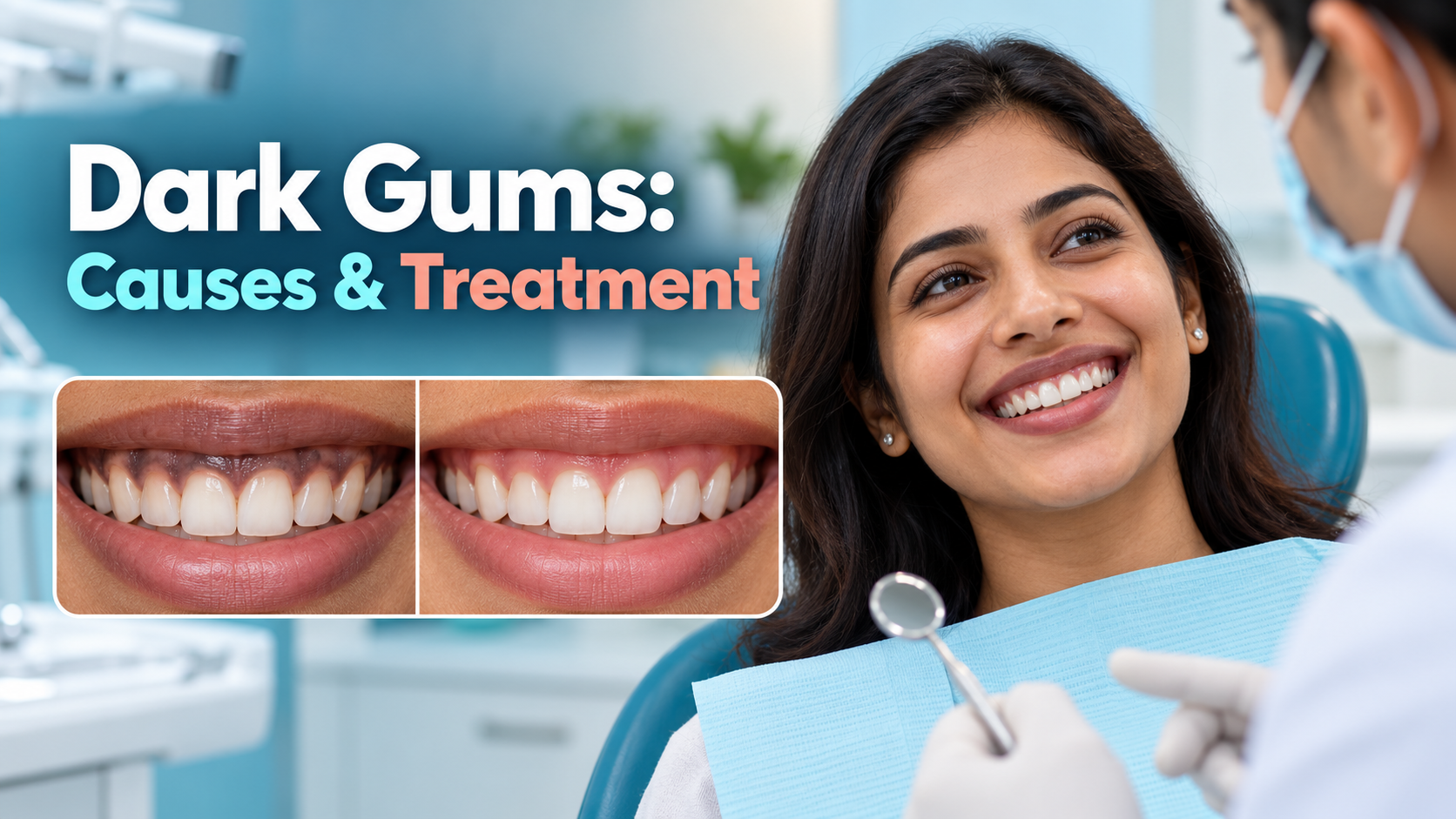
Dark gums are not always a sign of poor oral health. For many people, brown or black gum pigmentation is a normal result of melanin—the natural pigment responsible for skin, hair and eye colour. However, gums that suddenly change colour or develop unusual patches should be examined by a dentist.
This guide explains the common causes of dark gums, when professional evaluation is necessary and which treatments may be recommended.
Are Dark Gums Normal?
Yes, naturally dark gums can be completely healthy. Healthy gum colour varies from pink to different shades of brown or black, depending on genetics and melanin activity.
Natural pigmentation is generally:
- Evenly distributed across the gums
- Present for many years
- Painless
- Not associated with swelling or bleeding
- Similar to pigmentation seen in family members
Treatment is usually unnecessary when the pigmentation is natural and the gums are otherwise healthy.
What Causes Dark Gums?
Dark gum pigmentation can have several causes. Some are harmless, while others require dental or medical attention.
Natural Melanin Pigmentation
Melanin is the most common cause of naturally brown or black gums. People with medium or darker skin tones may have more noticeable gingival pigmentation.
This is a normal biological variation rather than a dental disease. Cosmetic treatment is optional and should only be considered after a dentist confirms that the gums are healthy.
Smoking and Tobacco Use
Smoking can stimulate increased melanin production in the mouth, producing brown or black areas known as smoker’s melanosis. The discolouration commonly appears on the front gums but may affect other oral tissues.
Stopping smoking or tobacco use may gradually reduce some pigmentation while also lowering the risk of gum disease, delayed healing and oral cancer.
Gum Disease and Inflammation
Gum disease does not usually cause uniform black pigmentation, but inflamed gums may appear dark red, purple or dusky. Other symptoms can include:
- Bleeding while brushing or flossing
- Swollen or tender gums
- Persistent bad breath
- Gum recession
- Pus around the gumline
- Loose teeth
Early gum disease may improve with professional cleaning and better oral hygiene. Advanced periodontitis may require deep cleaning, periodontal treatment or gum surgery.
Medicines and Medical Conditions
Some medicines can alter pigmentation in the gums or other oral tissues. Certain hormonal, genetic and systemic conditions may also cause unusual colour changes.
Do not stop a prescribed medicine without speaking to the prescribing doctor. A dentist can review the appearance of the gums and recommend medical consultation when necessary.
Dental Materials or Previous Injury
A small blue, grey or black area near a restored tooth may result from dental material becoming embedded in the tissue. This is sometimes called an amalgam tattoo.
Injury, irritation and inflammation may also leave localised pigmentation. Because different conditions can look similar, a new or unexplained spot should be professionally examined.
When Should You See a Dentist?
Arrange a dental examination if the gum colour changes suddenly or if a dark area:
- Appears without an obvious cause
- Changes in size, shape or colour
- Has an irregular border
- Becomes raised, painful or ulcerated
- Bleeds without clear irritation
- Occurs with swelling or loose teeth
- Does not heal within two to three weeks
Seek prompt professional advice for persistent mouth ulcers, red or white patches, unexplained lumps, difficulty swallowing or ongoing oral pain. These symptoms do not necessarily indicate cancer, but they should not be ignored.
How Are Dark Gums Diagnosed?
A dentist begins by examining the gums, teeth and surrounding oral tissues. The assessment may include questions about:
- When the pigmentation first appeared
- Recent changes in its appearance
- Smoking or tobacco use
- Current medicines
- Medical conditions
- Previous dental treatments
- Bleeding, pain or swelling
The dentist may take photographs or X-rays when clinically appropriate. An unusual or changing lesion may require referral to an oral medicine specialist, periodontist or oral surgeon. In selected cases, a biopsy may be advised to establish an accurate diagnosis.
Treatment Options for Dark Gums
Treatment depends on the cause. A dentist must first determine whether the pigmentation is natural, inflammatory, medication-related or associated with another condition.
No Treatment for Healthy Natural Pigmentation
Healthy melanin pigmentation does not need medical treatment. Some people choose cosmetic gum depigmentation because the colour affects their confidence, but the decision is personal.
Professional Gum Cleaning
When inflammation or gum disease affects the gum colour, treatment may include:
- Professional scaling
- Cleaning below the gumline
- Improved brushing and interdental cleaning
- Periodontal therapy
- Regular maintenance appointments
Treating the infection and controlling plaque are more important than cosmetic colour correction.
Tobacco-Cessation Support
Stopping smoking or chewing tobacco helps protect the gums and the rest of the mouth. Pigmentation related to tobacco may fade gradually, although the degree and speed of improvement vary.
Medication or Medical Review
If a medicine or systemic condition is suspected, the dentist may coordinate with the patient’s doctor. Prescribed medication should only be changed by an appropriately qualified healthcare professional.
Cosmetic Gum Depigmentation
Cosmetic treatment removes or reduces pigment from the surface layers of the gums. Available techniques may include:
- Laser gum depigmentation
- Surgical removal of the pigmented surface layer
- Abrasion techniques
- Electrosurgery
- Other periodontal procedures
The appropriate method depends on gum health, pigmentation depth, medical history and the dentist’s clinical assessment. Pigmentation can return after treatment, so permanent results cannot be guaranteed.
What Is Recovery Like After Gum Depigmentation?
Recovery varies according to the procedure and the amount of tissue treated. Temporary tenderness, mild swelling or sensitivity may occur during healing.
Patients may be advised to:
- Follow the dentist’s cleaning instructions
- Use prescribed medicines as directed
- Avoid smoking and tobacco
- Choose softer foods temporarily
- Avoid very hot, spicy or acidic foods
- Attend the scheduled review appointment
Contact the dental clinic if there is persistent bleeding, severe pain, increasing swelling, fever or another unexpected symptom.
Can Dark Gums Be Prevented?
Natural melanin pigmentation cannot—and does not need to—be prevented. However, good oral care can reduce inflammation and help dentists identify unusual changes early.
Helpful habits include:
- Brushing twice daily with fluoride toothpaste
- Cleaning between the teeth every day
- Avoiding smoking and chewing tobacco
- Attending regular dental examinations
- Seeking advice about new oral pigmentation
- Avoiding unverified gum-lightening products
Do not apply bleach, strong acids, abrasive powders or other DIY whitening substances to the gums. These products can burn or permanently damage oral tissue.
Dark Gum Evaluation in Pondicherry
If you are concerned about dark gums in Pondicherry, begin with a comprehensive dental examination. The priority is to distinguish healthy natural pigmentation from inflammation, tobacco-related changes or an unusual oral lesion.
After identifying the cause, the dentist can explain whether treatment is necessary and discuss suitable periodontal or cosmetic options. An individual assessment is essential because gum colour alone cannot determine oral health.
Frequently Asked Questions
Are black or brown gums unhealthy?
Not necessarily. Brown or black gums are often caused by natural melanin and can be completely healthy. Sudden, uneven or changing pigmentation should be checked by a dentist.
Can dark gums become pink naturally?
Pigmentation caused by inflammation or smoking may improve after the underlying cause is addressed. Natural melanin pigmentation generally remains unless cosmetic treatment is performed.
Can a dentist remove dark gum pigmentation?
A dentist or periodontist may offer gum depigmentation after confirming that the tissue is healthy. Techniques can include laser treatment, surgical removal or abrasion.
Is laser gum depigmentation permanent?
Results can last for a considerable period, but pigmentation may return. The likelihood and timing of recurrence vary between patients.
Are home remedies safe for lightening dark gums?
No DIY method can be considered reliably safe or effective. Bleach, acids and abrasive products can injure the gums. Seek professional dental advice instead.