


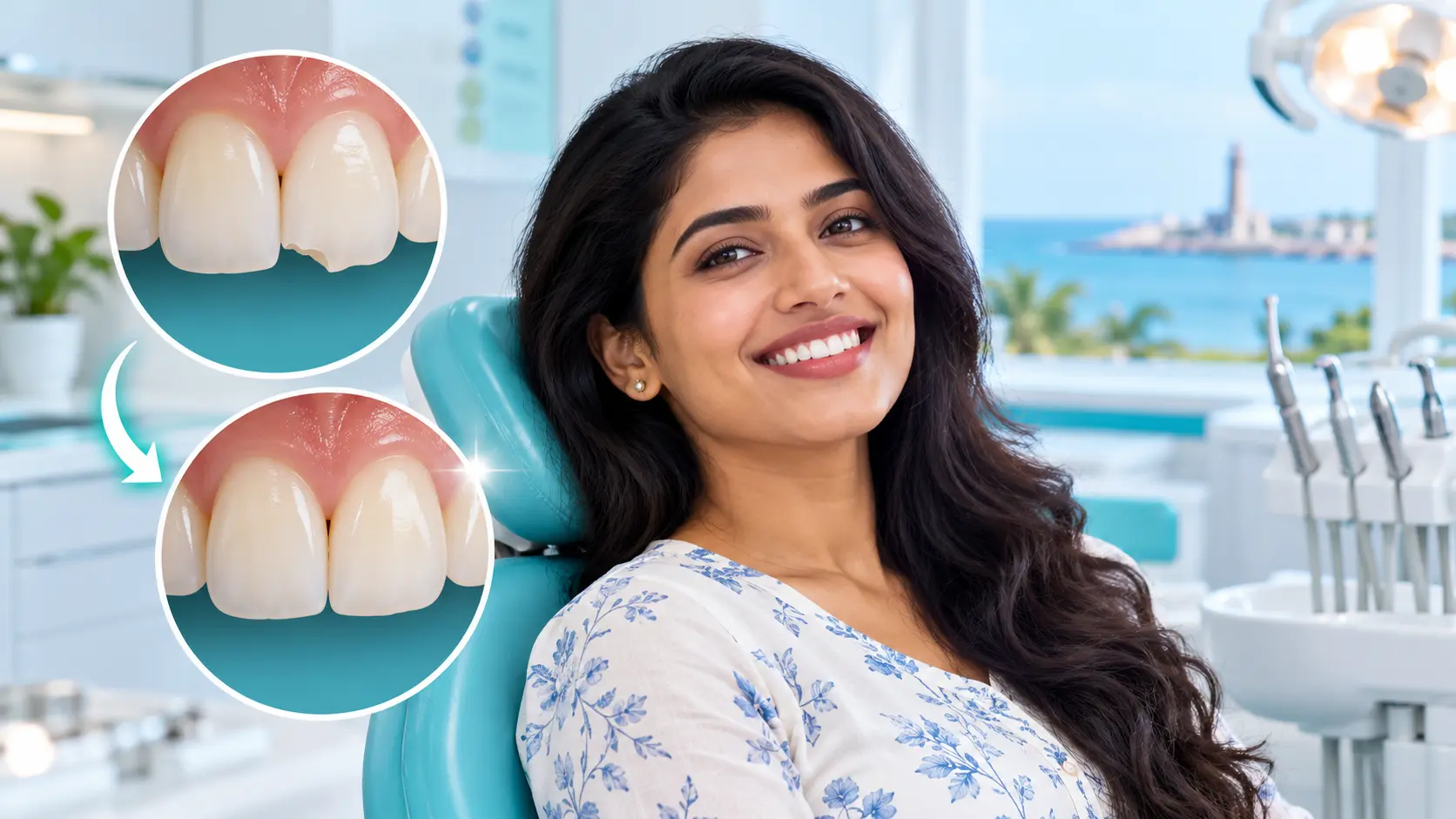
Dental Bonding Treatment in Pondicherry for a Natural Smile
Dental bonding is a cosmetic dental treatment used to improve chipped, slightly cracked, uneven, gapped or discoloured teeth. It uses tooth-coloured composite resin that is carefully applied, shaped and polished to blend naturally with the surrounding teeth.
For suitable patients, dental bonding treatment in Pondicherry can provide an effective smile improvement without extensive tooth preparation. Many simple bonding procedures can be completed in a single appointment. However, the treatment process depends on the condition of the tooth, the number of teeth involved and the patient’s bite.
At Smile and Glow Dental Care, the dentist evaluates your teeth, gums, bite and cosmetic expectations before recommending composite bonding or another suitable treatment.
What Is Dental Bonding?
Dental bonding, also known as composite bonding or tooth bonding, involves applying a tooth-coloured resin material directly to the tooth.
The dentist selects a composite shade that closely matches your natural teeth. The material is then carefully shaped, hardened using a special curing light and polished to produce a smooth, natural-looking finish.
Dental bonding may be used for:
- Repairing small chips in teeth
- Closing minor gaps between teeth
- Improving uneven tooth shapes
- Making short-looking teeth appear longer
- Masking certain types of discolouration
- Restoring slightly worn tooth edges
- Improving minor surface imperfections
- Covering exposed tooth-root areas in suitable cases
A dental examination is necessary because not every chipped, cracked or discoloured tooth can be corrected with bonding alone.
Who Is Suitable for Composite Dental Bonding?
Composite bonding may be suitable for adults with healthy teeth and gums who want to correct minor cosmetic concerns.
You may be a suitable candidate if:
- You have a small chip in a tooth
- There is a minor gap between your teeth
- One or more teeth appear uneven
- Your tooth has mild surface discolouration
- You want a minimally invasive cosmetic option
- Your teeth and gums are generally healthy
- You have realistic expectations about the result
- You are willing to maintain good oral hygiene
Dental bonding may not be suitable for people with severe tooth decay, extensive fractures, active gum disease, major bite problems or heavy teeth grinding. These conditions may need to be treated before cosmetic bonding is considered.
How Is Dental Bonding Performed?
Dental examination
The dentist examines your teeth, gums and bite. Dental X-rays may be recommended if there is a suspected cavity, deeper crack or another problem that cannot be identified through a visual examination.
Treatment planning
Your concerns and expected results are discussed. The dentist determines whether bonding, veneers, crowns, orthodontic treatment or another dental procedure would be more appropriate.
Shade selection
A composite resin shade is selected to match the surrounding natural teeth. If you are planning teeth whitening, discuss it with the dentist before bonding because composite resin does not whiten like natural enamel.
Tooth preparation
The tooth is cleaned and gently prepared. Depending on the condition of the tooth, little or no natural enamel may need to be removed.
Composite application
A conditioning liquid and bonding agent are applied to the tooth. The tooth-coloured composite resin is then placed, shaped and adjusted to create the desired appearance.
Curing and polishing
A special curing light is used to harden the composite material. The dentist checks your bite, makes final adjustments and polishes the bonded tooth.
The procedure generally takes around 30 to 60 minutes per tooth. The exact duration depends on the number of teeth being treated and the complexity of the correction.
What Are the Benefits of Dental Bonding?
Dental bonding provides several benefits when it is used in suitable cases.
- Provides a natural-looking tooth-coloured result
- Corrects several minor cosmetic concerns
- Usually requires minimal tooth preparation
- May be completed in one dental visit
- Preserves more natural tooth structure
- Can improve small chips, gaps and uneven edges
- Small damaged areas may often be repaired
- May be more affordable than porcelain veneers
- Requires little or no recovery time
The final result and durability depend on the condition of the tooth, the patient’s bite, oral habits and regular dental care.
Dental Bonding Versus Veneers and Crowns
Dental bonding is generally recommended for small or moderate cosmetic corrections. Composite resin is applied directly to the tooth and often requires less preparation than porcelain restorations.
Veneers are thin restorations attached to the front surfaces of teeth. They may offer better stain resistance and durability, but they involve a different treatment process and may require more tooth preparation.
Crowns cover most or all of the visible tooth. They are usually considered when a tooth is significantly damaged, weakened or heavily restored.
The right option should be selected according to the health and strength of the tooth rather than appearance alone. Your dentist can explain the benefits, limitations, expected results and maintenance requirements of each treatment.
How Long Does Dental Bonding Last?
Dental bonding may last approximately three to ten years before requiring polishing, repair or replacement. Its lifespan varies between patients and cannot be guaranteed.
Factors that affect the durability of dental bonding include:
- The size and location of the bonded area
- Your bite and chewing pressure
- Teeth grinding or clenching
- Biting hard foods and objects
- Smoking or tobacco use
- Frequent consumption of staining drinks
- Daily brushing and flossing
- Regular dental examinations
- Professional dental cleanings
Patients who grind their teeth may be advised to wear a customised night guard to help protect their bonded teeth.
Is Dental Bonding Painful?
Dental bonding is usually a comfortable procedure because most of the treatment is performed on the tooth’s surface.
Local anaesthesia may not be required for simple cosmetic bonding. However, anaesthesia may be necessary if the tooth has decay, sensitivity or requires another restorative procedure.
Some patients may experience temporary sensitivity after treatment. Contact your dentist if the sensitivity continues, the bonded tooth develops a sharp edge or your bite feels uncomfortable.
How to Care for Bonded Teeth
Good aftercare can help maintain the appearance and strength of bonded teeth.
- Brush twice daily using fluoride toothpaste
- Use a soft-bristled toothbrush
- Floss or clean between the teeth every day
- Attend regular dental examinations
- Schedule professional dental cleanings
- Avoid biting fingernails, pens or ice
- Do not use your teeth to open packets
- Limit tea, coffee and strongly coloured foods
- Avoid smoking and tobacco products
- Wear a night guard if recommended
- Contact the dentist if the bonding chips or loosens
Composite resin can stain and chip over time. Regular dental reviews allow the dentist to examine the bonded area and recommend polishing, repair or replacement when necessary.
How Much Does Dental Bonding Cost in Pondicherry?
The cost of dental bonding in Pondicherry depends on the number of teeth being treated and the complexity of the correction.
The cost may be influenced by:
- Number of teeth requiring bonding
- Size of the damaged or discoloured area
- Amount of reshaping required
- Condition of the tooth and gums
- Presence of tooth decay
- Need for additional dental treatment
- Bite adjustments
- Future maintenance requirements
An accurate dental bonding cost can be provided only after a clinical examination. Choosing treatment based only on the lowest price may overlook important factors such as diagnosis, material selection, bite assessment and long-term maintenance.
When Should You Consult a Dentist?
Arrange a dental consultation if you have:
- A chipped or broken tooth
- A visible crack in a tooth
- A small gap between teeth
- Uneven or irregular tooth edges
- Persistent tooth sensitivity
- Discolouration that does not improve
- A bonded tooth that feels sharp or loose
- Pain or discomfort while biting
- A cosmetic dental concern affecting your confidence
A chipped or cracked tooth should not automatically be considered a cosmetic problem. Depending on the depth of the damage, the tooth may require a filling, crown, root canal treatment or another procedure.
Why Choose Smile and Glow Dental Care?
If you are considering dental bonding treatment in Pondicherry, begin with a professional dental consultation at Smile and Glow Dental Care.
During the consultation, the dentist will:
- Examine the condition of your teeth and gums
- Check your bite and tooth alignment
- Understand your cosmetic concerns
- Explain whether bonding is suitable
- Discuss the expected results and limitations
- Recommend suitable alternative treatments
- Provide a personalised treatment plan
The objective is to achieve a natural-looking improvement while protecting your long-term dental health.
Frequently Asked Questions
Can dental bonding close gaps between teeth?
Dental bonding can close certain small gaps by adding tooth-coloured composite resin to the sides of the teeth. Larger spaces or gaps caused by alignment problems may require orthodontic treatment or another dental option.
Can a chipped tooth be repaired with dental bonding?
Small tooth chips may often be repaired using composite bonding. Larger fractures, deep cracks or teeth with nerve involvement may require a different restorative treatment.
Does dental bonding stain?
Composite resin can gradually stain, especially with frequent consumption of tea, coffee and strongly coloured foods. Smoking and tobacco use can also affect its appearance.
Can bonded teeth be whitened?
Whitening treatments do not change the colour of existing composite bonding in the same way they whiten natural enamel. If whitening and bonding are both planned, whitening may need to be completed before selecting the composite shade.
How many appointments are required?
Many simple dental bonding procedures can be completed in one appointment. Additional visits may be required when several teeth are involved or other dental problems need treatment first.
Is dental bonding permanent?
Dental bonding is not a permanent lifetime treatment. The composite material may eventually require polishing, repair or replacement because it can stain, wear or chip over time.
Is dental bonding suitable for front teeth?
Yes. Dental bonding is commonly used on front teeth to repair small chips, close minor gaps, improve uneven edges and mask certain types of discolouration.
Where can I get dental bonding treatment in Pondicherry?
You can consult Smile and Glow Dental Care for dental bonding treatment in Pondicherry. The dentist will examine your teeth, gums and bite before recommending an appropriate treatment plan.
Conclusion
Dental bonding is a minimally invasive cosmetic dental treatment that can improve small chips, minor gaps, uneven edges and certain types of tooth discolouration. It can provide a natural-looking result with minimal tooth preparation when used in suitable cases.
A professional dental examination is important because damaged or discoloured teeth may sometimes indicate tooth decay, a deeper crack or another condition requiring different care.
Consult Smile and Glow Dental Care to find out whether dental bonding treatment in Pondicherry is suitable for your dental condition and smile goals.
This article is intended for general educational purposes and is not a substitute for diagnosis or personalised treatment advice from a qualified dentist.