


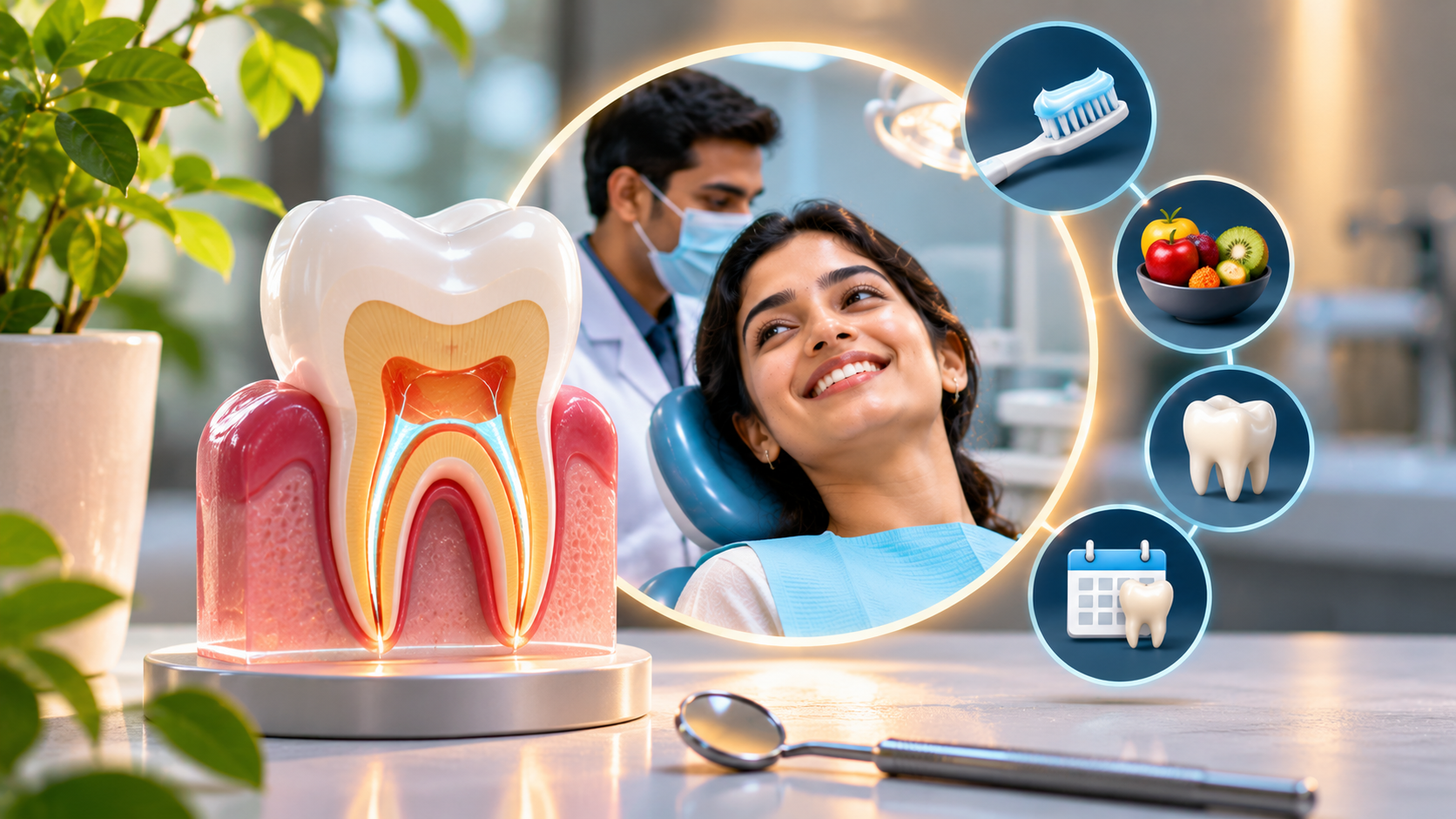
Dental Care After Root Canal Treatment in Pondicherry
Root canal treatment removes inflamed or infected tissue from inside a tooth before the root canals are cleaned, filled and sealed. Proper aftercare protects the treated tooth, supports healing and reduces the risk of fracture or reinfection.
Mild tenderness can occur for a few days after treatment, especially if the tooth was painful or infected before the procedure. However, severe pain, increasing swelling or the return of previous symptoms should be reported to your dentist.
Smile & Glow Dental Care provides post-treatment guidance, follow-up evaluation and permanent restoration after root canal treatment in Pondicherry.
What Should You Expect After Root Canal Treatment?
Your mouth, lips, cheek or tongue may remain numb for several hours because of the local anaesthetic used during the procedure.
As the numbness wears off, you may notice:
- Mild tenderness around the treated tooth
- Slight soreness while biting
- Jaw discomfort from keeping your mouth open
- Minor gum irritation near the treated area
- A different feeling when touching the tooth
These symptoms should gradually improve. Contact your dentist if the discomfort becomes severe, increases or lasts longer than expected.
Immediate Care After Root Canal Treatment
The first few hours after treatment are important for protecting your mouth and the treated tooth.
Follow these precautions:
- Wait until the numbness reduces before chewing
- Avoid biting your cheek, lip or tongue
- Follow your dentist’s eating instructions
- Avoid very hot drinks while your mouth is numb
- Do not disturb the temporary filling
- Avoid smoking
- Do not repeatedly touch the treated tooth
- Take prescribed medicines exactly as directed
Your dentist’s instructions should take priority because treatment may vary according to the tooth, infection and type of restoration.
What Can You Eat After a Root Canal?
Choose soft foods that require minimal chewing until the numbness has worn off and the tooth feels comfortable.
Suitable options may include:
- Soft rice
- Idli
- Yoghurt
- Eggs
- Soft-cooked vegetables
- Soup that is not excessively hot
- Mashed foods
- Soft fruits
- Pasta
- Other foods recommended by your dentist
Chew on the opposite side when possible, particularly if the tooth has a temporary filling or has not yet received its permanent restoration.
Foods to Avoid After Treatment
Until the treated tooth has been permanently restored or your dentist confirms that normal chewing is safe, avoid:
- Hard nuts
- Ice cubes
- Hard sweets
- Sticky chocolates
- Chewing gum
- Popcorn kernels
- Hard biscuits
- Crunchy snacks
- Tough meat
- Biting pens or pencils
- Using the treated tooth to open packages
Hard or sticky foods may loosen a temporary filling or fracture a weakened tooth.
Can You Brush After Root Canal Treatment?
Yes. Unless your dentist advises otherwise, continue brushing twice daily with fluoride toothpaste.
Use a soft-bristled toothbrush and clean gently around the treated area. Avoid aggressive brushing if the surrounding gum feels tender.
You should also continue cleaning between your teeth. Be careful around a temporary filling, crown or restoration and follow any special flossing instructions provided by your dentist.
Good oral hygiene helps protect the treated tooth and the surrounding gums from new plaque, decay and infection.
Managing Discomfort After Root Canal Treatment
Some tenderness is common during the early healing period. Follow the pain-management instructions provided by your dentist.
Important medication precautions include:
- Take only medicines recommended or prescribed for you
- Follow the stated dose and timing
- Do not exceed the recommended amount
- Do not share prescription medicines
- Inform your dentist about allergies or medical conditions
- Contact the clinic if you experience an unexpected reaction
- Do not start antibiotics without professional advice
Antibiotics are not required after every root canal. If they are prescribed, use them exactly as directed and contact the dentist if you experience a problem.
Protect the Temporary Filling
A temporary filling may be placed between appointments or before the final crown or permanent restoration.
To protect it:
- Avoid chewing hard foods on the treated tooth
- Avoid sticky foods
- Do not pick at the filling
- Keep the area clean
- Attend the next appointment on time
- Contact the clinic if the filling becomes loose
- Report a significant loss of filling material
- Do not attempt a permanent home repair
A thin surface layer may occasionally wear away, but a loose or missing temporary filling should be discussed with your dentist.
Why Is a Permanent Restoration Important?
Root canal treatment addresses the infection inside the tooth, but the tooth still requires a strong outer restoration.
Depending on how much natural tooth structure remains, the dentist may recommend:
- A permanent filling
- An inlay or onlay
- A dental crown
- A post and crown in selected cases
Back teeth commonly experience strong chewing forces and may require a crown or another protective restoration. The final decision depends on the tooth’s location, remaining structure, bite and previous damage.
Delaying the permanent restoration may increase the risk of leakage, reinfection or tooth fracture.
Do All Root Canal-Treated Teeth Need Crowns?
Not every tooth automatically requires the same restoration.
A crown may be recommended when:
- A large amount of tooth structure has been lost
- The tooth contains a large filling
- The tooth has a crack
- The tooth is a back chewing tooth
- Additional protection is required
- The remaining structure is weak
Some front teeth or teeth with more remaining structure may be restored differently. Your dentist will recommend the most suitable option after examining the tooth.
Attend All Follow-Up Appointments
Root canal treatment and final tooth restoration may require more than one appointment.
Follow-up visits allow the dentist to:
- Check whether symptoms are improving
- Examine the temporary filling
- Complete the root canal if treatment is ongoing
- Place the permanent restoration
- Check the bite
- Evaluate healing
- Take an X-ray when clinically required
- Plan further monitoring
Do not skip the final restoration appointment simply because the tooth no longer hurts.
When Should You Contact Your Dentist?
Contact the dental clinic if you experience:
- Severe pain or pressure lasting more than a few days
- Pain that is becoming worse
- Visible swelling inside or outside the mouth
- Fever or feeling unwell
- Pus or a persistent bad taste
- Difficulty opening the mouth
- An uneven or high bite
- A loose or missing temporary filling
- A loose crown
- An allergic reaction to medication
- The return of symptoms present before treatment
Prompt evaluation can help identify a bite problem, restoration failure, persistent infection or another condition requiring treatment.
What If the Tooth Feels High When Biting?
A treated tooth may feel high if the temporary or permanent restoration contacts the opposing tooth before the other teeth.
This can cause tenderness while biting and place unnecessary pressure on the treated tooth.
Do not wait for the restoration to wear down naturally. Contact your dentist so the bite can be examined and adjusted if required.
Can a Root Canal-Treated Tooth Become Infected Again?
A properly treated and restored tooth can remain functional for many years, but retreatment may occasionally be required.
Possible reasons include:
- Undetected or complex canals
- Delayed permanent restoration
- Leakage around a filling or crown
- New tooth decay
- A cracked tooth
- A loose or damaged restoration
- Persistent infection
Report new pain, swelling, a gum pimple or recurring symptoms even if the root canal was completed months or years earlier.
Long-Term Care After Root Canal Treatment
A root canal-treated tooth still requires regular dental care.
Protect it by:
- Brushing twice daily with fluoride toothpaste
- Cleaning between the teeth every day
- Attending dental checkups
- Completing the permanent restoration
- Avoiding chewing ice and hard objects
- Wearing a night guard if prescribed
- Treating teeth grinding
- Limiting frequent sugary snacks
- Reporting pain or swelling early
- Following recommended X-ray reviews
The treated tooth can still develop decay around a filling or crown, so daily cleaning remains essential.
Can You Smoke After Root Canal Treatment?
Smoking can interfere with oral healing and contributes to wider dental and gum problems.
Avoid smoking after treatment and discuss smoking cessation support with a healthcare professional if needed. Follow any specific instructions given by your dentist.
Returning to Work After Treatment
Many patients can return to normal non-strenuous activities after root canal treatment, but the mouth may remain numb and the tooth may feel tender.
If you receive sedating medication or feel unwell, follow the dentist’s instructions about driving, operating machinery and returning to work.
Your recovery may differ depending on the severity of the original infection and the complexity of treatment.
Common Mistakes to Avoid
Avoid these mistakes after root canal treatment:
- Chewing before the numbness wears off
- Biting hard foods with the treated tooth
- Skipping the permanent restoration
- Ignoring a loose temporary filling
- Stopping oral hygiene
- Taking unprescribed antibiotics
- Exceeding medicine instructions
- Ignoring worsening pain or swelling
- Missing follow-up appointments
- Repeatedly testing the tooth by biting hard
- Attempting to repair the filling at home
Root Canal Aftercare at Smile & Glow Dental Care
Smile & Glow Dental Care provides dental care after root canal treatment for patients in Pondicherry.
Post-treatment care may include:
- Reviewing healing
- Checking the temporary filling
- Completing ongoing root canal treatment
- Adjusting an uneven bite
- Placing a permanent filling
- Planning a dental crown
- Evaluating recurring symptoms
- Providing oral-hygiene guidance
- Scheduling follow-up X-rays when required
The aftercare plan is personalised according to the treated tooth, remaining tooth structure and clinical condition.
Book Your Root Canal Follow-Up in Pondicherry
Do not leave a root canal-treated tooth with a temporary restoration longer than advised.
Attend your scheduled follow-up and contact the clinic if you experience worsening pain, swelling, a loose filling or an uncomfortable bite.
For dental care after root canal treatment in Pondicherry, schedule an evaluation with Smile & Glow Dental Care.
Frequently Asked Questions
Is pain normal after root canal treatment?
Mild tenderness for a few days can be normal. Severe, increasing or persistent pain should be reported to your dentist.
When can I eat after a root canal?
Wait until the numbness has reduced and follow your dentist’s instructions. Begin with soft foods and avoid chewing hard items on the treated tooth.
Can I brush and floss after root canal treatment?
Yes. Continue brushing and cleaning between the teeth, but be gentle around the treated area and temporary restoration.
Can I chew on a temporary filling?
Avoid hard, sticky and heavy chewing on the temporarily restored tooth. Use the opposite side when possible until the permanent restoration is completed.
Does every root canal-treated tooth need a crown?
Not always. The required restoration depends on the tooth’s location, remaining structure, bite and extent of previous damage.
What should I do if my temporary filling falls out?
Contact your dentist promptly. Avoid chewing on the tooth and do not attempt a permanent home repair.
Why does my tooth feel high after root canal treatment?
The temporary or permanent restoration may be contacting the opposing tooth too early. Your dentist can check and adjust the bite.
How long can a root canal-treated tooth last?
With proper treatment, a suitable permanent restoration, daily oral hygiene and regular dental checkups, a root canal-treated tooth can remain functional for many years.
> This article provides general dental information and does not replace the aftercare instructions, diagnosis or treatment plan given by your dentist.