


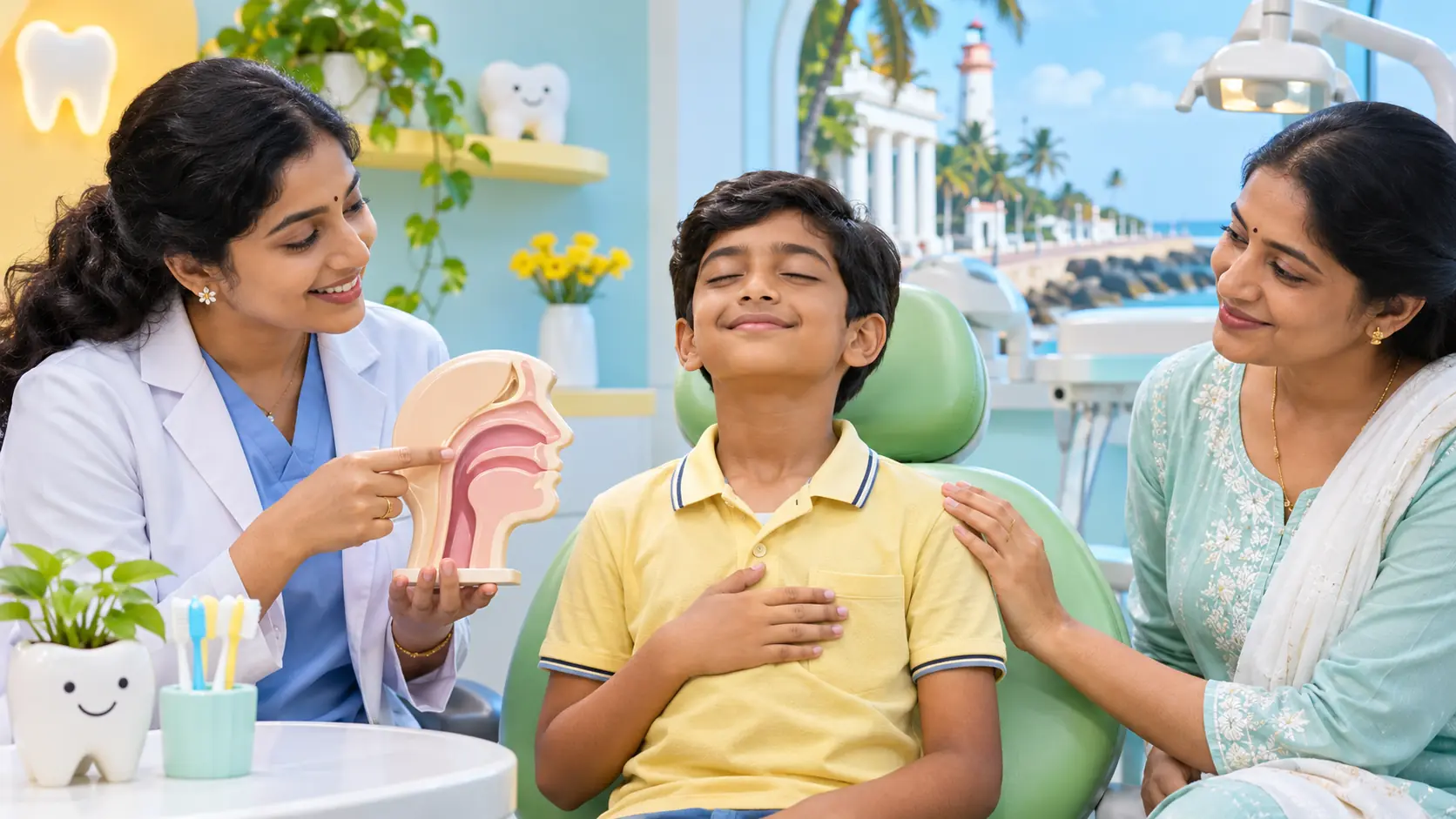
Dental Care for Mouth-Breathing Children in Pondicherry
Occasional mouth breathing during a cold or a blocked nose is common in children. However, a child who regularly breathes through the mouth during the day or while sleeping may need a dental and medical evaluation.
Persistent mouth breathing is not a diagnosis by itself. It can be associated with nasal congestion, allergies, enlarged tonsils or adenoids, structural airway problems or an established breathing habit. It may also contribute to dry mouth and increase certain oral-health risks.
At Smile & Glow Dental Care, Pondicherry, children can receive an oral-health assessment to identify dental changes associated with mouth breathing. When signs suggest an airway or sleep-related problem, parents may be advised to consult a paediatrician, ENT specialist or sleep physician.
Quick Answer: Does Mouth Breathing Affect a Child’s Teeth?
Regular mouth breathing may reduce the protective effect of saliva and leave the mouth feeling dry. This can contribute to plaque accumulation, bad breath, gum irritation and a higher risk of tooth decay.
Mouth breathing may also occur alongside changes in the position of the tongue, lips, teeth or jaws. However, it does not affect every child in the same way, and it should not automatically be assumed to be the cause of crooked teeth or altered facial growth.
A dental examination can determine whether the child has cavities, inflamed gums, enamel changes, a narrow dental arch, crowding or an abnormal bite requiring monitoring or treatment.
What Is Mouth Breathing in Children?
Mouth breathing means that a child regularly uses the mouth instead of the nose to breathe. It may happen only during sleep, mainly during physical activity or throughout both the day and night.
Short-term mouth breathing can occur when a child has a cold or temporary nasal congestion. Persistent mouth breathing, particularly when accompanied by snoring or disturbed sleep, should be professionally assessed.
Parents may notice that their child:
- Sleeps with the mouth open
- Keeps the lips apart while resting
- Breathes through the mouth during the day
- Frequently wakes with a dry mouth
- Has dry or cracked lips
- Snores or breathes noisily during sleep
- Has persistent bad breath
- Appears tired or irritable during the day
- Has difficulty concentrating at school
What Causes Mouth Breathing in Children?
A child may breathe through the mouth for several reasons. The correct treatment depends on identifying the underlying cause rather than simply trying to keep the mouth closed.
Possible causes include:
- Temporary nasal congestion caused by a cold
- Allergic rhinitis or long-term nasal allergies
- Enlarged adenoids or tonsils
- Chronic sinus or nasal inflammation
- Structural narrowing inside the nose
- Certain craniofacial or developmental conditions
- A breathing habit that continues after an obstruction improves
- Sleep-related breathing disorders
A dentist can screen for oral and facial signs, but medical conditions affecting the nose, throat or airway require assessment by an appropriate medical professional.
How Can Mouth Breathing Affect Oral Health?
#### Dry Mouth
Saliva helps wash away food particles, neutralise acids and protect the teeth. When air continuously passes through the mouth, the oral tissues may become dry, especially during sleep.
A dry mouth does not guarantee that a child will develop dental problems, but reduced salivary protection can increase susceptibility to plaque, tooth decay and gum irritation.
#### Tooth Decay
Children who breathe through the mouth and experience dryness may have a greater need for preventive dental care. The risk may be higher when dryness is combined with frequent sugary snacks, sweetened drinks or inadequate brushing.
The dentist may recommend an individual cavity-prevention plan based on the child’s age, existing dental condition, diet, fluoride exposure and overall decay risk.
#### Red or Bleeding Gums
Dry tissues and plaque accumulation may contribute to red, swollen or bleeding gums. Gum inflammation is also commonly related to ineffective brushing around the gumline.
Bleeding gums should not be ignored or treated only with home remedies. A dental examination can identify whether the problem is caused by plaque-related gingivitis or another condition.
#### Bad Breath
Persistent mouth breathing may dry the mouth and contribute to unpleasant breath. However, bad breath may also be related to plaque, tongue coating, cavities, gum inflammation, tonsil problems, nasal congestion or other medical conditions.
Treating the source is more effective than repeatedly masking the smell with mouth fresheners.
#### Changes in Teeth and Bite Development
Some children with long-standing mouth breathing may also have crowding, an open bite, a narrow upper dental arch or other bite-related concerns. These findings can have several contributing factors, including genetics, oral habits, muscle function and growth patterns.
Mouth breathing alone should not be assumed to be the cause. An orthodontic assessment can help determine whether the child’s dental development needs monitoring or treatment.
Can Mouth Breathing Affect a Child’s Sleep?
Mouth breathing during sleep may occur with simple nasal congestion, but it can also be one of several signs of sleep-disordered breathing or obstructive sleep apnoea.
Parents should arrange a medical assessment if mouth breathing is accompanied by:
- Frequent or loud snoring
- Pauses in breathing during sleep
- Gasping, choking or struggling to breathe
- Restless sleep or frequent waking
- Excessive sweating during sleep
- Sleeping with the neck extended or in an unusual position
- Bedwetting after the expected age
- Morning headaches
- Difficulty waking in the morning
- Daytime sleepiness
- Irritability, hyperactivity or attention difficulties
- Poor school performance or concerns about growth
Snoring does not always mean that a child has sleep apnoea. However, regular snoring with breathing pauses or daytime symptoms should be discussed promptly with a paediatrician or ENT specialist.
A dentist can help identify possible risk indicators but cannot confirm sleep apnoea through a routine dental examination. Diagnosis may require specialist medical assessment and, in some cases, an overnight sleep study.
Dental Examination for a Mouth-Breathing Child
During a dental visit, the dentist may ask about the child’s daytime breathing, sleep quality, snoring, allergies, dental habits and previous medical assessments.
The examination may include an evaluation of:
- Teeth and existing cavities
- Plaque levels and gum health
- Dryness of the mouth and lips
- Tongue resting position
- Tooth alignment and spacing
- Upper and lower jaw relationship
- Dental arch width
- Bite development
- Visible tonsillar enlargement
- Signs of tooth grinding or enamel wear
This assessment helps create an appropriate dental-care plan and determine whether referral to another healthcare professional is advisable.
Dental Care Options for Mouth-Breathing Children in Pondicherry
Dental treatment does not follow a single standard plan because every child’s needs are different. Care may include a combination of preventive treatment, restorative dentistry, bite monitoring and multidisciplinary referral.
#### Professional Cleaning and Oral-Hygiene Guidance
When plaque or gum inflammation is present, professional cleaning may be recommended. Parents and children can also receive practical guidance on brushing difficult areas, cleaning the gumline and maintaining oral hygiene during periods of dry mouth.
#### Fluoride Treatment
A dentist may recommend fluoride varnish when a child has an increased risk of cavities. Fluoride can help strengthen tooth enamel and make it more resistant to acid attacks.
The need and frequency of professional fluoride treatment should be determined through a dental examination and cavity-risk assessment.
#### Dental Sealants
Sealants may be suitable for deep grooves on certain permanent back teeth. They create a protective covering over vulnerable chewing surfaces and can form part of a broader cavity-prevention plan.
Not every tooth requires a sealant. Suitability depends on the tooth’s eruption, groove pattern and decay risk.
#### Treatment of Cavities or Gum Problems
Existing cavities should be treated according to their depth, the tooth involved and the child’s age. Inflamed gums may improve with plaque removal, better home care and professional monitoring.
Dental treatment manages oral complications but does not remove a nasal or throat obstruction.
#### Orthodontic Assessment
An orthodontic opinion may be recommended if the child has significant crowding, a narrow dental arch, an open bite, crossbite or another developing bite concern.
Orthodontic treatment should be based on a complete assessment of the child’s teeth, jaws and growth. It should not be presented as a guaranteed cure for mouth breathing or sleep apnoea.
#### Referral for Airway Evaluation
If the history or examination suggests persistent nasal obstruction, enlarged tonsils or adenoids, or sleep-disordered breathing, the child may need evaluation by a paediatrician, ENT specialist, pulmonologist or sleep physician.
Treating the underlying airway problem is an important part of managing persistent mouth breathing.
Home Dental Care for Children Who Breathe Through the Mouth
Parents can support their child’s oral health while professional assessment is being arranged.
- Brush the child’s teeth twice daily with an age-appropriate amount of fluoride toothpaste
- Supervise or assist brushing until the child can clean every surface effectively
- Clean between teeth that touch using floss or another dentist-recommended method
- Encourage regular plain-water intake
- Limit frequent sugary snacks and sweetened beverages
- Avoid acidic drinks, particularly before bedtime
- Keep scheduled dental examinations based on the child’s individual risk
- Follow professional advice about fluoride, dry-mouth products or mouthrinses
- Inform the dentist about snoring, breathing pauses, allergies and sleep concerns
Young children should not use mouthrinses or specialised high-fluoride products unless advised by a dentist or doctor.
Should Parents Tape a Child’s Mouth Closed at Night?
No. Parents should not tape a child’s mouth closed to stop mouth breathing.
Mouth taping can be unsafe when a child has nasal congestion, enlarged tonsils or adenoids, vomiting risk, an unrecognised airway obstruction or a sleep-related breathing disorder. It also does not identify or treat the reason the child is mouth breathing.
A child who regularly sleeps with the mouth open should receive an appropriate dental and medical assessment instead of having the mouth forcibly closed.
Can Breathing Exercises or Myofunctional Therapy Help?
Some children may be referred for oral-motor or myofunctional therapy after the airway has been medically assessed. This type of therapy may focus on nasal-breathing habits, lip closure, tongue posture and oral muscle function.
It is not appropriate for every child and should not be used to delay the investigation of possible nasal obstruction or sleep apnoea. Results vary, and no exercise programme should be described as a guaranteed cure.
Parents should choose a qualified provider and ensure that the child’s dentist and medical team are involved when necessary.
When Should Parents Seek Urgent Medical Help?
Seek emergency medical assistance if a child:
- Has severe difficulty breathing while awake
- Has lips, skin or fingernails that appear blue, grey or unusually pale
- Experiences a prolonged pause in breathing
- Is gasping or struggling severely for air
- Is unusually difficult to wake
- Becomes limp, confused or unresponsive
- Develops sudden breathing difficulty after choking or a possible allergic reaction
These symptoms require urgent medical care and should not wait for a routine dental appointment.
When Should You Book a Dental Appointment?
Arrange a dental assessment when a child regularly breathes through the mouth and also has:
- Dry mouth or cracked lips
- Persistent bad breath
- New or repeated cavities
- Red, swollen or bleeding gums
- Tooth sensitivity
- Changes in the position of the teeth
- Difficulty closing the lips comfortably
- Concerns about jaw or bite development
- Tooth grinding or visible enamel wear
A dental appointment is also valuable when a medical professional has diagnosed an airway or sleep condition and the child needs preventive oral care.
Dental and Medical Care Should Work Together
Persistent mouth breathing may involve both oral-health and airway concerns. The dentist can address cavities, gum inflammation, enamel protection and bite development, while a paediatrician or ENT specialist investigates medical causes of nasal or throat obstruction.
When needed, care may involve:
- A general or paediatric dentist
- A paediatrician
- An ENT specialist
- An orthodontist
- A sleep physician or pulmonologist
- A qualified oral-motor or myofunctional therapist
Coordinated care helps ensure that the child’s dental needs are treated without overlooking a possible breathing or sleep problem.
Dental Care for Mouth-Breathing Children at Smile & Glow Dental Care
Smile & Glow Dental Care provides dental assessments for children with mouth breathing, dry mouth, cavities, gum irritation and developing bite concerns in Pondicherry.
The visit can help parents understand the child’s current oral-health condition, available preventive treatments and whether an airway or orthodontic referral should be considered.
Treatment recommendations are made only after examining the child and considering their age, symptoms, dental development, medical history and individual risk factors.
Frequently Asked Questions
#### Is mouth breathing normal in children?
Temporary mouth breathing can occur during a cold or short period of nasal congestion. Persistent daytime or nighttime mouth breathing should be assessed because it may be associated with allergies, enlarged tonsils or adenoids, nasal obstruction or a sleep-related breathing problem.
#### Can mouth breathing cause cavities?
Mouth breathing may contribute to oral dryness and reduced salivary protection, which can increase cavity risk when combined with plaque, frequent sugar intake and inadequate brushing. It does not mean that every mouth-breathing child will develop cavities.
#### Can mouth breathing affect jaw and tooth development?
Some mouth-breathing children also have crowding, narrow dental arches or bite problems. These changes can have multiple causes, so a dental or orthodontic assessment is needed instead of assuming that mouth breathing is solely responsible.
#### Which healthcare professional should my child see?
A dentist can assess the child’s teeth, gums, bite and oral signs. A paediatrician or ENT specialist should evaluate persistent nasal obstruction, enlarged tonsils or adenoids, snoring, breathing pauses or other airway-related symptoms.
#### Does snoring mean my child has sleep apnoea?
Not always. Children may snore because of temporary congestion or other causes. Frequent loud snoring accompanied by breathing pauses, gasping, restless sleep or daytime problems requires medical assessment.
#### Can orthodontic treatment stop mouth breathing?
Orthodontic treatment can address certain tooth and jaw problems, but it may not remove a nasal or throat obstruction. The underlying cause of mouth breathing must be evaluated before deciding on treatment.
#### Is mouth taping safe for children?
Mouth taping is not recommended for children without medical evaluation. It may be dangerous when nasal breathing is restricted and does not treat the underlying cause of mouth breathing.
#### How can I protect my child’s teeth at home?
Help the child brush twice daily with an age-appropriate amount of fluoride toothpaste, clean between touching teeth, drink plain water and limit frequent sugary or acidic foods and drinks. Follow a dentist’s advice about fluoride treatments and examination frequency.
#### When is mouth breathing an emergency?
Seek emergency assistance if the child has severe breathing difficulty, prolonged breathing pauses, blue or grey lips, sudden choking-related breathing problems or is unusually difficult to wake.
Book a Child Dental Assessment in Pondicherry
If your child frequently breathes through the mouth, has a dry mouth, snores, develops repeated cavities or shows changes in tooth alignment, schedule a dental assessment at Smile & Glow Dental Care in Pondicherry.
An early evaluation can identify oral-health problems, provide personalised preventive care and determine whether consultation with a paediatrician, ENT specialist or orthodontist may be appropriate.
This article provides general educational information and is not a substitute for an examination, diagnosis or individual treatment plan from a qualified dental or medical professional.