


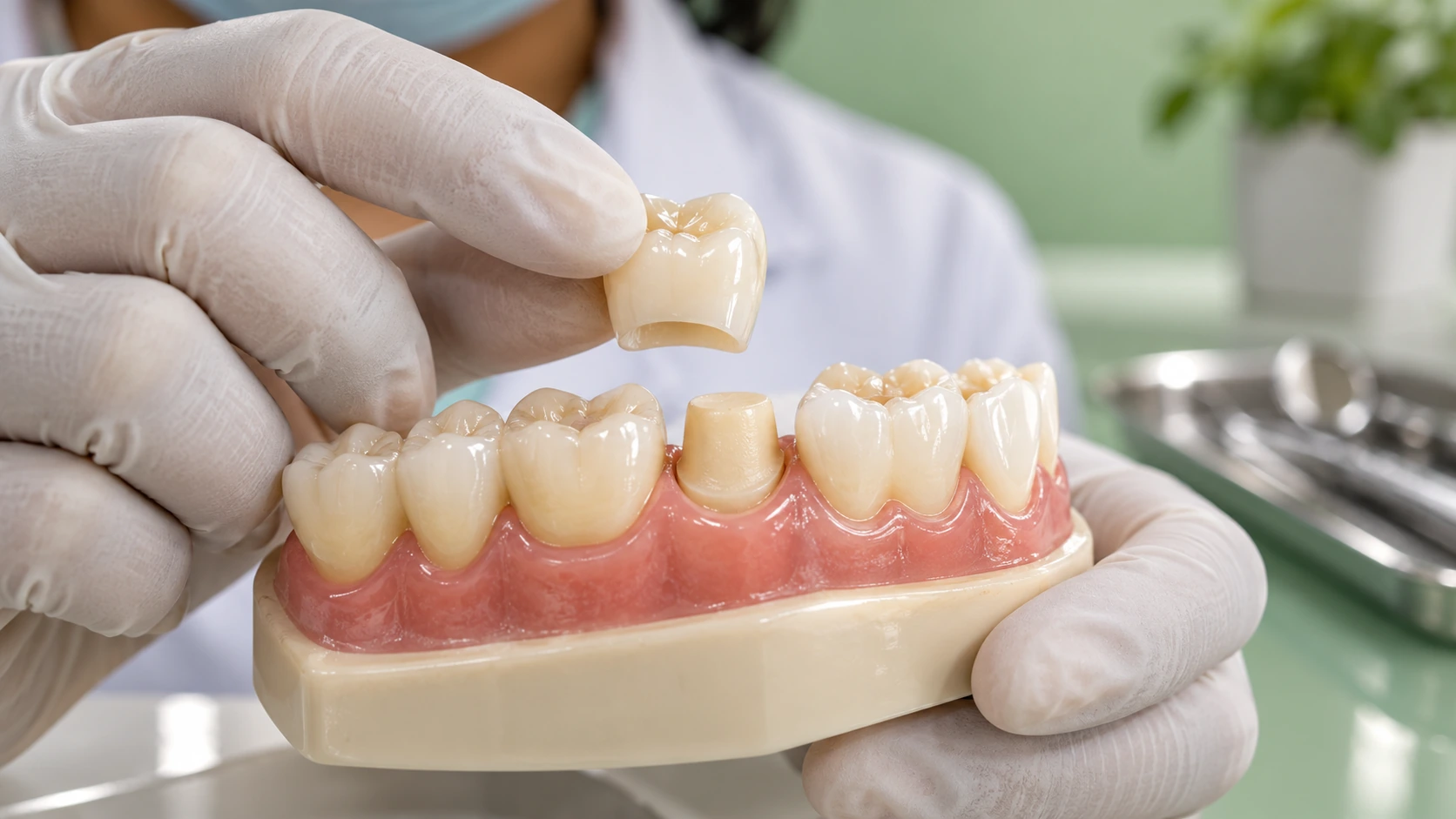
Dental Crown Treatment Guide in Pondicherry: Everything Patients Should Know
A dental crown is a custom-made restoration designed to cover and protect a damaged, weakened, heavily restored, or aesthetically compromised tooth. Crowns can restore the shape, function, appearance, and strength of suitable teeth.
If you are searching for a dental crown treatment guide in Pondicherry, understanding when a crown is needed, how the treatment works, which materials may be available, and how to care for your crown can help you prepare for your dental consultation.
Smile and Glow Dental Care provides dental crown treatment in Pondicherry, including digitally designed ceramic and zirconia crown options and CAD/CAM-supported treatment workflows.
What Is a Dental Crown?
A dental crown is a custom-made restoration that covers the visible portion of a tooth.
It can be used to:
- Protect a weakened tooth
- Restore a broken tooth
- Restore a heavily filled tooth
- Cover a tooth after suitable root canal treatment
- Improve the shape of a damaged tooth
- Improve the appearance of selected discoloured or misshapen teeth
- Restore a dental implant
- Support certain bridge restorations
A crown is different from a dental filling because it covers a larger portion of the tooth and is designed to provide additional coverage when a simpler restoration may not be sufficient.
When Is a Dental Crown Needed?
A dentist may recommend a crown when a tooth has lost significant structure or requires additional protection.
Common situations include:
- Large cavities
- Large existing fillings
- Broken teeth
- Cracked or weakened teeth
- Significant tooth wear
- Teeth with substantial structural loss
- Selected root canal-treated teeth
- Certain cosmetic restorative cases
- Dental implant restoration
However, not every damaged tooth needs a crown.
Depending on the amount of remaining healthy tooth structure, alternatives may include:
- Dental filling
- Composite bonding
- Inlay
- Onlay
- Veneer
- Other conservative restoration
Your dentist should evaluate the tooth before deciding whether a crown is appropriate.
Does Every Root Canal-Treated Tooth Need a Crown?
No.
The need for a crown after root canal treatment depends on factors such as:
- Tooth location
- Remaining tooth structure
- Existing cracks
- Bite forces
- Existing restoration
- Overall restorability
Back teeth can experience substantial chewing forces, so additional protection may often be considered when significant tooth structure has been lost.
The final restoration should be selected after evaluating the individual tooth rather than automatically placing a crown on every root canal-treated tooth.
Signs You May Need a Dental Crown
You may need a dental evaluation if you have:
- A broken tooth
- A large filling
- A heavily damaged tooth
- A cracked tooth
- Significant tooth wear
- A weak tooth after extensive decay
- A tooth that has undergone root canal treatment
- A badly discoloured or misshapen tooth
- A damaged dental crown
- A dental implant requiring a final crown
Symptoms alone cannot determine whether a crown is necessary.
A dentist needs to evaluate the tooth and its supporting structures.
Dental Crown Treatment Consultation in Pondicherry
The treatment begins with a comprehensive dental examination.
Your dentist may evaluate:
- Tooth structure
- Existing fillings
- Cracks
- Tooth decay
- Gum health
- Bite
- Adjacent teeth
- Root condition
- Supporting bone
- Existing dental restorations
Dental X-rays may be recommended when additional information about the roots or supporting structures is required.
The objective is to determine whether the tooth can be restored and whether a crown is the appropriate option.
What Happens During Dental Crown Treatment?
Dental crown treatment generally involves several stages.
Step 1: Dental Examination
The dentist examines the tooth and identifies the underlying problem.
The examination may include:
- Clinical evaluation
- Bite assessment
- Dental photographs
- X-rays when required
- Digital scans when appropriate
Step 2: Treatment Planning
Your dentist determines:
- Whether a crown is necessary
- Which tooth needs treatment
- How much tooth structure remains
- Which crown material may be appropriate
- Whether additional treatment is required
Step 3: Tooth Preparation
If a crown is selected, the tooth is carefully prepared to create the appropriate space and shape for the restoration.
The amount of preparation depends on:
- Existing tooth structure
- Crown material
- Tooth position
- Bite
- Restoration requirements
Step 4: Digital Scan or Impression
The prepared tooth is recorded using an impression or digital scanning workflow.
Digital scanning can capture the shape of the prepared tooth and surrounding structures for restoration design.
Step 5: Temporary Crown
A temporary crown may be placed when the final crown requires laboratory or fabrication time.
The temporary restoration helps protect the prepared tooth while the final restoration is being completed.
Step 6: Final Crown Design
The final crown is customized according to:
- Tooth shape
- Tooth colour
- Size
- Bite
- Contact with neighbouring teeth
- Available space
- Functional requirements
Step 7: Crown Try-In and Evaluation
Before final placement, the dentist checks the crown.
Important factors include:
- Fit
- Margins
- Contacts
- Appearance
- Bite
- Comfort
Step 8: Final Crown Placement
Once the crown has been appropriately evaluated and adjusted, it is placed using the appropriate dental cement or bonding protocol.
What Is a Same-Day Dental Crown?
Some dental practices use CAD/CAM technology to fabricate certain crowns through an accelerated workflow.
Same-day treatment may be possible for selected cases depending on:
- Tooth condition
- Crown type
- Digital workflow
- Clinical requirements
- Laboratory requirements
- Appointment availability
Same-day crown treatment does not mean that every patient or every crown can be completed in one visit.
What Types of Dental Crowns Are Available?
Dental crowns can be made from different materials.
Common options include:
- Zirconia crowns
- Ceramic crowns
- Metal-ceramic crowns
- Metal crowns
- Other specialized restorative materials
The choice depends on the tooth, bite, available space, aesthetic requirements, strength requirements, and other clinical factors.
There is no single crown material that is automatically ideal for every tooth.
Zirconia Dental Crowns in Pondicherry
Zirconia is a ceramic material used in dental restorations.
Zirconia crowns may be considered when a combination of:
- Strength
- Tooth-coloured appearance
- Durability
- Digital fabrication
is desired.
The suitability of zirconia depends on the tooth, bite, design, available space, and other clinical considerations.
Ceramic Dental Crowns
Ceramic crowns can provide a tooth-coloured restoration with an emphasis on aesthetics.
They may be considered for selected:
- Front teeth
- Cosmetic restorations
- Damaged teeth
- Restorative cases where appearance is important
The specific ceramic material should be selected according to the tooth and functional requirements.
Metal-Ceramic Crowns
Metal-ceramic crowns combine a metal substructure with a ceramic outer layer.
They have been used for many restorative situations because they combine strength and tooth-coloured appearance.
The appearance and design requirements of each tooth should be considered when choosing between materials.
Which Dental Crown Is Best?
There is no universal crown material that is best for every patient.
The choice may depend on:
- Front or back tooth
- Bite forces
- Remaining tooth structure
- Available space
- Tooth colour
- Aesthetic expectations
- Gum position
- Opposing teeth
- Restoration design
- Long-term maintenance
Your dentist can compare suitable options for your individual tooth.
Dental Crown for Front Teeth
Front teeth are highly visible, so appearance is an important consideration.
The dentist may evaluate:
- Tooth colour
- Shape
- Size
- Translucency
- Smile line
- Gum position
- Adjacent teeth
- Facial features
Ceramic or other tooth-coloured crown options may be considered when clinically appropriate.
Dental Crown for Back Teeth
Back teeth experience significant chewing forces.
The crown selection may therefore consider:
- Bite pressure
- Remaining tooth structure
- Available space
- Tooth position
- Opposing teeth
- Material strength
The dentist will recommend a restoration based on the individual tooth and its functional requirements.
Dental Crown After Root Canal Treatment
A tooth that has undergone root canal treatment may require a protective restoration when substantial tooth structure has been lost.
Root canal treatment addresses the internal dental pulp and root canal system.
A crown or other final restoration addresses the remaining tooth structure and helps restore function.
These are separate stages of treatment.
The final restoration should be planned after assessing the amount of healthy tooth structure remaining.
Dental Crown for a Broken Tooth
A broken tooth may require a crown when enough healthy structure remains to support the restoration.
The dentist will evaluate:
- Location of the fracture
- Depth of the fracture
- Remaining tooth structure
- Root condition
- Gum health
- Bite
If the tooth cannot be predictably restored, alternative treatment may need to be considered.
Dental Crown for a Large Filling
A tooth with a large filling may have reduced remaining natural structure.
In selected cases, a crown can provide additional coverage.
However, not every large filling automatically requires a crown.
The dentist should evaluate the tooth and determine whether a crown, onlay, filling, or another restoration is more appropriate.
Dental Crown for Discoloured Teeth
A crown can sometimes be used to improve the appearance of a severely discoloured tooth when other treatments are not suitable.
However, if the tooth is healthy and the main concern is surface staining, professional whitening or another conservative cosmetic option may be considered first.
A dental examination helps identify the cause of discoloration before treatment.
Dental Crown vs Dental Filling
A filling restores a smaller area of lost tooth structure.
A crown covers a larger portion of the tooth.
A dentist may consider a crown when:
- The tooth has substantial structural loss
- A large filling is no longer adequate
- The tooth is significantly weakened
- The tooth requires additional protection
A filling may be more appropriate when enough healthy tooth structure remains.
Dental Crown vs Dental Veneer
Crowns and veneers serve different purposes.
Dental Crown
A crown covers and protects a larger portion of the tooth.
It may be used for:
- Structural damage
- Large restorations
- Broken teeth
- Selected root canal-treated teeth
- Certain cosmetic cases
Dental Veneer
A veneer primarily covers the visible front surface of a tooth.
It may be considered for selected cosmetic concerns such as:
- Minor shape changes
- Certain discoloration
- Selected gaps
- Minor aesthetic imperfections
The dentist should recommend the more appropriate option based on the amount of tooth structure involved.
Dental Crown vs Onlay
An onlay is a more conservative indirect restoration that can restore selected areas of a tooth without covering the entire visible tooth in the same way as a full crown.
Depending on the amount of remaining structure and location of damage, an onlay may be an alternative to a full crown.
Your dentist can determine whether an onlay, crown, or another restoration is suitable.
Does Getting a Dental Crown Hurt?
The level of discomfort depends on the condition of the tooth and the treatment required.
Local anaesthesia may be used during tooth preparation when appropriate.
After treatment, some patients may experience temporary:
- Sensitivity
- Gum tenderness
- Mild discomfort
- Bite awareness
Persistent or severe pain should be evaluated by your dentist.
How Long Does Dental Crown Treatment Take?
The treatment timeline depends on:
- Tooth condition
- Need for additional treatment
- Crown material
- Digital workflow
- Laboratory requirements
- Number of teeth
- Same-day availability
Some suitable cases may be completed through an accelerated or same-day workflow, while other cases require multiple appointments.
Your dentist can provide a more specific timeline after examination.
What Should I Eat After Getting a Crown?
If you have received a temporary crown, follow your dentist's dietary instructions.
You may be advised to avoid:
- Very sticky foods
- Hard foods
- Chewing directly on the temporary crown
Once the final crown is permanently placed and your dentist confirms that it is ready for normal function, you can generally return to your normal diet according to professional guidance.
Dental Crown Aftercare
A crowned tooth still needs regular oral hygiene.
After crown treatment:
- Brush twice daily
- Clean between your teeth
- Pay attention to the crown margin
- Attend regular dental checkups
- Avoid biting hard objects
- Do not use your teeth to open packages
- Follow your dentist's recommendations
- Report changes around the crown
A crown does not make the underlying tooth immune to decay or gum problems.
Can a Tooth Under a Crown Get Decay?
Yes.
A crowned tooth can still develop decay, particularly around the crown margin if plaque remains and risk factors are not controlled.
Good brushing, interdental cleaning, professional checkups, and appropriate oral hygiene habits are important for maintaining the tooth and surrounding gums.
What Happens If a Dental Crown Falls Out?
If your crown becomes loose or falls out:
- Keep the crown safe
- Do not use household glue
- Avoid chewing on the exposed tooth
- Contact your dentist
- Follow professional instructions
Your dentist will evaluate the crown and tooth and determine whether it can be re-cemented or needs replacement.
Can a Dental Crown Crack or Break?
Crowns can sometimes become damaged.
Risk factors can include:
- Excessive biting forces
- Teeth grinding
- Trauma
- Hard objects
- Material-related factors
- Poor fit or other clinical issues
If your crown cracks or breaks, contact your dentist for evaluation.
How Long Does a Dental Crown Last?
There is no guaranteed fixed lifespan for every dental crown.
Longevity depends on:
- Crown material
- Tooth condition
- Fit
- Bite
- Oral hygiene
- Teeth grinding
- Diet
- Dental habits
- Regular dental care
Regular dental examinations can help monitor the crown and the underlying tooth.
How to Maintain Dental Crowns
To maintain your crown:
- Brush twice daily
- Clean between teeth
- Maintain healthy gums
- Attend regular dental examinations
- Avoid biting hard non-food objects
- Manage teeth grinding when advised
- Follow professional maintenance instructions
Good oral hygiene protects both the crown and the natural tooth underneath it.
Dental Crown Treatment Cost in Pondicherry
There is no single fixed price for dental crowns.
The total cost may depend on:
- Crown material
- Number of crowns
- Tooth condition
- Laboratory work
- Digital design
- Scanning
- Tooth preparation
- Temporary crown
- Additional dental treatment
- Root canal treatment if required
- Core buildup if required
An accurate estimate requires a dental examination and treatment plan.
What Can Increase Dental Crown Treatment Cost?
The final treatment cost may be affected by:
Crown Material
Different materials have different characteristics and costs.
Number of Teeth
One crown and a full smile restoration have very different treatment requirements.
Additional Treatment
You may require:
- Root canal treatment
- Core buildup
- Gum treatment
- Tooth extraction
- Temporary restoration
Laboratory Requirements
Customized crowns may involve dental laboratory fabrication and additional design requirements.
Digital Treatment
Digital scans and CAD/CAM workflows may be part of the treatment process depending on the clinic and restoration.
What Should You Ask Before Getting a Dental Crown?
Before treatment, ask your dentist:
- Why do I need a crown?
- Is a crown the most conservative suitable option?
- Could a filling, onlay, or another restoration work?
- Which crown material is recommended?
- Why is that material suitable?
- Do I need root canal treatment?
- Do I need a core buildup?
- Will I receive a temporary crown?
- How many appointments are required?
- What is included in the treatment cost?
- How should I maintain the crown?
Understanding the treatment plan can help you make an informed decision.
Why Choose Smile and Glow Dental Care for Crown Treatment in Pondicherry?
Smile and Glow Dental Care provides dental crown treatment in Pondicherry using digitally designed ceramic and zirconia crown options.
The clinic describes a digital workflow involving:
- Tooth scanning
- Custom crown design
- CAD/CAM technology
- Crown fitting
- Colour matching
- Bite evaluation
Same-day crown services are also available for selected cases.
The appropriate crown material and treatment sequence should be determined after evaluating the individual tooth.
Dental Crown Consultation in Pondicherry
If you have a broken, weakened, heavily restored, worn, discoloured, or root canal-treated tooth, a dental examination can help determine whether a crown is appropriate.
During the consultation, your dentist can assess:
- Remaining tooth structure
- Tooth decay
- Cracks
- Gum health
- Bite
- Root condition
- Existing restoration
The dentist can then explain suitable treatment options and the expected treatment sequence.
Final Thoughts: Dental Crown Treatment Guide in Pondicherry
Dental crowns can restore and protect teeth that have lost significant structure while also improving appearance and function.
A successful crown treatment begins with the correct diagnosis and treatment plan.
The process may include:
- Dental examination
- Diagnostic imaging
- Treatment planning
- Tooth preparation
- Digital scanning or impressions
- Temporary crown
- Custom crown fabrication
- Fit and bite evaluation
- Final crown placement
- Long-term maintenance
Not every damaged tooth requires a crown, and not every crown requires the same material.
If you are considering a dental crown in Pondicherry, consult a qualified dentist for an individual examination and treatment plan.
Frequently Asked Questions
What is a dental crown?
A dental crown is a custom-made restoration that covers a damaged or weakened tooth to restore its shape, function, appearance, and protection.
When do I need a dental crown?
A crown may be recommended for a significantly weakened, broken, heavily restored, worn, or selected root canal-treated tooth. The dentist should determine whether a crown is appropriate after examination.
Does every root canal-treated tooth need a crown?
No. The need depends on the remaining tooth structure, tooth location, bite forces, cracks, and existing restoration.
Which dental crown is best?
There is no single crown material that is best for every patient. The choice depends on the tooth, bite, available space, appearance, strength requirements, and clinical condition.
Are zirconia crowns good for teeth?
Zirconia can be suitable for selected dental restorations because it can combine a tooth-coloured appearance with strength. Suitability depends on the individual tooth and treatment requirements.
How long does dental crown treatment take?
Some selected cases may be completed through an accelerated or same-day workflow, while other treatments require multiple appointments. The timeline depends on the tooth and restoration.
Is dental crown treatment painful?
Local anaesthesia may be used during tooth preparation. Some temporary sensitivity or gum tenderness may occur after treatment.
Can a tooth under a crown get decay?
Yes. The natural tooth beneath and around a crown can still develop decay, particularly around the crown margin if oral hygiene is inadequate.
What should I do if my crown falls out?
Keep the crown safe, avoid household glue, avoid chewing on the exposed tooth, and contact your dentist for evaluation.
How much does a dental crown cost in Pondicherry?
The cost depends on the crown material, tooth condition, number of crowns, laboratory work, digital workflow, preparation, and any additional treatment required. An examination is needed for an accurate estimate.
Where can I get dental crown treatment in Pondicherry?
Smile and Glow Dental Care provides dental crown treatment in Pondicherry, including digitally designed ceramic and zirconia crown options and CAD/CAM-supported treatment workflows.