


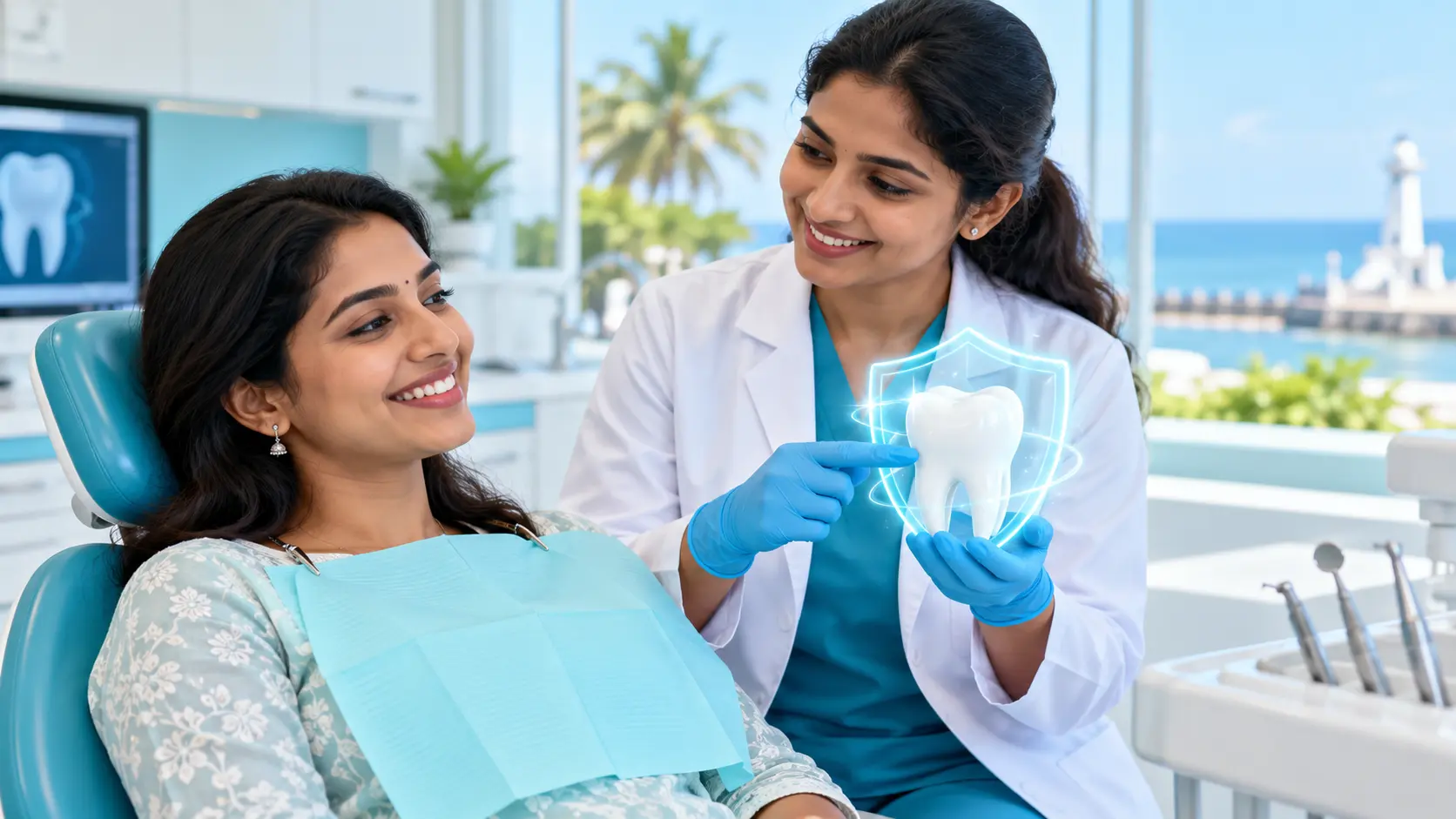
Dental Fluoride Treatment in Pondicherry for Stronger, Healthier Teeth
Dental fluoride treatment is a preventive procedure that helps strengthen tooth enamel and reduce the risk of cavities. During treatment, a dental professional applies a concentrated fluoride varnish, gel or foam directly to the teeth.
Fluoride supports the replacement of minerals lost when acids produced by oral bacteria attack the enamel. This process is called remineralisation. It can help strengthen weakened enamel and may slow or reverse the earliest stages of tooth decay before a physical cavity develops.
Professional dental fluoride treatment in Pondicherry may be recommended for children and adults based on their cavity risk, oral health, diet and medical needs.
What Is Dental Fluoride Treatment?
Fluoride is a naturally occurring mineral that helps protect teeth against acid attacks and tooth decay.
Professional fluoride treatment uses a higher concentration of fluoride than standard toothpaste. It is applied by a dentist or trained dental professional in a controlled amount.
Common professional fluoride products include:
- Fluoride varnish
- Fluoride gel
- Fluoride foam
- Prescription fluoride toothpaste
- Prescription fluoride mouth rinse
The appropriate product depends on the patient’s age, cavity risk and ability to use the treatment safely.
How Does Fluoride Protect the Teeth?
The enamel covering each tooth regularly loses and gains minerals.
When bacteria in dental plaque break down sugars and carbohydrates, they produce acids. These acids remove minerals from the enamel through a process known as demineralisation.
Fluoride helps by:
- Replacing minerals lost from enamel
- Supporting enamel remineralisation
- Making enamel more resistant to acid attacks
- Slowing the development of early tooth decay
- Reducing the activity of cavity-causing bacteria
- Protecting exposed root surfaces in suitable cases
Fluoride can strengthen early weakened areas, but it cannot rebuild a tooth after a cavity has formed a physical hole. Cavitated teeth may require a filling or another restorative treatment.
Who May Benefit from Fluoride Treatment?
Fluoride treatment may be recommended for children and adults with an increased risk of tooth decay.
You may benefit if you have:
- A history of frequent cavities
- Early signs of enamel demineralisation
- Deep grooves in the back teeth
- Orthodontic braces
- Difficulty cleaning the teeth effectively
- Dry mouth
- Exposed tooth roots
- Gum recession
- Sensitive teeth
- A diet high in sugary foods or drinks
- Crowns, bridges or other dental restorations
- Reduced saliva production caused by medication
- A medical condition affecting oral health
- Special healthcare needs
- Limited exposure to fluoride
- Recent dental decay
A dentist will assess your risk before deciding whether professional fluoride treatment is necessary.
Is Fluoride Treatment Suitable for Children?
Yes. Fluoride varnish is commonly used to help prevent cavities in children.
Children may be more vulnerable to tooth decay because:
- Brushing skills are still developing
- Back teeth can be difficult to clean
- Sugary snacks and drinks may be consumed frequently
- Newly erupted teeth require additional protection
- Deep grooves can trap food and plaque
A small amount of fluoride varnish can be painted onto the teeth by a dental professional. The procedure is quick and does not normally require drilling or anaesthesia.
Parents should continue supervising brushing at home. Children must use an age-appropriate amount of fluoride toothpaste and should be taught to spit rather than swallow it.
Can Adults Receive Fluoride Treatment?
Yes. Fluoride treatment is not only for children.
Adults may benefit when they have:
- Frequent tooth decay
- Gum recession
- Exposed tooth roots
- Dry mouth
- Sensitive teeth
- Crowns or bridgework
- Orthodontic treatment
- Reduced ability to clean their teeth
- Medical treatment that affects saliva
- A high-sugar diet
- Previous radiation treatment involving the head or neck
The dentist will decide whether fluoride varnish, prescription toothpaste or another preventive option is appropriate.
What Happens During Fluoride Treatment?
Professional fluoride treatment is usually simple and non-invasive.
Dental examination
The dentist examines the teeth and gums and evaluates the patient’s risk of developing cavities.
Cleaning and preparation
Visible food debris or plaque may be removed. The teeth may be gently dried depending on the fluoride product being used.
Fluoride application
A small amount of fluoride varnish is painted onto the tooth surfaces. Alternatively, fluoride gel or foam may be applied using a dental tray.
Setting period
Fluoride varnish begins setting when it contacts saliva. It remains in contact with the teeth for several hours before gradually wearing away.
The procedure usually takes only a few minutes. Drilling, injections and tooth removal are not required for a routine fluoride application.
What Are the Benefits of Fluoride Treatment?
Professional fluoride treatment may provide several preventive benefits:
- Strengthens tooth enamel
- Helps prevent new cavities
- Supports remineralisation of early weakened areas
- Protects newly erupted permanent teeth
- Helps protect exposed tooth roots
- May reduce certain types of tooth sensitivity
- Supports patients with dry mouth
- Complements daily brushing with fluoride toothpaste
- Provides additional protection for high-risk patients
- May reduce the need for future restorative treatment
Fluoride works best as part of a complete preventive-care plan that includes brushing, interdental cleaning, a balanced diet and regular dental examinations.
Fluoride Treatment and Dental Sealants
Fluoride treatment and dental sealants both help prevent cavities, but they work differently.
Fluoride strengthens the enamel across multiple tooth surfaces. Dental sealants create a protective coating over the deep grooves on the chewing surfaces of back teeth.
A child or adult at high risk of decay may benefit from both treatments:
- Fluoride protects and strengthens enamel
- Sealants protect deep pits and grooves
- Brushing and flossing remove plaque
- Regular dental check-ups identify early problems
The dentist can determine which preventive treatments are appropriate.
Is Dental Fluoride Treatment Safe?
Professionally applied fluoride is considered safe and effective when it is used in the correct amount and according to clinical guidance.
A dental professional controls:
- The type of fluoride product
- The amount applied
- The method of application
- The frequency of treatment
- The patient’s ability to spit
- Existing sources of fluoride
- Individual cavity risk
Dental fluorosis can develop when excessive fluoride is repeatedly swallowed while permanent teeth are developing. It does not develop from fluoride exposure after teeth have fully formed.
Children should always be supervised while brushing and should use only the recommended amount of toothpaste.
Inform the dentist about known allergies, medical conditions and previous reactions to dental products before treatment.
How Often Is Fluoride Treatment Needed?
The frequency of fluoride treatment depends on the patient’s cavity risk.
Some patients may be advised to receive professional fluoride treatment:
- Every three months
- Every six months
- During routine dental visits
- At another interval based on individual risk
Patients with a low risk of tooth decay may not require professional application as frequently as patients with dry mouth, repeated cavities or weak enamel.
The dentist will recommend a schedule after assessing the teeth, diet, oral hygiene and medical history.
What Should You Do After Fluoride Treatment?
Aftercare instructions depend on the fluoride product used.
Your dentist may advise you to:
- Avoid eating or drinking for a specified period
- Choose soft foods for the rest of the day
- Avoid very hot foods or drinks temporarily
- Avoid hard, sticky or crunchy foods for several hours
- Delay brushing or flossing for a specified period
- Avoid alcohol-containing mouthwash temporarily
A thin coating or slightly sticky feeling may remain after fluoride-varnish treatment. This is temporary and usually disappears after normal brushing resumes.
Always follow the specific aftercare instructions provided by your dentist because recommendations can differ between products.
Does Fluoride Treatment Replace Daily Brushing?
No. Professional fluoride treatment does not replace daily oral hygiene.
To protect your teeth:
- Brush twice daily using fluoride toothpaste
- Clean between your teeth every day
- Limit frequent sugary snacks
- Reduce sugary and acidic drinks
- Drink water regularly
- Attend routine dental check-ups
- Receive professional cleaning when recommended
- Follow personalised preventive advice
Fluoride is most effective when combined with good plaque control and healthy dietary habits.
How Much Does Dental Fluoride Treatment Cost in Pondicherry?
The cost of dental fluoride treatment in Pondicherry can depend on:
- Type of fluoride product
- Patient’s age
- Number of teeth being treated
- Individual cavity risk
- Need for professional cleaning
- Additional preventive treatments
- Frequency of application
- Whether dental sealants are also recommended
An accurate estimate can be provided after a dental examination and cavity-risk assessment.
Dental Fluoride Treatment at Smile and Glow Dental Care
Smile and Glow Dental Care provides preventive dental evaluation and fluoride-treatment guidance for children and adults in Pondicherry.
During your consultation, the dentist may:
- Examine the teeth and gums
- Check for existing cavities
- Identify early enamel changes
- Review previous dental decay
- Assess brushing and dietary habits
- Evaluate dry mouth and tooth sensitivity
- Recommend an appropriate fluoride product
- Explain aftercare instructions
- Plan follow-up preventive visits
- Recommend sealants when appropriate
Professional fluoride treatment is selected according to individual need rather than automatically recommended for every patient.
Frequently Asked Questions
Does fluoride treatment prevent cavities?
Fluoride strengthens enamel and helps prevent cavities. It can also support the remineralisation of early weakened areas before a physical cavity forms.
Can fluoride treatment repair a cavity?
Fluoride may slow or reverse very early enamel demineralisation. It cannot rebuild a tooth after decay has formed a hole. A cavitated tooth may require a filling.
Is fluoride treatment painful?
No. Fluoride application is generally painless and does not require drilling or an injection.
Is fluoride varnish safe for children?
Fluoride varnish is considered safe when applied in the correct amount by a trained professional. The dentist evaluates the child’s age and cavity risk before recommending it.
How long does fluoride treatment take?
Professional fluoride application normally takes only a few minutes. The complete appointment may take longer if an examination or cleaning is also performed.
How often should children receive fluoride varnish?
The frequency depends on the child’s cavity risk and oral health. A dentist may recommend treatment at regular intervals based on an individual assessment.
Can adults benefit from fluoride treatment?
Yes. Adults with dry mouth, exposed roots, gum recession, sensitivity, repeated cavities or multiple dental restorations may benefit from professional fluoride treatment.
Where can I get dental fluoride treatment in Pondicherry?
You can consult Smile and Glow Dental Care for a cavity-risk assessment and personalised dental fluoride treatment in Pondicherry.
Conclusion
Dental fluoride treatment is a simple preventive procedure that strengthens enamel, supports remineralisation and helps reduce the risk of cavities.
It can benefit both children and adults, especially those with frequent decay, dry mouth, exposed roots or difficulty maintaining effective oral hygiene.
Consult Smile and Glow Dental Care for a professional evaluation and personalised dental fluoride treatment plan in Pondicherry.
This article provides general educational information and is not a substitute for examination, diagnosis or personalised advice from a qualified dentist or healthcare professional.