


Dental Implant Treatment Guide in Pondicherry: Everything Patients Should Know
Dental implants are a modern tooth replacement option for people who have lost one or more teeth. A dental implant acts as an artificial tooth root and can support a replacement crown, bridge, or denture.
Dental implant treatment is planned according to the patient's oral health, jawbone condition, number of missing teeth, bite, and overall treatment requirements.
If you are searching for a dental implant treatment guide in Pondicherry, understanding the complete treatment process can help you prepare for your consultation and make informed decisions about tooth replacement.
Smile and Glow Dental Care provides dental implant consultation and restorative dental care in Pondicherry for patients looking for solutions for missing teeth.
What Is a Dental Implant?
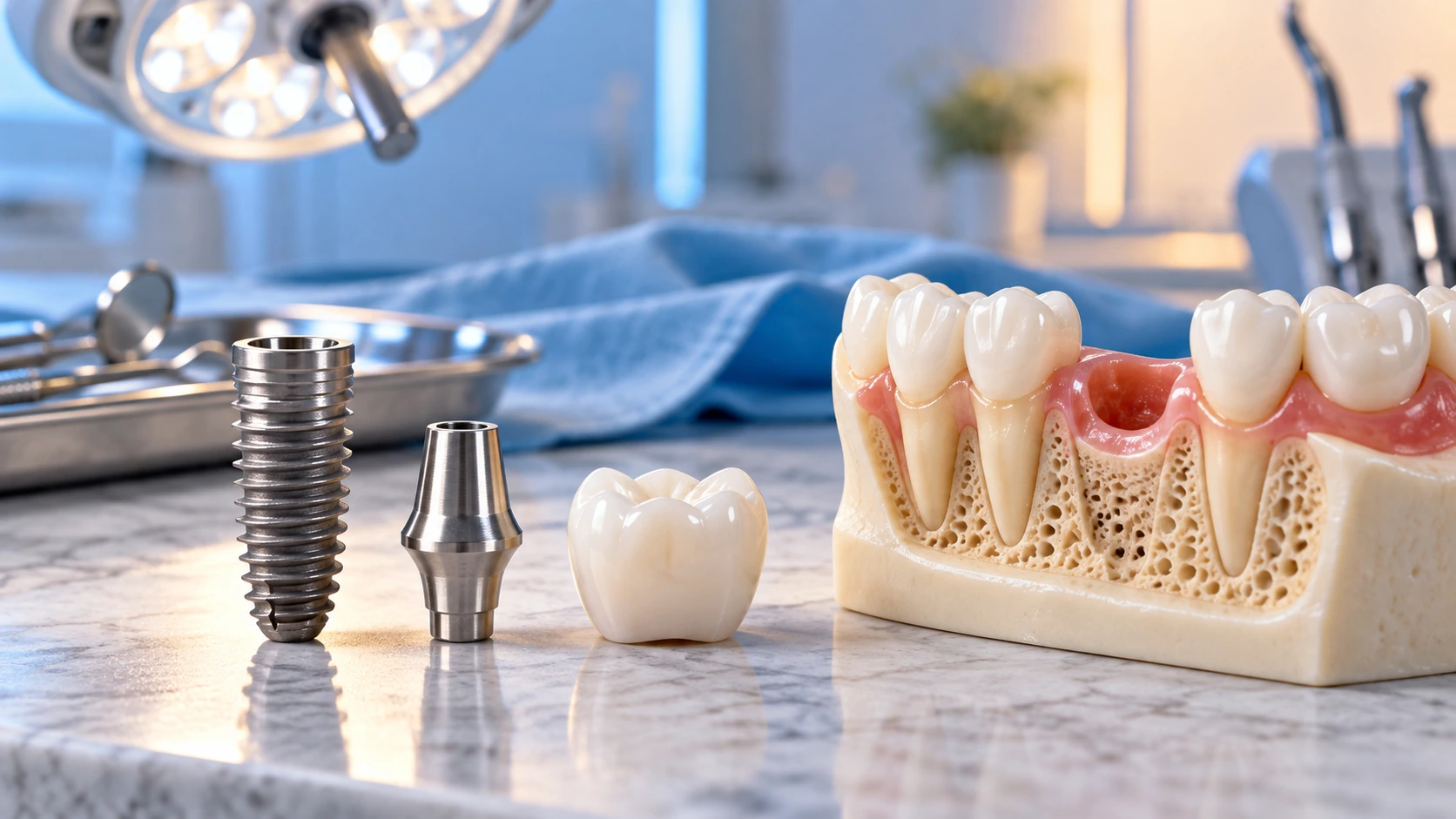
A dental implant is a small post, commonly made from titanium or another biocompatible material, that is placed into the jawbone to replace the root portion of a missing tooth.
A typical dental implant restoration includes:
- Dental implant fixture
- Abutment
- Dental crown
The implant is placed into the jawbone, the abutment connects the implant to the replacement tooth, and the crown provides the visible tooth-like restoration.
The exact implant system and restoration depend on the patient's individual treatment plan.
Why Are Dental Implants Used?
Dental implants can be used to replace:
- One missing tooth
- Several missing teeth
- Multiple adjacent teeth
- A complete dental arch in selected cases
Depending on the situation, implants may support:
- Individual crowns
- Implant-supported bridges
- Implant-supported dentures
- Full-arch restorations
The appropriate option depends on the number and position of missing teeth, bone condition, oral health, and treatment goals.
What Are the Benefits of Dental Implants?
Dental implants can provide several functional and restorative benefits.
Natural-Looking Tooth Replacement
A customized crown can be designed to complement the colour, shape, and appearance of surrounding teeth.
Improved Chewing Function
Replacing missing teeth can help restore chewing function.
Support for Dental Restorations
Implants can provide a stable foundation for crowns, bridges, and certain dentures.
Replacement of a Missing Tooth Without Using Adjacent Teeth
For selected single-tooth cases, an implant-supported crown can replace the missing tooth without requiring the adjacent natural teeth to serve as bridge supports.
Support for Certain Full-Arch Solutions
Multiple implants can be used as a foundation for selected full-arch restorative treatments.
Who May Be Suitable for Dental Implants?
Dental implant suitability is determined after a comprehensive dental examination.
Your dentist may evaluate:
- Jawbone condition
- Gum health
- Oral hygiene
- Number of missing teeth
- Tooth and root condition
- Bite
- Medical history
- Medications
- Smoking or tobacco use
- Treatment expectations
The American Dental Association recommends a comprehensive examination and discussion of treatment alternatives before proceeding with dental implants.
Is Everyone Eligible for Dental Implants?
Not everyone will be immediately suitable for implant placement.
Some patients may first need treatment for:
- Gum disease
- Tooth infection
- Insufficient bone
- Poor oral hygiene
- Other dental conditions
Additional procedures may sometimes be recommended before implant placement.
Your dentist will determine whether implant treatment is appropriate after evaluating your individual condition.
What Happens During a Dental Implant Consultation?
The consultation is the first major step in dental implant treatment.
Dental Examination
Your dentist evaluates:
- Missing tooth area
- Adjacent teeth
- Gums
- Bite
- Existing restorations
- Oral health
Medical History Review
Your dentist may ask about:
- Existing medical conditions
- Medications
- Previous dental treatment
- Allergies
- Smoking or tobacco habits
Dental Imaging
Depending on the case, imaging may include:
- Dental X-rays
- Panoramic imaging
- 3D dental imaging or CBCT
Imaging helps the dental team assess the available bone and surrounding structures.
Treatment Planning
The dentist then develops a personalized treatment plan based on:
- Implant position
- Number of implants
- Bone condition
- Restoration type
- Healing requirements
- Additional procedures
What Is the Dental Implant Treatment Process?
Dental implant treatment generally involves several stages.
Step 1: Initial Consultation
Your dentist examines your mouth and discusses your missing tooth or teeth.
Step 2: Diagnostic Imaging
Dental imaging helps evaluate the jawbone and treatment area.
Step 3: Treatment Planning
The implant position, restoration, and treatment sequence are planned.
Step 4: Tooth Extraction If Required
If a damaged or non-restorable tooth is still present, extraction may be required before or as part of implant treatment.
The timing depends on the individual case.
Step 5: Bone Grafting If Required
If there is insufficient bone to support the planned implant, bone augmentation may be considered.
Step 6: Implant Placement
The dental implant is surgically placed into the jawbone.
Step 7: Healing and Osseointegration
During healing, the implant integrates with the surrounding bone.
This biological process is called osseointegration.
Step 8: Abutment Placement
Once the implant has healed appropriately, an abutment may be connected to the implant.
Step 9: Crown or Prosthetic Restoration
The final crown, bridge, or denture is attached according to the treatment plan.
The exact sequence can vary between patients and treatment types.
What Is Osseointegration?
Osseointegration is the process in which the dental implant integrates with the surrounding jawbone.
This creates a stable foundation for the replacement tooth.
The length of the healing period varies depending on:
- Bone quality
- Implant location
- Implant stability
- Whether bone grafting was performed
- Individual healing
- Overall treatment plan
Your dentist will determine when the implant is ready for the next stage.
Do I Need Bone Grafting for Dental Implants?
Not everyone needs bone grafting.
Bone grafting may be considered when the jawbone does not provide enough volume or support for the planned implant.
Possible reasons for reduced bone volume include:
- Long-term tooth loss
- Previous infection
- Gum disease
- Trauma
- Natural bone changes after tooth loss
The American Academy of Implant Dentistry notes that bone augmentation may be required when available bone is inadequate for implant placement.
What Is a Sinus Lift?
A sinus lift is a procedure that may be considered for selected upper back-tooth implant cases when there is insufficient bone height beneath the sinus.
It is not required for every patient.
Your dentist evaluates the anatomy using appropriate imaging before deciding whether a sinus-related procedure is necessary.
Can a Dental Implant Be Placed Immediately After Extraction?
In selected cases, an implant may be placed at the time of tooth extraction.
However, immediate implant placement is not appropriate for every patient.
The decision depends on:
- Condition of the extraction site
- Bone availability
- Infection
- Gum and tissue condition
- Implant stability
- Overall treatment plan
Your dentist will determine the appropriate timing.
What Is a Single-Tooth Dental Implant?
A single-tooth implant replaces one missing tooth.
The restoration typically includes:
- One implant fixture
- One abutment
- One crown
This approach can provide an independent tooth replacement without requiring adjacent natural teeth to support a conventional bridge.
What Are Multiple Dental Implants?
When several teeth are missing, treatment may involve multiple implants.
Depending on the case, implants can support:
- Individual crowns
- Implant-supported bridges
- Other restorative solutions
The number of implants required depends on the treatment plan.
What Are Full-Arch Dental Implants?
Full-arch implant treatment is designed for patients who require replacement of most or all teeth in an upper or lower arch.
Depending on the individual case, treatment may involve multiple implants supporting a fixed or removable restoration.
Full-arch treatment requires detailed assessment and customized planning.
Are Dental Implants Painful?
Dental implant placement is performed using appropriate anaesthesia.
During the procedure, the treatment area is numbed to improve comfort.
After surgery, some patients may experience:
- Mild pain
- Swelling
- Bruising
- Minor bleeding
- Tenderness
These symptoms can occur after oral surgery and usually improve during recovery.
Your dentist will provide specific post-operative instructions based on your procedure.
How Long Does Dental Implant Treatment Take?
Dental implant treatment does not always happen in a single appointment.
The overall timeline depends on:
- Number of implants
- Bone condition
- Need for extraction
- Bone grafting
- Implant stability
- Healing
- Type of restoration
- Individual treatment response
Straightforward cases may have a shorter treatment pathway, while cases requiring additional procedures can take longer.
Your dentist can provide a personalized treatment timeline after examination.
Can Dental Implants Be Completed in One Day?
Some selected cases can receive an immediate or same-day temporary restoration.
However, this does not mean every patient completes the entire implant treatment in one day.
The suitability of immediate loading depends on factors such as:
- Implant stability
- Bone condition
- Location
- Number of implants
- Bite
- Overall treatment plan
A professional evaluation is required before considering this approach.
What Happens After Dental Implant Surgery?
After implant placement, your dentist provides specific recovery instructions.
You may be advised to:
- Follow prescribed medication instructions
- Maintain gentle oral hygiene
- Avoid disturbing the surgical area
- Follow dietary recommendations
- Attend scheduled follow-up visits
- Avoid smoking or tobacco as advised
Recovery differs between patients and procedures.
What Can I Eat After Dental Implant Surgery?
Your dentist may recommend softer foods during the early healing period.
Depending on your procedure, suitable options may include:
- Soft rice
- Idli
- Soft vegetables
- Yogurt
- Smooth foods
- Other foods recommended by your dentist
Avoid chewing directly over the surgical area until your dentist advises that it is safe.
Dental Implant Aftercare Tips
Good aftercare is important for healing and long-term maintenance.
Maintain Oral Hygiene
Keep your mouth clean while following your dentist's instructions around the surgical site.
Attend Follow-Up Visits
Regular appointments allow your dentist to monitor healing and implant health.
Avoid Tobacco
Smoking and tobacco use can negatively affect oral health and healing.
Protect the Implant
Avoid unnecessary pressure or habits that may damage the temporary or final restoration.
How Long Do Dental Implants Last?
Dental implants are designed as long-term tooth replacement solutions.
However, long-term success depends on factors such as:
- Oral hygiene
- Gum health
- Regular dental maintenance
- Bite forces
- Tobacco use
- Overall health
- Quality and condition of the restoration
An implant is not a replacement for regular dental care.
How Do You Maintain Dental Implants?
After your dental implant treatment:
- Brush regularly
- Clean between teeth and around the implant
- Follow your dentist's hygiene recommendations
- Attend regular dental checkups
- Maintain gum health
- Report changes or discomfort promptly
Dental implants require ongoing maintenance and professional monitoring.
Can Dental Implants Get Infected?
Yes.
The tissues surrounding an implant can develop inflammation or infection.
Potential warning signs include:
- Persistent swelling
- Bleeding
- Redness
- Pain
- Bad taste
- Changes around the implant
- Loosening of the restoration
Contact your dentist if you notice unusual symptoms around an implant.
Dental Implants vs Dental Bridges
Both implants and bridges can replace missing teeth, but they work differently.
Dental Implants
- Replace the missing tooth root
- Can support an individual crown
- Can support bridges or dentures
- Do not normally require adjacent teeth to support a single-tooth crown
Dental Bridges
- Replace missing teeth using a bridge
- Usually rely on supporting teeth
- May be suitable in selected situations
Your dentist can compare both options based on your oral health and treatment requirements.
Dental Implants vs Dentures
Dentures are removable tooth replacement appliances.
Dental implants are placed into the jawbone and can support fixed or removable restorations.
The appropriate option depends on:
- Number of missing teeth
- Bone condition
- Oral health
- Budget
- Maintenance preferences
- Treatment goals
Dental Implant Treatment for Older Adults
Age alone does not determine whether someone can receive dental implants.
The dentist may evaluate:
- Bone condition
- Gum health
- General health
- Medications
- Oral hygiene
- Ability to maintain regular dental care
Treatment should be planned individually.
Dental Implant Treatment for Patients With Diabetes
Patients with diabetes should inform their dentist about their condition and medications.
Well-controlled health conditions may be managed as part of implant planning, while poorly controlled diabetes can affect healing and treatment considerations.
Your dentist can coordinate care and determine whether additional precautions are needed.
Dental Implant Treatment for Smokers
Smoking and tobacco use can affect oral health and healing.
If you smoke or use tobacco, discuss this openly with your dentist before implant treatment.
Your dental team can provide guidance regarding risk reduction and healing.
Dental Implant Cost in Pondicherry
There is no single fixed price for dental implant treatment.
The total cost can vary depending on:
- Number of implants
- Implant system
- Crown material
- Abutment
- Diagnostic imaging
- Bone grafting
- Sinus lift
- Tooth extraction
- Temporary restoration
- Final restoration
- Treatment complexity
An individual consultation is required for an accurate treatment estimate.
What Should a Dental Implant Cost Estimate Include?
Before beginning treatment, ask whether the quotation includes:
- Consultation
- Dental imaging
- Implant fixture
- Implant placement
- Abutment
- Crown
- Temporary restoration
- Bone grafting if required
- Additional procedures
- Follow-up appointments
An itemized estimate makes it easier to understand the complete treatment cost.
How to Choose a Dental Implant Treatment Plan
Do not compare implant treatment based only on the advertised price.
Ask your dentist:
- Which implant system is recommended?
- Why is this implant suitable for my case?
- How much bone is available?
- Do I need bone grafting?
- What crown material is recommended?
- How many appointments are expected?
- What is the estimated healing period?
- What happens if additional treatment is required?
- What aftercare will be needed?
The American Dental Association recommends that patients discuss diagnosis, treatment options, alternatives, and individual needs with their dentist before proceeding with implant treatment.
Why Choose Smile and Glow Dental Care for Dental Implant Treatment in Pondicherry?
Smile and Glow Dental Care provides dental implant consultation and restorative dental care in Pondicherry.
Patients can discuss:
- Single-tooth implants
- Multiple dental implants
- Missing teeth
- Implant-supported restorations
- Crown options
- Bone-related treatment requirements
- Implant aftercare
The treatment plan is developed according to the patient's dental condition and restorative needs.
Dental Implant Consultation in Pondicherry
If you have one or more missing teeth, a professional consultation can help identify suitable replacement options.
During the consultation, your dentist can evaluate:
- Missing tooth area
- Bone condition
- Gum health
- Bite
- Adjacent teeth
- Overall oral health
The dentist can then explain whether dental implants, bridges, dentures, or another treatment may be appropriate.
Final Thoughts: Dental Implant Treatment Guide in Pondicherry
Dental implant treatment is a multi-stage process designed to replace missing teeth and restore oral function.
The treatment may involve:
- Dental examination
- Imaging
- Treatment planning
- Implant placement
- Healing and osseointegration
- Abutment placement
- Crown or prosthetic restoration
- Long-term maintenance
Not every patient requires the same procedure or number of appointments.
If you are considering dental implants in Pondicherry, a professional dental examination is the best starting point for understanding your treatment options, expected timeline, and estimated cost.
Frequently Asked Questions
What is a dental implant?
A dental implant is a post placed into the jawbone to replace the root of a missing tooth and support a replacement crown, bridge, or denture.
Who is suitable for dental implants?
Suitability depends on factors including jawbone condition, gum health, oral hygiene, medical history, number of missing teeth, and treatment requirements.
How long does dental implant treatment take?
Treatment time varies depending on bone condition, healing, number of implants, additional procedures, and the type of final restoration.
Is dental implant surgery painful?
Implant placement is performed using appropriate anaesthesia. Some swelling, soreness, bruising, or discomfort may occur during recovery.
Do I need bone grafting for a dental implant?
Not everyone needs bone grafting. It may be recommended when there is insufficient bone volume or support for the planned implant.
Can a dental implant be placed immediately after extraction?
In selected cases, immediate implant placement may be possible. The decision depends on the extraction site, bone, infection status, tissue condition, and implant stability.
Can dental implants be completed in one day?
Some selected cases can receive an immediate or same-day temporary restoration, but the complete implant treatment and healing process may take longer.
How long do dental implants last?
Dental implants are designed for long-term use, but their success depends on oral hygiene, gum health, maintenance, bite forces, tobacco use, and individual factors.
How do I take care of dental implants?
Maintain regular brushing and interdental cleaning, attend dental checkups, follow professional hygiene instructions, and report any changes around the implant.
How much do dental implants cost in Pondicherry?
The cost depends on the number of implants, implant system, crown, abutment, diagnostic imaging, bone grafting, additional procedures, and treatment complexity. An examination is needed for an individual estimate.
Where can I get dental implant treatment in Pondicherry?
Smile and Glow Dental Care provides dental implant consultation and restorative dental care in Pondicherry for patients with missing teeth.