


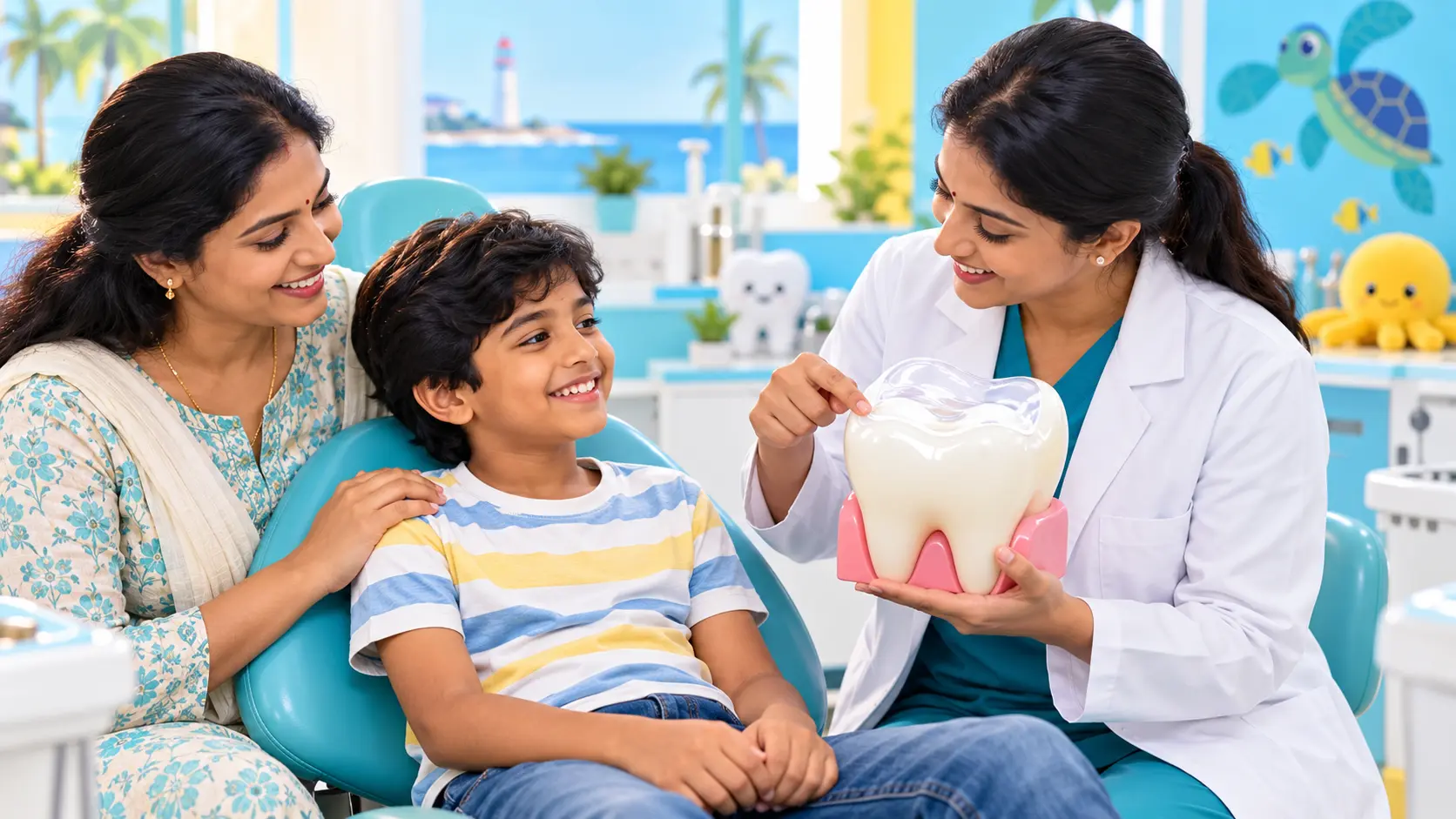
Dental Sealants for Children in Pondicherry: Strong Cavity Protection
Dental sealants are thin protective coatings applied to the chewing surfaces of back teeth. They cover the deep pits and grooves where food particles and cavity-causing bacteria can become trapped.
Children’s permanent molars can be difficult to clean effectively, even with regular brushing. Applying sealants soon after these teeth erupt can provide additional protection during the cavity-prone school years.
Parents looking for dental sealants for children in Pondicherry can consult Smile and Glow Dental Care for a cavity-risk assessment and personalised preventive treatment plan.
What Are Dental Sealants?
Dental sealants are liquid dental materials painted onto the chewing surfaces of molars and premolars.
The material flows into the natural pits and grooves before being hardened. Once set, it creates a smooth protective barrier that helps prevent food particles and bacteria from entering hard-to-clean areas.
Sealants are most commonly applied to:
- Permanent first molars
- Permanent second molars
- Premolars with deep grooves
- Selected primary teeth with a high cavity risk
- Early non-cavitated areas when clinically appropriate
A dentist must examine the tooth before deciding whether a sealant can be placed.
Why Do Children’s Back Teeth Need Sealants?
The chewing surfaces of molars contain natural grooves called pits and fissures. Some grooves are narrow and deep, making them difficult for toothbrush bristles to clean completely.
Plaque and food can remain inside these grooves and increase the risk of tooth decay.
Children may be particularly vulnerable because:
- Their brushing skills are still developing
- Newly erupted teeth can be difficult to clean
- Molars have deep grooves
- Sugary snacks may be consumed frequently
- School routines may affect brushing and diet
- Permanent teeth need long-term protection
A sealant forms a physical barrier over these vulnerable areas.
At What Age Should Children Get Dental Sealants?
Sealants are usually considered when permanent molars have fully erupted.
First permanent molars
The first permanent molars commonly erupt at approximately six years of age. They appear behind the primary teeth and do not replace any baby teeth.
Because these teeth must last throughout adulthood, early protection may be beneficial.
Second permanent molars
The second permanent molars commonly erupt at approximately twelve years of age. These teeth should also be assessed for deep grooves and cavity risk.
Primary teeth
Some children may benefit from sealants on primary molars when the teeth have deep pits, are difficult to clean or have a high risk of decay.
Age alone does not determine whether sealants are needed. Tooth eruption, groove depth, previous cavities, diet and oral hygiene are also considered.
Which Children May Benefit from Dental Sealants?
A dentist may recommend sealants if a child has:
- Deep pits and grooves in the molars
- Newly erupted permanent molars
- Previous cavities
- Early signs of enamel demineralisation
- Difficulty brushing effectively
- Orthodontic appliances
- A high-sugar diet
- Frequent sugary snacks or drinks
- Reduced saliva production
- A medical condition affecting oral health
- Special healthcare needs
- Limited access to regular dental care
- A family history of frequent tooth decay
Children with a low cavity risk may still benefit if their molars have deep, difficult-to-clean grooves.
How Are Dental Sealants Applied?
Applying dental sealants is usually quick, painless and non-invasive.
Dental examination
The dentist examines the tooth to check whether it is healthy, already decayed or suitable for sealing.
Cleaning the tooth
The chewing surface is cleaned to remove plaque and food debris.
Preparing the surface
A conditioning material is placed on the tooth for a short period. This prepares the enamel so the sealant can bond properly.
Rinsing and drying
The tooth is rinsed and kept dry. Moisture control is important for successful bonding.
Applying the sealant
The liquid sealant is painted carefully into the pits and grooves.
Hardening the material
A special curing light may be used to harden the sealant.
Checking the bite
The dentist checks that the child can bite comfortably and makes adjustments if necessary.
The process usually requires only a few minutes per tooth. It generally does not involve drilling or an injection.
What Are the Benefits of Dental Sealants?
Dental sealants provide several preventive benefits:
- Protect deep pits and grooves
- Reduce the risk of cavities in back teeth
- Create a smoother, easier-to-clean surface
- Protect newly erupted permanent molars
- Reduce food and plaque accumulation
- Avoid drilling when placed preventively
- Support children who struggle with brushing
- May reduce the need for future fillings
- Can protect teeth for several years
- Work alongside fluoride and regular oral care
Sealants are one part of a complete cavity-prevention plan and do not replace brushing, flossing or dental check-ups.
Can Sealants Be Placed Over Early Tooth Decay?
Sealants may be used on selected early, non-cavitated areas when the tooth surface has not formed a physical hole.
Sealing the area can isolate it from food and bacteria and may help prevent further progression. However, the tooth must be examined and monitored by a dentist.
Sealants should not be used to hide an established cavity. A tooth with cavitated decay may require a filling or another restorative treatment.
Are Dental Sealants Safe for Children?
Dental sealants are widely used as a preventive dental treatment for children and adolescents.
The dentist uses a small, controlled amount of material on the tooth’s surface. Once hardened, the sealant forms a protective coating over the grooves.
Parents should inform the dentist about:
- Known allergies
- Previous reactions to dental materials
- Medical conditions
- Current medication
- Special healthcare requirements
The dentist can explain the sealant material being used and answer any safety concerns before treatment.
How Long Do Dental Sealants Last?
Dental sealants can protect teeth for several years, but they are not permanent.
Their lifespan depends on:
- Sealant material
- Quality of bonding
- Child’s chewing habits
- Tooth grinding
- Oral hygiene
- Diet
- Regular dental monitoring
Sealants can gradually wear, chip or detach. During routine dental visits, the dentist will examine them and repair or replace them when necessary.
Do Sealants Make Teeth Feel Different?
A sealed tooth may feel slightly different to the tongue immediately after treatment. This sensation usually becomes unnoticeable after a short period.
The child should not experience ongoing pain. Contact the dentist if:
- The bite feels uneven
- The child cannot chew comfortably
- The tooth becomes painful
- The sealant appears damaged
- The material becomes loose
A small bite adjustment may sometimes be required.
What Should Children Do After Sealant Treatment?
Children can generally return to normal activities after sealant placement.
Aftercare may include:
- Following the dentist’s specific instructions
- Brushing twice daily with fluoride toothpaste
- Cleaning between the teeth as advised
- Avoiding chewing ice and very hard objects
- Limiting frequent sugary snacks and drinks
- Drinking water regularly
- Attending routine dental examinations
- Having the sealants checked periodically
Sealants protect only the treated chewing surfaces. Cavities can still develop between teeth and near the gumline if oral hygiene is poor.
Dental Sealants Versus Fluoride Treatment
Dental sealants and fluoride treatments prevent cavities in different ways.
Dental sealants
- Cover pits and grooves
- Mainly protect chewing surfaces
- Create a physical barrier
- Are commonly used on molars
Fluoride treatment
- Strengthens tooth enamel
- Supports remineralisation
- Protects multiple tooth surfaces
- Can benefit both children and adults
A child may benefit from both sealants and fluoride treatment based on cavity risk.
How Can Parents Help Prevent Cavities?
Parents and caregivers play an important role in protecting children’s teeth.
- Encourage brushing twice daily
- Use age-appropriate fluoride toothpaste
- Supervise younger children while brushing
- Teach children to spit out toothpaste
- Clean between teeth as advised
- Limit frequent sugary snacks
- Avoid sugary drinks before bedtime
- Encourage water between meals
- Schedule regular dental check-ups
- Ask the dentist about fluoride and sealants
- Seek early care for tooth pain or sensitivity
Preventive dental visits help identify problems before they cause pain or infection.
How Much Do Dental Sealants Cost in Pondicherry?
The cost of dental sealants for children in Pondicherry depends on:
- Number of teeth requiring sealants
- Type of sealant material
- Condition of the teeth
- Child’s cavity risk
- Need for professional cleaning
- Need for fluoride treatment
- Presence of early decay
- Follow-up or repair requirements
An accurate estimate can be provided after the dentist examines the child’s teeth.
Dental Sealants at Smile and Glow Dental Care
Smile and Glow Dental Care provides preventive dental evaluation and sealant treatment for children in Pondicherry.
During the appointment, the dentist may:
- Examine the child’s teeth and gums
- Check newly erupted permanent molars
- Assess deep pits and grooves
- Evaluate previous cavity experience
- Review brushing and dietary habits
- Identify early tooth decay
- Recommend sealants where appropriate
- Discuss fluoride treatment
- Explain home-care instructions
- Plan regular follow-up visits
Sealants are recommended according to the condition and cavity risk of each tooth.
Frequently Asked Questions
Are dental sealants painful?
No. Dental sealant application is generally painless and usually does not require drilling or an injection.
At what age should my child get sealants?
The first permanent molars commonly erupt around age six, and second permanent molars around age twelve. The dentist should assess these teeth soon after they fully erupt.
Can sealants be placed on baby teeth?
Yes. Sealants may be placed on selected primary molars when they have deep grooves or a high risk of developing cavities.
Do dental sealants replace brushing?
No. Children must continue brushing twice daily with fluoride toothpaste and cleaning between their teeth as advised.
How long do sealants last?
Dental sealants may protect teeth for several years. They should be checked during routine dental visits and repaired or replaced if they become worn or damaged.
Can a cavity develop underneath a sealant?
A properly placed and maintained sealant helps prevent bacteria and food from entering the grooves. Teeth must still be checked regularly because sealants can wear or detach.
Are fluoride treatment and sealants the same?
No. Fluoride strengthens enamel across tooth surfaces, while sealants create a protective barrier over the pits and grooves of back teeth.
Where can children get dental sealants in Pondicherry?
Parents can consult Smile and Glow Dental Care for a cavity-risk assessment and dental sealants for children in Pondicherry.
Conclusion
Dental sealants are a quick and painless preventive treatment that protects the deep grooves of children’s back teeth. They are particularly useful when placed soon after permanent molars erupt.
Sealants work best when combined with fluoride toothpaste, healthy dietary habits, regular dental examinations and professional fluoride treatment when recommended.
Consult Smile and Glow Dental Care to determine whether dental sealants are suitable for your child’s teeth.
This article provides general educational information and is not a substitute for examination, diagnosis or personalised advice from a qualified dentist or healthcare professional.