


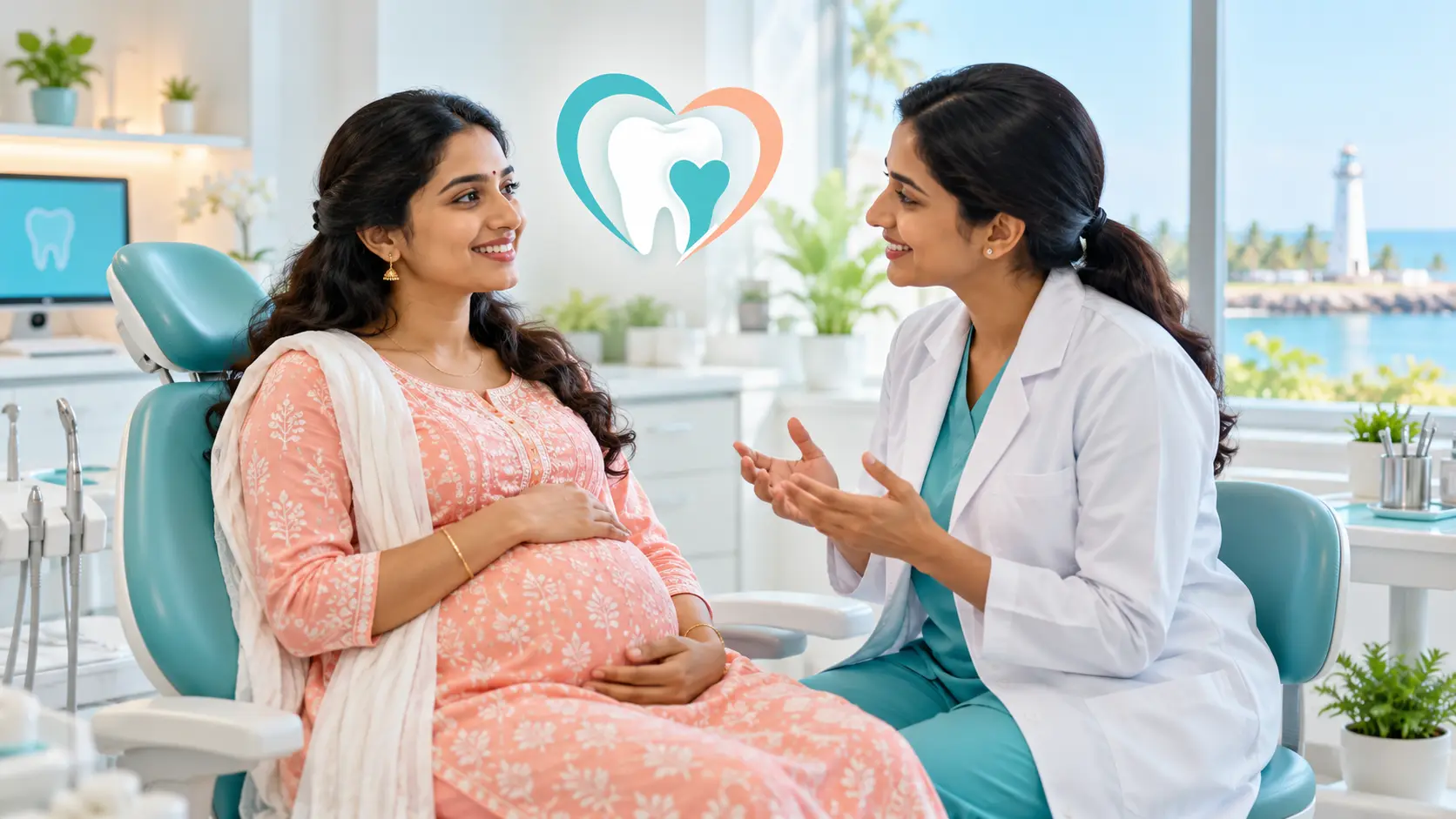
Dental Treatment for Pregnant Women in Pondicherry: Safe Care
Pregnancy causes many changes in the body, including changes that can affect the teeth and gums. Hormonal changes may make the gums more sensitive to plaque, while morning sickness, dietary changes and frequent snacking may increase the risk of enamel damage and tooth decay.
Pregnant women should not avoid dental care because of concerns about treatment safety. Preventive, diagnostic and necessary restorative dental treatment can generally be provided during pregnancy with appropriate clinical precautions.
If you are looking for dental treatment for pregnant women in Pondicherry, inform the dentist about your pregnancy, expected delivery date, medical history and medicines before treatment begins.
Why Is Dental Care Important During Pregnancy?
Maintaining good oral health during pregnancy helps prevent pain, infection and difficulty eating.
Dental care is important because pregnancy may be associated with:
- Swollen or sensitive gums
- Bleeding while brushing or flossing
- Increased plaque accumulation
- Pregnancy gingivitis
- Tooth sensitivity
- Enamel erosion from vomiting
- Dry mouth
- Increased snacking
- Greater cavity risk
- Difficulty maintaining normal oral hygiene
- Existing dental problems becoming worse
Untreated dental infection can cause severe pain, swelling and difficulty eating. Delaying necessary treatment may allow the problem to become more complicated.
What Dental Problems Are Common During Pregnancy?
Pregnancy gingivitis
Hormonal changes may make the gums respond more strongly to dental plaque.
Symptoms can include:
- Red or swollen gums
- Tender gums
- Bleeding while brushing
- Bleeding while flossing
- Bad breath
- Gum discomfort
Pregnancy does not directly cause gum disease, but hormonal changes can increase gum sensitivity to plaque. Professional cleaning and good oral hygiene can help control inflammation.
Tooth decay
Pregnant women may face an increased cavity risk because of:
- Frequent snacking
- Increased intake of sugary foods
- Difficulty brushing because of nausea
- Morning sickness
- Dry mouth
- Changes in normal routines
Enamel erosion
Repeated vomiting can expose the teeth to stomach acids. This may weaken the enamel and cause sensitivity.
Pregnancy-related gum growth
Some pregnant women may develop a localised gum swelling that bleeds easily. It is usually related to irritation and plaque, but any unusual gum growth should be professionally examined.
Existing dental infection
Untreated cavities, cracked teeth, gum disease and wisdom-tooth problems can become painful during pregnancy and may require prompt treatment.
Is Dental Treatment Safe During Pregnancy?
Preventive, diagnostic and necessary restorative dental care is generally considered safe during pregnancy.
Depending on clinical need, treatment may include:
- Dental examination
- Professional teeth cleaning
- Gum-disease treatment
- Dental fillings
- Treatment of tooth sensitivity
- Root canal treatment
- Emergency tooth extraction
- Treatment of dental infection
- Repair of broken fillings or crowns
- Dental X-rays when clinically necessary
- Local anaesthesia
Every patient is different. The dentist considers the pregnancy stage, medical history, medications and urgency of the dental problem before recommending treatment.
Patients with a high-risk pregnancy or significant medical condition may require coordination between the dentist and obstetrician.
Which Trimester Is Best for Dental Treatment?
Necessary dental treatment can be provided during any trimester. Treatment should not be delayed when there is pain, infection, swelling or dental trauma.
First trimester
During the first trimester:
- Inform the dentist as soon as pregnancy is confirmed
- Attend examinations and preventive appointments
- Seek immediate care for pain or infection
- Avoid unnecessary medication
- Discuss complex elective treatment with the dentist
Second trimester
The second trimester is often physically more comfortable for routine dental appointments because early nausea may have improved and lying in the dental chair may be easier.
Non-urgent treatment may be planned during this period when clinically appropriate.
Third trimester
Dental treatment can still be provided during the third trimester. However, appointments may be kept shorter because lying back for long periods can become uncomfortable.
The dental team may adjust the chair position and allow breaks to maintain comfort.
Urgent dental care should not be postponed simply because the patient is in the third trimester.
Are Dental X-Rays Safe During Pregnancy?
Dental X-rays may be taken during pregnancy when they are necessary for diagnosis or treatment planning.
Modern dental radiography uses a low radiation dose and focuses on a small area. The dentist will:
- Confirm that the X-ray is clinically necessary
- Use appropriate modern equipment
- Limit images to those required
- Follow current radiation-safety protocols
- Consider the patient’s pregnancy and medical history
Inform the dentist and X-ray technician that you are pregnant before any imaging is performed.
Avoiding a necessary X-ray may delay the diagnosis of an infection or another dental problem. The benefits and need for imaging should be discussed with the dentist.
Is Local Anaesthesia Safe During Pregnancy?
Local anaesthesia may be used during pregnancy when dental treatment requires numbing.
The dentist will select:
- An appropriate anaesthetic
- The lowest effective dose
- A technique suitable for the procedure
- Additional precautions based on medical history
Do not avoid necessary treatment solely because local anaesthesia may be required. Untreated dental pain and infection may create greater problems.
Inform the dentist about allergies, previous reactions, current medicines and any instructions provided by your obstetrician.
What Dental Treatments Should Not Be Delayed?
Dental conditions requiring prompt care may include:
- Severe toothache
- Dental abscess
- Facial swelling
- Broken or cracked tooth
- Deep tooth decay
- Infected wisdom tooth
- Gum infection
- Dental trauma
- Loose or broken restoration
- Pain that prevents eating or sleeping
Necessary treatments such as fillings, root canal treatment and extraction may be performed during pregnancy when clinically required.
Delaying treatment can allow infection to spread and may result in the need for more complex care.
Which Treatments May Be Postponed?
Purely elective cosmetic procedures may sometimes be postponed until after pregnancy when there is no health-related reason to complete them immediately.
Examples may include:
- Elective teeth whitening
- Non-urgent cosmetic reshaping
- Optional smile-makeover procedures
- Replacement of satisfactory restorations for appearance alone
The decision should be made with the dentist according to the patient’s needs and oral health.
Can Pregnant Women Take Dental Medicines?
Pregnant women should not self-medicate for tooth pain or infection.
Tell the dentist about:
- Prescription medicines
- Over-the-counter products
- Vitamins and supplements
- Known allergies
- Previous medication reactions
- Medical advice from the obstetrician
The dentist will select medication based on the pregnancy stage, dental condition and overall health. Coordination with the obstetrician may be required.
Do not:
- Use leftover antibiotics
- Change prescribed medication independently
- Place aspirin directly on the tooth or gums
- Take herbal remedies without medical advice
- Exceed the recommended dose of pain medicine
Antibiotics are not required for every toothache. Definitive dental treatment is usually necessary to remove the source of pain or infection.
How Can Morning Sickness Affect Teeth?
Vomiting exposes the teeth to stomach acid. Repeated acid exposure can weaken enamel and increase sensitivity.
After vomiting:
- Rinse your mouth with plain water
- Use a dentist-approved neutralising rinse if advised
- Avoid brushing immediately
- Wait approximately 30 minutes before brushing
- Use a soft-bristled toothbrush
- Brush with fluoride toothpaste
- Drink water regularly
Brushing immediately after vomiting may spread acid across temporarily softened enamel.
If toothpaste triggers nausea:
- Try a smaller toothbrush head
- Brush at a different time
- Use a mild-flavoured fluoride toothpaste
- Take short breaks while brushing
- Ask the dentist for personalised advice
How Can Pregnant Women Prevent Gum Problems?
Good plaque control can reduce pregnancy-related gum inflammation.
- Brush twice daily with fluoride toothpaste
- Use a soft-bristled toothbrush
- Clean between the teeth every day
- Spit after brushing without immediately rinsing
- Attend professional cleaning when recommended
- Limit frequent sugary snacks
- Drink water between meals
- Avoid smoking and tobacco products
- Seek care for bleeding or swollen gums
- Maintain regular dental examinations
Do not stop brushing because the gums bleed. Brush gently and arrange a dental examination to identify the cause.
Pregnancy Dental Appointment Checklist
Before attending your dental appointment:
- Inform the clinic that you are pregnant
- Mention the pregnancy week or trimester
- Provide the expected delivery date
- Bring a list of current medicines
- Mention allergies and medical conditions
- Explain whether the pregnancy is high risk
- Share your obstetrician’s instructions
- Inform the dentist about nausea or dizziness
- Ask questions about the recommended treatment
Communication helps the dental team plan safe and comfortable care.
When Should a Pregnant Woman See a Dentist?
Arrange a dental appointment if you experience:
- Toothache
- Bleeding gums
- Swollen or painful gums
- Persistent bad breath
- Tooth sensitivity
- A broken tooth
- Pain while chewing
- A loose filling or crown
- A lump or unusual gum growth
- A mouth ulcer that does not heal
- Wisdom-tooth pain
- Signs of dental infection
A dental check-up is also recommended when it has been a long time since the previous examination, even if there is no pain.
When Is Emergency Care Required?
Seek urgent dental or medical care for:
- Rapidly increasing facial swelling
- Severe dental pain affecting sleep
- Fever with dental swelling
- Difficulty swallowing
- Difficulty breathing
- Swelling of the mouth, throat or neck
- Uncontrolled bleeding
- Serious injury to the teeth or jaw
- Inability to eat or drink
- Signs of an allergic reaction
Difficulty breathing or swallowing with facial or throat swelling requires emergency medical attention.
How Much Does Pregnancy Dental Treatment Cost in Pondicherry?
The cost of dental treatment during pregnancy depends on the dental condition and procedure required.
Factors may include:
- Dental consultation
- Professional cleaning
- Gum treatment
- Dental X-rays
- Type of filling
- Root canal treatment
- Tooth extraction
- Treatment of infection
- Emergency dental care
- Need for follow-up visits
An accurate estimate can be provided after a dental examination. Pregnancy itself does not determine the price; the required dental treatment does.
Dental Care for Pregnant Women at Smile and Glow Dental Care
Smile and Glow Dental Care provides preventive, diagnostic and necessary dental care for pregnant women in Pondicherry.
During the consultation, the dentist may:
- Review the pregnancy stage
- Discuss medical history and medication
- Examine the teeth and gums
- Check for tooth decay and infection
- Assess bleeding or swollen gums
- Evaluate morning-sickness-related enamel changes
- Recommend professional cleaning
- Plan necessary restorative treatment
- Explain medication and anaesthesia considerations
- Coordinate with the obstetrician when appropriate
The treatment plan will be based on dental needs, pregnancy stage and overall health.
Frequently Asked Questions
Can pregnant women visit the dentist?
Yes. Pregnant women should attend dental examinations and receive necessary preventive or restorative treatment. Inform the dentist about the pregnancy before treatment.
Is teeth cleaning safe during pregnancy?
Professional dental cleaning is generally safe during pregnancy and may help control plaque, bleeding gums and pregnancy gingivitis.
Can a pregnant woman receive a dental filling?
Yes. Untreated tooth decay may be restored during pregnancy when clinically necessary. The dentist will select suitable materials and precautions.
Can root canal treatment be performed during pregnancy?
Yes. Root canal treatment may be performed when required to control pain and infection. Delaying an infected tooth may result in more serious problems.
Can a tooth be extracted during pregnancy?
A tooth may be extracted during pregnancy when it cannot be saved or when infection, severe pain or another urgent condition makes removal necessary.
Are dental X-rays allowed during pregnancy?
Dental X-rays may be taken when clinically necessary. Modern dental imaging uses low radiation doses, and the dental team follows current safety protocols.
What should I do if my gums bleed during pregnancy?
Continue gentle brushing and interdental cleaning, and arrange a dental examination. Bleeding gums may indicate pregnancy gingivitis or gum disease.
Where can pregnant women get dental treatment in Pondicherry?
Pregnant women can consult Smile and Glow Dental Care for a dental examination and personalised pregnancy dental treatment plan in Pondicherry.
Conclusion
Dental care is an important part of maintaining health during pregnancy. Preventive, diagnostic and necessary restorative treatment can generally be provided safely with appropriate precautions.
Tooth pain, swelling and infection should not be ignored or postponed. Inform the dentist about your pregnancy, medical history and medications so that treatment can be planned appropriately.
Consult Smile and Glow Dental Care for professional dental treatment for pregnant women in Pondicherry.
This article provides general educational information and is not a substitute for personalised advice from a dentist, obstetrician or other qualified healthcare professional.