


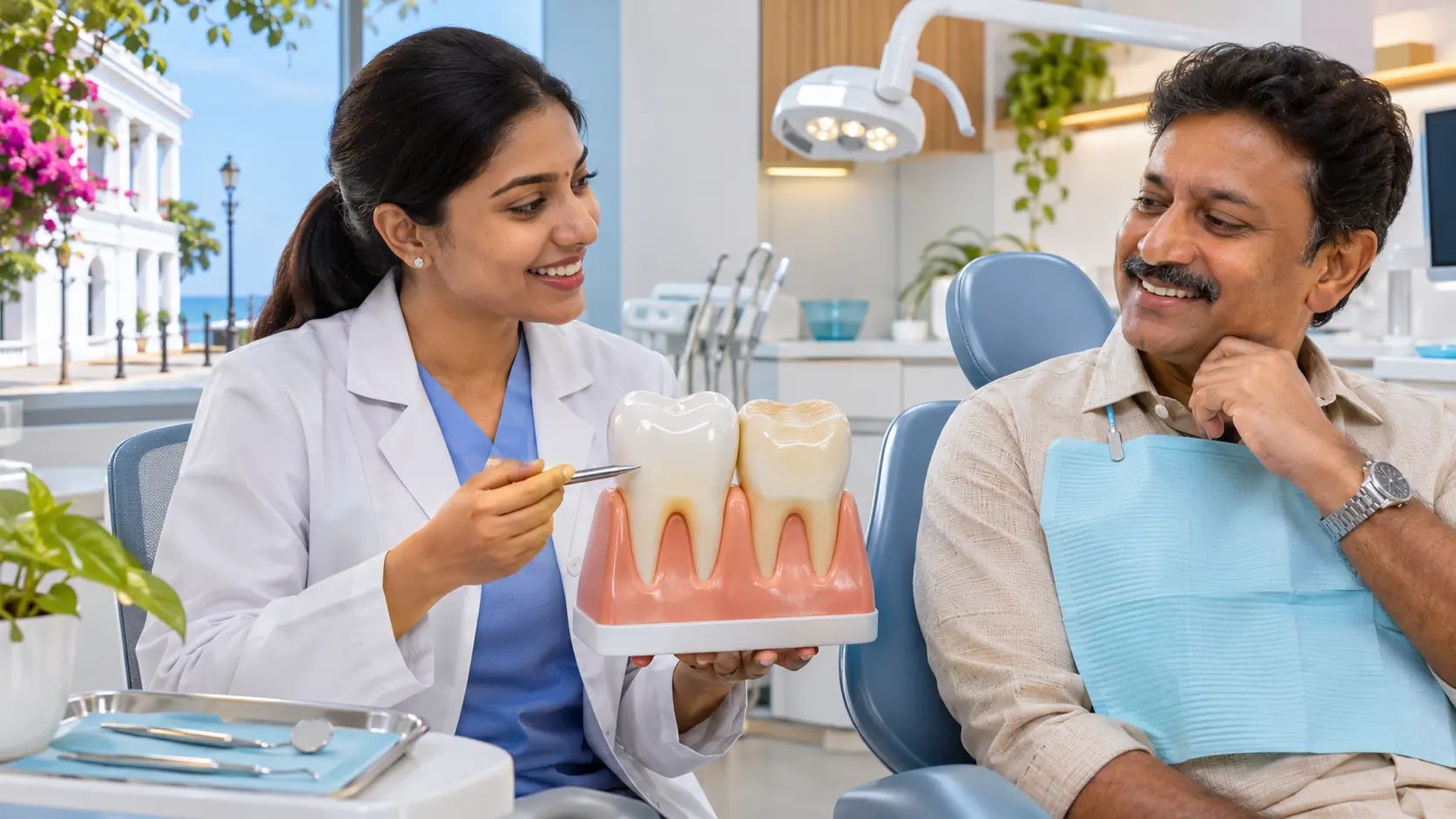
Dental Treatment for Worn Tooth Enamel in Pondicherry
Tooth enamel is the hard outer covering that protects the sensitive inner layers of a tooth. Although enamel is highly durable, it can gradually wear away through acid exposure, grinding, aggressive brushing or a combination of chemical and mechanical factors.
Dental treatment for worn tooth enamel in Pondicherry begins by identifying why the tooth surface is being lost. Treating only the visible damage without controlling the cause may allow wear to continue around or beneath a restoration.
At Smile & Glow Dental Care, an enamel-wear assessment may include examining the teeth, bite, dietary habits, brushing technique, sensitivity, medical history and possible teeth-grinding or acid-reflux symptoms.
Quick Answer: Can Worn Tooth Enamel Be Repaired?
Enamel that has been physically lost does not grow back. However, early surface softening may sometimes be strengthened through fluoride, saliva support and reduction of acid exposure.
When tooth structure has already been lost, treatment may include:
- Fluoride or remineralising care for early changes
- Desensitising toothpaste or professional treatment
- Tooth-coloured dental bonding
- Fillings
- Veneers in selected cases
- Onlays or crowns for more extensive damage
- A custom night guard when grinding contributes
- Root canal treatment if severe wear affects the tooth’s nerve
- Medical evaluation when acid reflux or repeated vomiting is involved
The correct treatment depends on the cause, depth, location and rate of wear.
What Is Worn Tooth Enamel?
Worn enamel means that part of the protective outer tooth surface has become thinner or has been lost.
The appearance varies according to the cause. Teeth may look:
- Smooth or glossy
- Flattened
- Rounded at the edges
- Shorter than before
- Chipped or cracked
- Yellowish as the underlying dentine becomes more visible
- Cupped on the chewing surfaces
- Thin or translucent at the front edges
- Uneven around existing fillings
Enamel wear is different from tooth decay. Dental erosion is primarily caused by acids dissolving the tooth surface without bacteria being the direct cause. Tooth decay involves bacterial acids produced from sugars.
A patient may have erosion, tooth decay or both conditions at the same time.
What Causes Tooth Enamel to Wear Away?
Tooth-surface loss is usually classified according to the process causing it.
Dental Erosion
Dental erosion occurs when acids soften and dissolve mineralised tooth structure.
External sources of acid may include:
- Carbonated soft drinks
- Energy and sports drinks
- Frequent fruit juice
- Citrus drinks
- Sour sweets
- Vinegar-containing foods
- Frequently sipping acidic beverages
- Swishing or holding acidic drinks in the mouth
Internal sources may include:
- Gastro-oesophageal reflux
- Frequent heartburn
- Recurrent vomiting
- Pregnancy-related vomiting
- Certain digestive conditions
- Eating disorders involving vomiting
The frequency and duration of exposure can be as important as the total amount consumed.
Teeth Grinding and Clenching
Grinding or clenching, known as bruxism, can wear down the biting surfaces and edges of teeth.
Possible signs include:
- Flattened teeth
- Chipped edges
- Cracks
- Morning jaw tightness
- Jaw-muscle tenderness
- Headaches after waking
- Damaged fillings or crowns
- A sleeping partner hearing grinding sounds
A night guard may protect the teeth, but the dentist may also recommend assessing sleep problems, stress, medicines or other contributing factors.
Tooth-to-Tooth Wear
Attrition is wear caused by teeth rubbing directly against each other. Some attrition occurs gradually with age, but accelerated wear may be associated with grinding, clenching or an unfavourable bite.
Abrasion
Abrasion is mechanical wear caused by an external object or habit. Possible contributors include:
- Forceful brushing
- Hard-bristled toothbrushes
- Highly abrasive cleaning products
- Habitually holding objects between the teeth
- Improper use of dental tools
- Oral jewellery contacting the teeth
Normal brushing with a soft toothbrush and appropriate fluoride toothpaste is unlikely to damage healthy enamel significantly.
Reduced Saliva and Dry Mouth
Saliva helps neutralise acids and supplies minerals that protect teeth. Reduced saliva may increase the risk of erosion, sensitivity and tooth decay.
Dry mouth may be associated with:
- Certain medicines
- Dehydration
- Medical conditions
- Radiation treatment
- Mouth breathing
- Tobacco or alcohol use
Patients with persistent dry mouth should receive an individual dental and medical assessment.
Early Signs of Worn Tooth Enamel
Enamel wear can progress slowly, and the early stages may not cause obvious pain.
Warning signs include:
- Sensitivity to cold, hot or sweet foods
- Teeth becoming more yellow
- Smooth, shiny surfaces
- Rounded tooth edges
- Small chips
- Flattened biting surfaces
- Shallow depressions or cupping
- Transparent front-tooth edges
- Existing fillings appearing raised
- Changes in the bite
- Teeth looking shorter
- Food collecting in newly worn areas
These changes can also occur for other reasons. A dental examination is required to confirm whether enamel wear is active and identify its cause.
Why Do Worn Teeth Become Sensitive?
Enamel protects the underlying dentine. When enamel becomes thin or is lost, temperature and other stimuli can reach the dentine more easily.
Sensitivity may occur with:
- Cold water
- Hot drinks
- Sweet foods
- Acidic foods
- Cold air
- Toothbrushing
- Touch near the gumline
Sensitivity does not always mean enamel erosion. Gum recession, tooth decay, cracked teeth, leaking fillings and recent dental treatment can produce similar symptoms.
Sudden or severe sensitivity should be assessed before using over-the-counter products for an extended period.
How Is Tooth Enamel Wear Diagnosed?
A dentist may assess:
- The pattern and location of wear
- Changes in tooth shape
- Amount of exposed dentine
- Cracks or fractures
- Existing fillings and crowns
- Sensitivity
- Tooth-decay risk
- Gum recession
- Bite relationship
- Signs of grinding or clenching
- Diet and beverage habits
- Acid-reflux or vomiting history
- Medicines and dry-mouth symptoms
Diagnostic records may include:
- Clinical photographs
- Digital scans or impressions
- Dental X-rays
- Bite analysis
- Sensitivity testing
- Comparison with previous dental records
Monitoring photographs or digital scans over time can help determine whether tooth wear is stable or progressing.
Treatment Options for Worn Tooth Enamel
Treatment should address both the damaged teeth and the underlying cause.
Fluoride and Remineralising Care
For early enamel softening without significant structural loss, the dentist may recommend:
- Fluoride toothpaste
- Professional fluoride varnish
- Prescription-strength fluoride products when appropriate
- Remineralising products selected for the patient
- Changes to acidic food and drink habits
- Measures to improve saliva protection
Fluoride may help strengthen the remaining surface, but it cannot recreate enamel that has already been physically lost.
Desensitising Treatment
Mild or moderate sensitivity may be managed using:
- Desensitising toothpaste
- Fluoride varnish
- Professionally applied sensitivity agents
- Bonding over exposed areas
- Treatment of associated gum recession
- Restoration of worn or cracked surfaces
Desensitising toothpaste may require consistent use before improvement is noticed. The dentist should investigate persistent pain to exclude decay, cracks or nerve involvement.
Dental Bonding
Dental bonding uses tooth-coloured resin to rebuild selected worn or chipped areas.
It may help:
- Restore front-tooth edges
- Cover exposed dentine
- Improve tooth shape
- Reduce sensitivity
- Correct minor unevenness
- Protect localised worn surfaces
Bonding is generally conservative because less natural tooth preparation may be required than for some other restorations.
However, bonding can chip, stain or wear and may need maintenance or replacement, particularly in patients who grind their teeth.
Tooth-Coloured Fillings
Fillings may restore localised worn areas, especially when tooth structure has been lost near the gumline or on a chewing surface.
The dentist will evaluate whether the restoration can withstand the patient’s bite and whether ongoing acid exposure or brushing trauma has been controlled.
Dental Veneers
Veneers cover the front surface of selected teeth. They may be considered when enamel wear affects tooth shape, colour or front-tooth proportions.
Veneers are not appropriate for every patient. Suitability depends on:
- Amount of remaining enamel
- Tooth position
- Bite forces
- Grinding habits
- Gum health
- Extent of structural loss
- Existing restorations
- Cosmetic expectations
A night guard may be recommended when grinding poses a risk to veneers, but protection cannot eliminate every possibility of fracture.
Dental Onlays and Crowns
Onlays or crowns may be required when a tooth has lost substantial structure or requires broader protection.
These restorations may:
- Rebuild the biting surface
- Restore tooth height
- Protect weakened tooth structure
- Improve chewing function
- Support a planned bite reconstruction
Crowns require preparation of the natural tooth and should be recommended only after considering conservative alternatives.
When several teeth are severely worn, treatment may require detailed planning to rebuild the bite gradually and safely.
Root Canal Treatment
Root canal treatment is not automatically required for worn enamel.
It may become necessary if severe wear, a deep crack or another condition causes irreversible inflammation or infection inside the tooth.
Symptoms that may suggest nerve involvement include:
- Severe or lingering pain
- Spontaneous toothache
- Pain that disrupts sleep
- Swelling
- Pus
- Significant pain when biting
- Persistent sensitivity after the trigger is removed
Clinical tests and dental X-rays are needed before recommending root canal treatment.
Custom Night Guard
A dentist may recommend a custom night guard when grinding or clenching is contributing to tooth damage.
A night guard can:
- Separate the upper and lower teeth
- Reduce direct tooth-to-tooth contact
- Protect restorations
- Reduce additional wear in selected patients
A guard protects teeth but may not stop the grinding habit itself. Jaw pain, headaches, sleep problems or suspected sleep apnoea may require further assessment.
Treating Acid Reflux-Related Enamel Wear
Stomach acid can affect the inner and chewing surfaces of teeth, sometimes before the patient recognises reflux symptoms.
If the wear pattern suggests gastric acid exposure, the dentist may recommend medical evaluation.
Patients should not attempt to manage chronic reflux only with dental products. A doctor can investigate and manage the underlying digestive condition.
After reflux or vomiting:
- Rinse the mouth gently with water
- Avoid immediately scrubbing the teeth
- Allow saliva time to neutralise the acid
- Brush later using a soft toothbrush and fluoride toothpaste
- Seek medical advice if reflux or vomiting is frequent
Do not use baking soda or other alkaline products repeatedly unless advised by a qualified professional.
Protecting Teeth From Dietary Acid
Practical steps include:
- Reduce the frequency of acidic drinks
- Keep acidic food and drinks to mealtimes where practical
- Choose plain water between meals
- Avoid swishing acidic drinks around the mouth
- Do not hold soft drinks or juice against the teeth
- Use a straw positioned away from the teeth when suitable
- Rinse with water after acidic food or drinks
- Wait before brushing after significant acid exposure
- Chew sugar-free gum when appropriate to stimulate saliva
- Discuss persistent dry mouth with a dentist
Even sugar-free soft drinks may be acidic. A product does not have to taste sweet to contribute to erosion.
How Long Should You Wait to Brush After Acidic Food?
Acid temporarily softens the enamel surface. Brushing immediately may increase mechanical wear.
After acidic food, drinks, reflux or vomiting, rinse with water and allow approximately 30 to 60 minutes before brushing. Individual advice may vary according to enamel condition and risk.
When brushing, use a soft-bristled toothbrush, fluoride toothpaste and gentle pressure.
Foods and Drinks Commonly Associated With Erosion
Potential sources include:
- Carbonated soft drinks
- Sports drinks
- Energy drinks
- Citrus juice
- Frequent lemon water
- Sour sweets
- Fruit-flavoured drinks
- Some fruit teas
- Vinegar-containing foods
- Alcoholic drinks with acidic mixers
These items do not need to be completely avoided by every patient. The dentist may recommend reducing frequency, limiting contact time and choosing safer alternatives based on the individual wear pattern.
Can Whitening Products Damage Worn Enamel?
Whitening products do not rebuild enamel. Some products may temporarily increase sensitivity, particularly when dentine is already exposed.
Highly abrasive whitening powders, charcoal products or aggressive home methods may worsen surface wear or gum irritation.
Patients with enamel loss, cracks, decay, exposed roots or sensitivity should have a dental examination before whitening.
Is Tooth Enamel Wear Preventable?
Many forms of accelerated tooth wear can be reduced by identifying risk factors early.
Preventive steps include:
- Brush twice daily with fluoride toothpaste
- Use a soft-bristled toothbrush
- Avoid excessive brushing pressure
- Limit frequent acidic drinks and snacks
- Drink plain water regularly
- Manage reflux with medical guidance
- Address recurrent vomiting with appropriate healthcare support
- Treat persistent dry mouth
- Avoid tobacco
- Use a custom guard when prescribed
- Attend regular dental examinations
- Monitor existing wear over time
Prevention is especially important because lost enamel cannot naturally regenerate.
When Should You See a Dentist?
Arrange a dental examination if you notice:
- Increasing tooth sensitivity
- Teeth becoming shorter or flatter
- Yellow dentine becoming visible
- Chipping or cracking
- Transparent tooth edges
- Frequent morning jaw pain
- Changes in the bite
- Repeatedly broken fillings
- Persistent heartburn or reflux
- Recurrent vomiting
- A change in the appearance of several teeth
Seek prompt care for swelling, severe pain, pus, a broken tooth with a sharp edge or pain that interferes with sleep or eating.
Difficulty breathing or swallowing with facial or oral swelling requires urgent medical attention.
How Much Does Worn-Enamel Treatment Cost in Pondicherry?
The cost depends on the number of affected teeth, severity of wear and selected treatment.
Factors may include:
- Clinical examination and diagnostic records
- Dental X-rays
- Fluoride or sensitivity treatment
- Dental bonding
- Fillings
- Veneers, onlays or crowns
- Custom night guard
- Root canal treatment when necessary
- Comprehensive bite rehabilitation
- Follow-up and maintenance
A personalised estimate can be given after the wear pattern, bite and remaining tooth structure have been assessed.
Worn-Enamel Treatment at Smile & Glow Dental Care
Smile & Glow Dental Care provides assessment and treatment planning for enamel erosion and worn teeth in Pondicherry.
Care may include:
- Tooth-wear examination
- Sensitivity assessment
- Bite and grinding evaluation
- Diet and acid-exposure review
- Fluoride and preventive care
- Dental bonding or fillings
- Veneer, onlay or crown assessment
- Custom night-guard planning
- Monitoring with photographs or digital scans
- Referral for medical assessment when appropriate
The treatment objective is to identify the cause, slow further wear, reduce sensitivity and restore damaged teeth as conservatively as possible.
Frequently Asked Questions
Can Tooth Enamel Grow Back?
Enamel that has been physically lost cannot grow back. Early surface softening may sometimes be strengthened through fluoride, saliva and reduced acid exposure, but deeper structural loss requires dental restoration when treatment is indicated.
How Do I Know If My Enamel Is Worn?
Common signs include sensitivity, yellowish teeth, smooth or glossy surfaces, rounded edges, small chips, flattened biting surfaces and transparent front-tooth edges. A dentist can confirm the cause.
What Is the Best Treatment for Worn Enamel?
There is no single treatment for every patient. Early wear may need preventive fluoride care, while structural loss may require bonding, fillings, veneers, onlays or crowns.
Can Acidic Drinks Damage Enamel?
Yes. Frequent contact with soft drinks, energy drinks, sports drinks, fruit juice and other acidic products may soften and progressively erode enamel.
Should I Brush Immediately After Drinking Something Acidic?
No. Rinse with water and allow approximately 30 to 60 minutes before brushing. Acid temporarily softens the tooth surface, making immediate brushing potentially more damaging.
Can a Night Guard Restore Worn Teeth?
No. A night guard cannot rebuild lost tooth structure. It may protect teeth and restorations from further grinding-related damage while other treatments restore affected areas.
Can Worn Enamel Cause Tooth Sensitivity?
Yes. As enamel becomes thinner, the underlying dentine may become exposed, causing sensitivity to cold, hot, sweet foods, air or touch.
Do All Worn Teeth Need Crowns?
No. Minor or moderate wear may be monitored or treated with fluoride, bonding or fillings. Crowns are generally considered when substantial tooth structure has been lost or broader protection is required.
Book a Worn-Enamel Assessment in Pondicherry
If your teeth have become sensitive, yellow, flattened, chipped or shorter, schedule a dental assessment at Smile & Glow Dental Care in Pondicherry.
A complete evaluation can identify whether the wear is caused by dietary acid, reflux, grinding, brushing habits or several combined factors. Early intervention can help reduce further tooth-surface loss and preserve more natural tooth structure.
This article provides general educational information and does not replace a clinical examination, diagnosis or personalised treatment advice from a qualified dentist or healthcare professional.