


Digital Dentistry Services in Pondicherry: Complete Guide
Digital dentistry is transforming the way modern dental care is diagnosed, planned, designed, and delivered. Instead of relying only on conventional impressions and manual workflows, digital dental technology can provide detailed digital records that support selected treatments.
If you are searching for digital dentistry services in Pondicherry, it is useful to understand how digital technology can be used for diagnosis, treatment planning, restorations, cosmetic dentistry, orthodontics, and dental implants.
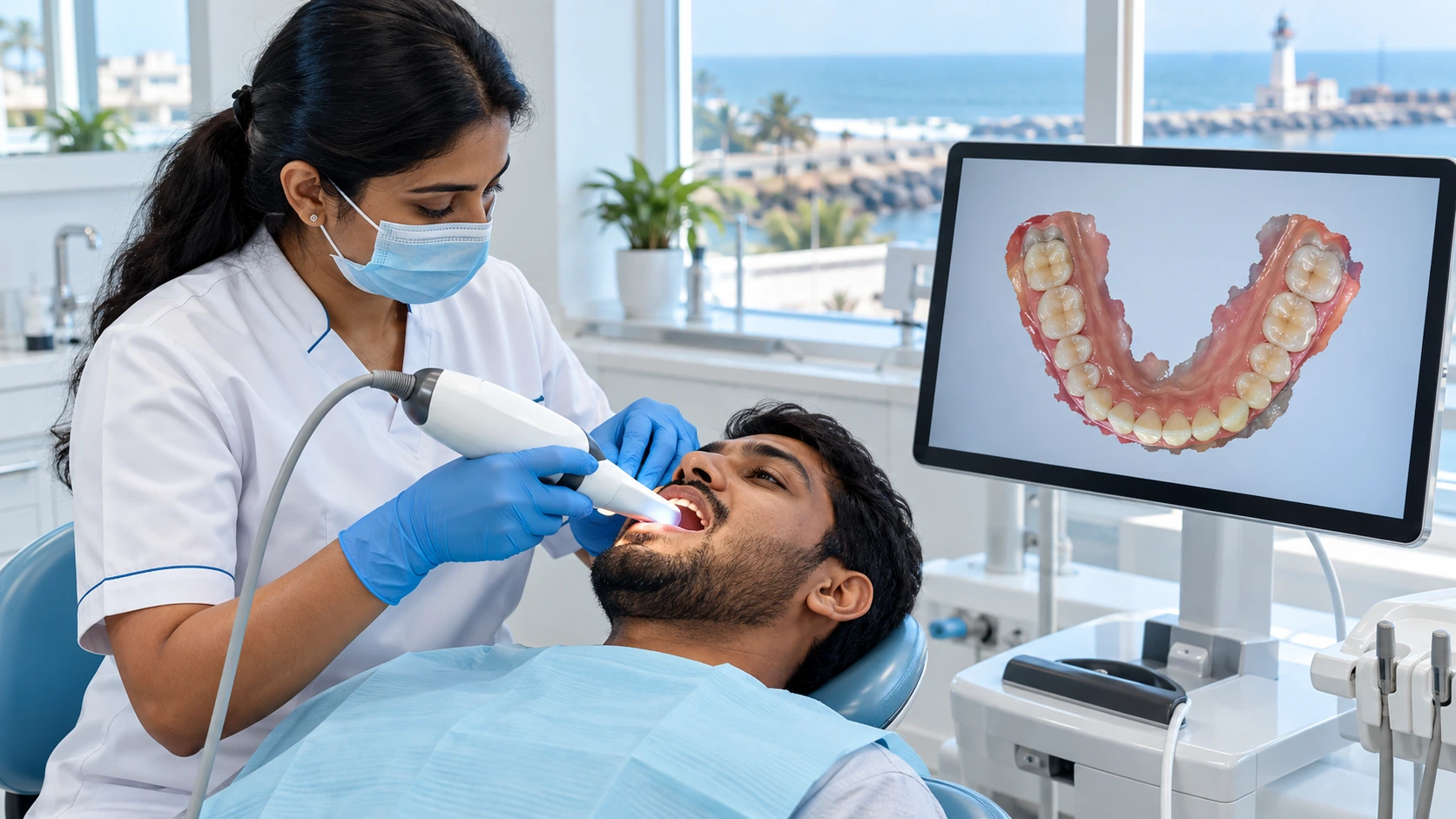
Smile and Glow Dental Care provides digital dentistry services in Pondicherry, including digital impressions, intraoral scanning, 3D imaging, CAD/CAM-supported restorations, digital smile planning, and digital implant planning.
What Is Digital Dentistry?
Digital dentistry refers to the use of digital technologies during different stages of dental care.
Depending on the treatment, digital dentistry can include:
- Intraoral scanning
- Digital impressions
- Digital X-rays
- 3D dental imaging
- CAD/CAM restoration design
- Digital crown design
- Digital Smile Design
- Digital implant planning
- Digital orthodontic planning
- Digital bite analysis
- Computer-assisted treatment planning
The technology used depends on the patient's dental condition and the procedure being performed.
How Does Digital Dentistry Work?
Digital dentistry generally begins with collecting accurate digital information about the patient's teeth and oral structures.
A typical workflow may involve:
Step 1: Dental Consultation
The dentist discusses your concerns, symptoms, dental history, and treatment goals.
Step 2: Digital Examination
Depending on the treatment, digital photographs, scans, X-rays, or other records may be obtained.
Step 3: Digital Treatment Planning
The collected information can be used to evaluate the teeth and plan an appropriate treatment.
Step 4: Digital Design
For selected procedures, restorations or treatment stages can be digitally designed.
Step 5: Manufacturing or Treatment
The digital design may be transferred to a dental laboratory or compatible manufacturing workflow.
Step 6: Clinical Evaluation
The dentist evaluates the restoration or treatment before final placement or completion.
Step 7: Follow-Up
The treatment is monitored through appropriate follow-up appointments.
Digital Dental Scanning
Intraoral scanning is one of the important technologies used in digital dentistry.
An intraoral scanner captures detailed digital information about the teeth and surrounding oral structures.
Digital scans may be used for:
- Crowns
- Bridges
- Aligners
- Veneers
- Implant restorations
- Bite records
- Smile design
- Other restorative procedures
The dentist determines whether digital scanning is suitable for the specific treatment.
Digital Impressions vs Traditional Impressions
Traditional dental impressions use impression material to create a physical mould of the teeth.
Digital impressions use an intraoral scanner to create a digital representation.
Digital Impressions
Potential advantages include:
- No conventional impression material
- Digital storage
- Easy electronic transfer
- Immediate visualization
- Convenient laboratory communication
- Easy comparison of digital records
Traditional Impressions
Traditional impressions can still be appropriate for certain procedures and clinical situations.
The most suitable impression technique depends on the treatment, equipment, clinical requirements, and dentist's assessment.
Digital X-Rays in Dentistry
Digital radiography can provide dental images that support diagnosis and treatment planning.
Digital X-rays may help evaluate:
- Tooth decay
- Tooth roots
- Bone levels
- Dental infections
- Impacted teeth
- Root canal-treated teeth
- Implant planning
- Other dental conditions
X-rays should be recommended based on clinical need rather than simply because digital equipment is available.
3D Dental Imaging
Three-dimensional imaging can provide detailed information about dental and bone structures.
Depending on the equipment and clinical indication, 3D imaging may assist with:
- Dental implant planning
- Impacted tooth assessment
- Complex root canal evaluation
- Bone assessment
- Oral surgery planning
- Selected orthodontic planning
The dentist determines whether 3D imaging is necessary for your treatment.
CAD/CAM Dentistry in Pondicherry
CAD/CAM stands for Computer-Aided Design and Computer-Aided Manufacturing.
In dentistry, CAD/CAM workflows can be used to design and manufacture selected restorations.
These may include:
- Dental crowns
- Bridges
- Inlays
- Onlays
- Veneers
- Other customized restorations
Digital scans can be used as part of the design process.
Digitally Designed Dental Crowns
Digital technology can support the design of dental crowns according to the patient's dental structure.
A digital crown workflow may include:
- Tooth preparation
- Digital scanning
- Digital design
- Computer-assisted fabrication
- Clinical try-in
- Bite evaluation
- Final placement
The choice of crown material depends on factors such as tooth location, bite, available space, aesthetic requirements, and clinical condition.
Digital Smile Design in Pondicherry
Digital Smile Design is a technology-assisted approach to planning cosmetic dental treatment.
The process can evaluate:
- Tooth shape
- Tooth size
- Tooth colour
- Tooth alignment
- Smile symmetry
- Gum appearance
- Smile line
- Facial characteristics
Digital smile planning may help patients understand potential treatment options before proceeding with cosmetic procedures.
Depending on the case, the final treatment may involve:
- Teeth whitening
- Veneers
- Cosmetic bonding
- Crowns
- Clear aligners
- Orthodontics
- Other restorative treatments
Digital Implant Planning
Digital dentistry can also support dental implant planning.
Depending on the case, digital planning may combine:
- Intraoral scans
- Digital photographs
- Dental X-rays
- 3D imaging
- Digital implant positioning
- Restoration design
The objective is to evaluate the available anatomy and plan the implant and final restoration appropriately.
Digital planning does not eliminate the need for clinical examination.
Digital Orthodontic Planning
Digital technology is widely used in selected orthodontic and clear aligner workflows.
Digital scans can help create a three-dimensional representation of the teeth.
The digital treatment plan may show:
- Starting tooth position
- Planned tooth movements
- Treatment stages
- Aligner sequence
- Expected final position
Clear aligners are not suitable for every orthodontic case, so an orthodontic assessment is necessary.
Digital Dentistry for Clear Aligners
Clear aligner treatment can use digital scanning and treatment-planning software.
A typical digital aligner workflow may involve:
- Digital intraoral scan
- Clinical examination
- Treatment planning
- Digital simulation
- Aligner manufacturing
- Regular progress monitoring
The final treatment depends on the patient's tooth position, bite, bone support, and clinical requirements.
Digital Dentistry for Veneers
Digital scans can support veneer planning and laboratory communication.
The digital workflow may include:
- Digital smile analysis
- Tooth scanning
- Veneer design
- Digital communication with the laboratory
- Restoration fabrication
- Clinical evaluation
- Final placement
Veneers are not appropriate for every patient.
The dentist should first evaluate tooth structure, gums, bite, and overall oral health.
Digital Dentistry for Dental Bridges
Digital scans can also be used when planning selected dental bridges.
The digital workflow may help capture:
- Prepared teeth
- Adjacent teeth
- Missing-tooth area
- Bite relationship
- Surrounding structures
The information can then support digital bridge design and laboratory fabrication.
Digital Bite Analysis
Bite information is important for many restorative and orthodontic treatments.
Digital records can help assess:
- Tooth contacts
- Bite relationships
- Restoration space
- Tooth position
- Functional relationships
Digital bite records may be used alongside conventional clinical assessment.
Digital Dental Photography
Dental photography can provide detailed visual records for:
- Smile analysis
- Cosmetic treatment planning
- Treatment documentation
- Before-and-after comparison
- Patient communication
- Laboratory communication
Photographs can be combined with digital scans and other records to support comprehensive treatment planning.
Digital Treatment Planning
Digital dentistry allows information from different sources to be brought together.
Depending on the treatment, planning may include:
- Clinical examination
- Digital photographs
- Digital scans
- X-rays
- 3D imaging
- Bite records
- Treatment simulations
The dentist can then use these records to develop an individualized treatment plan.
Benefits of Digital Dentistry
Digital dentistry can offer several potential benefits depending on the procedure.
Detailed Digital Records
Digital scans can provide detailed records of tooth shape and position.
Easier Data Storage
Digital records can be stored electronically for future reference.
Faster Communication
Digital files can be transferred to laboratories without physically transporting impression materials.
Treatment Visualization
Digital tools can help explain dental conditions and planned procedures.
Customized Restorations
CAD/CAM workflows can support customized crown, bridge, veneer, and other restoration designs.
Digital Treatment Monitoring
Repeated digital scans can sometimes be compared to evaluate changes over time.
Is Digital Dentistry More Accurate?
Digital technology can provide highly detailed digital records when used appropriately.
However, accuracy depends on:
- Equipment
- Scanning technique
- Clinical conditions
- Operator skill
- Software
- Laboratory workflow
- Type of treatment
Digital dentistry should therefore be considered a tool that supports clinical care rather than a guarantee of a particular treatment result.
Is Digital Dentistry Painful?
Digital scanning is generally a non-invasive procedure and does not involve drilling or injections.
The experience depends on the type of digital procedure being performed.
For example:
- Digital scanning is generally non-invasive.
- Digital X-rays are non-invasive.
- Dental implant surgery is an invasive procedure even when digitally planned.
- Tooth preparation for a crown is still a dental procedure even when the crown is digitally designed.
Digital technology itself does not determine whether a treatment is invasive.
Does Digital Dentistry Replace Traditional Dentistry?
No.
Digital dentistry complements conventional dental examination and treatment.
Dentists still need to evaluate:
- Teeth
- Gums
- Bite
- Oral tissues
- Symptoms
- Dental history
- Treatment risks
- Overall oral health
Digital records provide additional information that can support clinical decision-making.
Digital Dentistry for Root Canal Treatment
Digital imaging and magnification can support selected root canal procedures.
Digital technology may assist with:
- Diagnosis
- Imaging
- Treatment planning
- Documentation
- Restoration planning
Microscope-assisted dentistry may also provide enhanced visualization during selected endodontic procedures.
The actual root canal treatment still involves cleaning, shaping, filling, and sealing the root canal system.
Digital Dentistry for Full Mouth Rehabilitation
Patients undergoing comprehensive dental rehabilitation may require several types of digital records.
Digital dentistry can support planning for:
- Crowns
- Bridges
- Implants
- Dentures
- Aligners
- Bite reconstruction
- Smile design
Combining digital information can help coordinate different stages of a complex treatment plan.
Digital Dentistry for Cosmetic Dentistry
Cosmetic dental treatment can benefit from digital planning because appearance depends on the relationship between teeth, gums, lips, and facial features.
Digital records can help evaluate:
- Tooth proportions
- Smile symmetry
- Tooth colour
- Tooth shape
- Tooth alignment
- Gum display
The final treatment may include whitening, bonding, veneers, crowns, or aligners depending on the individual case.
Digital Dentistry for Preventive Care
Digital technology can also support preventive dental care.
Digital records may help dentists:
- Monitor changes
- Document existing conditions
- Compare dental scans over time
- Explain oral health findings
- Plan preventive treatment
Digital technology does not replace regular dental examinations or oral hygiene.
Digital Dentistry for Children
Selected digital technologies can also be useful in pediatric dental care.
Digital records may assist with:
- Monitoring dental development
- Orthodontic assessment
- Treatment documentation
- Selected diagnostic procedures
The technology used should always be appropriate for the child's age and clinical requirements.
Digital Dentistry and Patient Communication
One major benefit of digital dentistry is the ability to visualize dental information.
Instead of explaining a dental problem only verbally, dentists can use:
- Digital scans
- Dental photographs
- Digital X-rays
- 3D images
- Treatment simulations
This can make it easier for patients to understand their condition and available treatment options.
Digital Dentistry and Dental Laboratories
Digital workflows can improve communication between dental clinics and laboratories.
Digital files can be transferred electronically for selected restorations.
This can support:
- Crown design
- Bridge design
- Veneer design
- Implant restoration planning
- Aligner manufacturing
- Other laboratory procedures
Digital communication can also reduce the need to physically transport conventional impressions.
Same-Day Dental Treatment and Digital Dentistry
Some digital workflows can support faster treatment for selected procedures.
For example, certain CAD/CAM workflows may allow eligible restorations to be designed and fabricated through an accelerated process.
However, not every dental treatment can be completed in one day.
Factors such as:
- Treatment complexity
- Tooth condition
- Laboratory requirements
- Healing time
- Implant integration
- Orthodontic movement
can affect the treatment timeline.
How Much Do Digital Dentistry Services Cost in Pondicherry?
There is no single price for digital dentistry.
The cost depends on the specific procedure.
For example:
- Digital consultation
- Digital scan
- Digital crown
- Digital smile design
- Implant planning
- Clear aligner planning
- 3D imaging
- CAD/CAM restoration
may have different costs.
The overall treatment cost depends primarily on the dental procedure required rather than simply the use of digital technology.
Why Can Digital Dental Treatment Cost More?
Digital dentistry may involve:
- Specialized equipment
- Software
- Digital scanners
- Imaging systems
- CAD/CAM workflows
- Laboratory technology
- Specialized clinical training
However, technology should be recommended because it is clinically useful for the patient's treatment rather than simply because it is available.
How Long Does Digital Dental Treatment Take?
The timeline depends on the treatment.
Digital Scanning
Scanning itself can usually be completed during a dental appointment.
Digital Crown
Some suitable crown cases may follow an accelerated digital workflow.
Digital Smile Design
Planning time depends on the complexity of the proposed smile treatment.
Digital Implant Planning
Planning may require scans, imaging, clinical examination, and treatment coordination.
Clear Aligners
The overall treatment takes longer because teeth need to move gradually.
How to Choose a Digital Dental Clinic in Pondicherry
When selecting a clinic for digital dental treatment, consider:
Technology Used
Ask what digital technology is actually available.
Clinical Experience
Technology is most useful when combined with appropriate clinical knowledge and treatment planning.
Treatment Range
A clinic offering multiple digital workflows may be able to coordinate different stages of comprehensive treatment.
Clear Explanation
The dentist should explain:
- Your dental condition
- Why digital technology is being recommended
- Available alternatives
- Treatment stages
- Expected timeline
- Maintenance requirements
Personalized Planning
Digital dentistry should be customized to your individual dental condition.
Why Choose Smile and Glow Dental Care for Digital Dentistry?
Smile and Glow Dental Care provides digital dentistry services in Pondicherry using modern digital workflows.
The clinic's digital dentistry services include:
- Digital impressions
- Intraoral scanning
- 3D imaging
- CAD/CAM technology
- Digitally designed crowns
- Digital Smile Design
- Digital implant planning
- Digital treatment planning
The clinic describes its digital workflow as supporting cosmetic, restorative, and preventive dental care.
Digital Dentistry Consultation in Pondicherry
If you are considering digital dental treatment, begin with a professional dental consultation.
The dentist can determine whether digital technology is useful for your particular treatment.
Depending on your needs, the consultation may involve:
- Clinical examination
- Digital photographs
- Intraoral scanning
- Dental X-rays
- 3D imaging
- Bite assessment
- Treatment planning
The objective is to use the appropriate technology to support your dental treatment rather than using digital tools unnecessarily.
How to Maintain Your Dental Treatment
Digital dentistry does not eliminate the need for regular oral care.
After treatment:
- Brush twice daily
- Clean between your teeth
- Attend regular dental checkups
- Follow professional cleaning recommendations
- Maintain crowns and restorations
- Follow implant care instructions
- Wear orthodontic retainers when prescribed
- Avoid biting hard non-food objects
- Report persistent pain or sensitivity
Long-term maintenance remains essential for natural teeth and dental restorations.
Final Thoughts: Digital Dentistry Services in Pondicherry
Digital dentistry brings modern technology into different stages of dental care, from diagnosis and treatment planning to restoration design and orthodontic treatment.
Depending on the patient's needs, digital dentistry may involve:
- Intraoral scanning
- Digital impressions
- Digital X-rays
- 3D imaging
- CAD/CAM crowns
- Digital Smile Design
- Digital implant planning
- Digital orthodontic planning
- Digital bite records
- Digital treatment monitoring
Digital technology does not replace the dentist's clinical judgment.
The most appropriate approach begins with a comprehensive examination, followed by a personalized treatment plan that uses digital technology where it provides meaningful clinical value.
If you are looking for digital dentistry services in Pondicherry, a consultation can help you understand which digital treatments and technologies are relevant to your dental needs.
Frequently Asked Questions
What are digital dentistry services in Pondicherry?
Digital dentistry services use technologies such as intraoral scanners, digital X-rays, 3D imaging, CAD/CAM systems, digital smile planning, and digital implant planning to support selected dental treatments.
What is an intraoral scanner?
An intraoral scanner is a digital device used to capture detailed information about the teeth and oral structures and create a digital dental model.
Are digital impressions better than traditional impressions?
Digital impressions can offer advantages such as digital storage, easy transfer, and immediate visualization for suitable treatments. Traditional impressions remain appropriate for some clinical situations.
What is CAD/CAM dentistry?
CAD/CAM dentistry uses computer-aided design and manufacturing technologies to digitally design and manufacture selected dental restorations such as crowns, bridges, veneers, inlays, and onlays.
Can digital dentistry be used for dental implants?
Yes. Digital scans and imaging can support implant planning by helping evaluate dental structures, bone, implant positioning, and the final restoration.
Can digital dentistry help with clear aligners?
Yes. Digital scans and treatment-planning software can be used to plan selected clear aligner treatments and monitor tooth movement.
What is Digital Smile Design?
Digital Smile Design is a digital planning approach that evaluates tooth shape, size, colour, alignment, smile symmetry, gums, and facial characteristics to help plan selected cosmetic dental treatments.
Is digital dentistry painful?
Digital scanning is generally non-invasive. However, some treatments planned or supported digitally, such as implant surgery or crown preparation, are still dental procedures that may involve local anaesthesia.
How much do digital dentistry services cost in Pondicherry?
The cost depends on the specific dental treatment, technology required, materials, laboratory work, and complexity. A dental consultation is required for an accurate estimate.
How long does digital dental treatment take?
The timeline depends on the treatment. Digital scanning itself can be performed during a consultation, while crowns, implants, aligners, and comprehensive treatments may require additional appointments.
Does digital dentistry replace a dentist?
No. Digital technology supports diagnosis, planning, communication, and selected procedures, while clinical examination and professional judgment remain essential.
Where can I get digital dentistry services in Pondicherry?
Smile and Glow Dental Care provides digital dentistry services in Pondicherry, including digital impressions, intraoral scanning, 3D imaging, CAD/CAM-supported crowns, Digital Smile Design, and digital implant planning.