


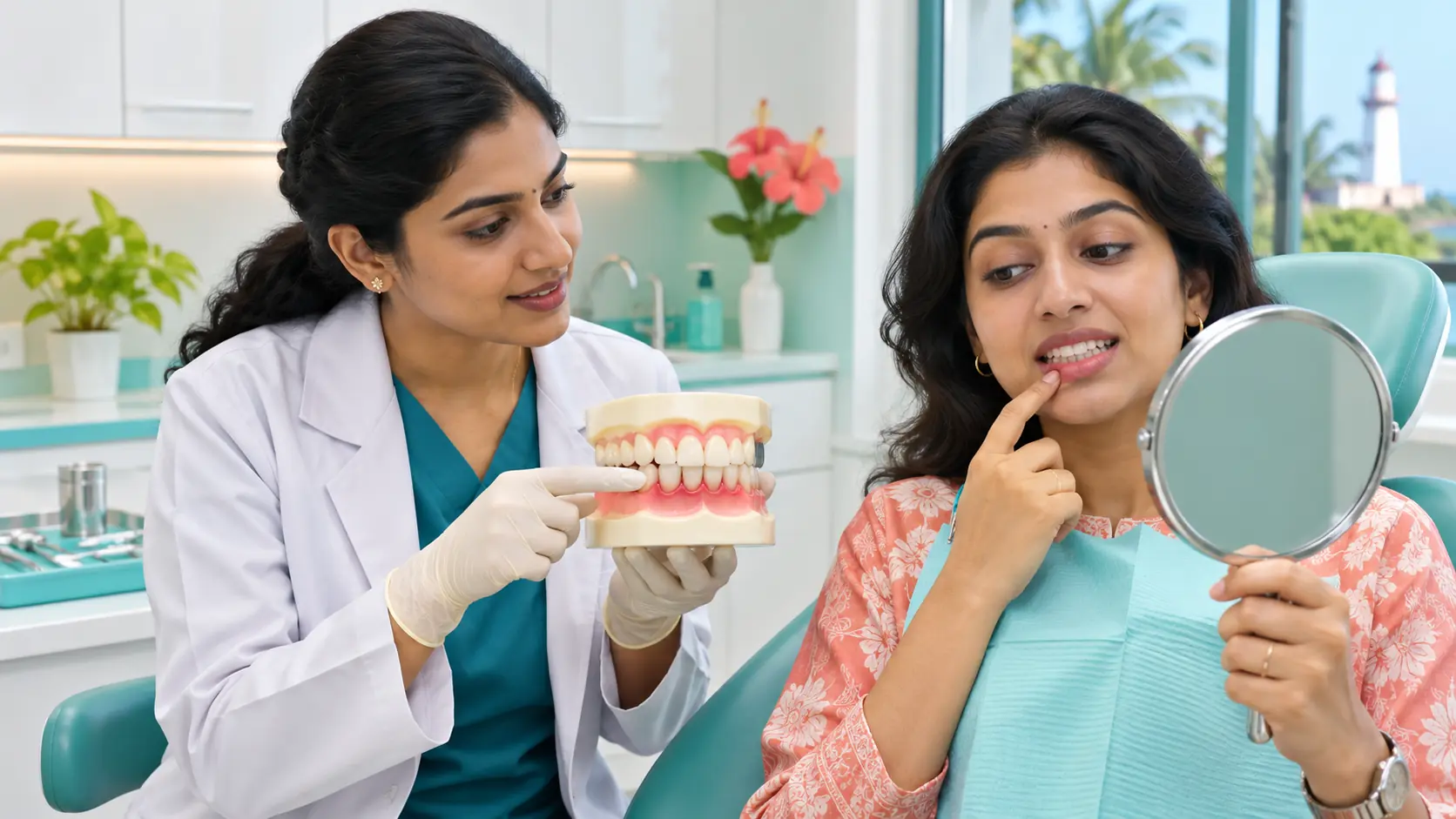
Early Signs of Gum Infection in Pondicherry
Gum infections can begin with mild changes that are easy to overlook. Slight bleeding, redness or persistent bad breath may not cause severe pain, but they can indicate inflammation around the teeth.
Recognising the early signs of gum infection in Pondicherry can help patients seek treatment before the condition damages the tissues and bone supporting their teeth. Early gum disease is often easier to control than advanced periodontal disease.
At Smile & Glow Dental Care, gum health can be assessed through a clinical examination, periodontal measurements and dental X-rays when necessary.
Quick Answer: What Are the Early Signs of Gum Infection?
Possible early warning signs include:
- Gums that bleed during brushing or flossing
- Red or darker-looking gums
- Puffy or swollen gum margins
- Gum tenderness
- Persistent bad breath
- A recurring bad taste
- Plaque or tartar around the gumline
- New sensitivity near the gums
- Slight gum recession
- Food repeatedly collecting around one area
- A small swelling or pimple on the gum
Gum disease can sometimes progress without significant pain. Regular dental examinations remain important even when symptoms appear mild.
What Is a Gum Infection?
The term gum infection may refer to several conditions affecting the tissues around the teeth.
Gingivitis
Gingivitis is the early stage of gum disease. It commonly develops when bacterial plaque accumulates along the gumline.
The gums may become red, swollen and prone to bleeding, but the supporting bone has not yet been lost. Plaque-related gingivitis can often be reversed with professional care and effective daily cleaning.
Periodontitis
Periodontitis is a more advanced condition affecting the gums, periodontal ligament and bone supporting the teeth.
It can develop when inflammation spreads below the gumline. Periodontal pockets may form, and supporting bone may gradually be lost. Treatment can control the infection and slow progression, but lost bone does not simply return through brushing alone.
Gum Abscess
A gum or periodontal abscess is a localised collection of pus caused by infection. It may appear as a painful swelling or pimple near a tooth.
An abscess requires prompt dental treatment. It will not reliably disappear without addressing the source of the infection.
Early Sign 1: Bleeding While Brushing or Flossing
Healthy gums do not usually bleed repeatedly during gentle cleaning. Bleeding may be one of the earliest visible signs of gingivitis.
Occasional bleeding can also occur after starting a new flossing routine or using excessive brushing pressure. However, bleeding that continues, increases or appears spontaneously needs professional assessment.
Do not stop cleaning the area completely because plaque may accumulate further. Use gentle technique and arrange an examination if the bleeding persists.
Early Sign 2: Red or Darkened Gums
Healthy gum colour varies naturally between individuals. The important sign is a change from the person’s normal appearance.
Inflamed gums may look:
- Redder than usual
- Darker along the gumline
- Shiny
- Smooth instead of firm and textured
- Uneven in colour
Natural pigmentation should not be confused with infection. A dentist can evaluate whether a colour change is caused by inflammation, pigmentation, trauma or another oral condition.
Early Sign 3: Puffy or Swollen Gums
Swelling occurs when gum tissue reacts to plaque, bacteria, irritation or infection. Early swelling may be most noticeable between the teeth or along the gumline.
Swollen gums may:
- Look rounded between teeth
- Feel soft or tender
- Cover more of the tooth surface
- Bleed easily
- Make teeth appear shorter
- Create discomfort during eating
Localised swelling near one tooth may have a different cause from generalised swelling throughout the mouth and should be examined.
Early Sign 4: Persistent Bad Breath
Bad breath can have several causes, including food, dry mouth, tongue coating, tooth decay and certain medical conditions. Persistent bad breath may also occur when bacteria and plaque collect around or below the gums.
Brushing or using mouthwash may temporarily cover the smell without treating its source.
Arrange a dental examination when bad breath:
- Continues despite brushing
- Returns quickly after cleaning
- Occurs with gum bleeding
- Is accompanied by a bad taste
- Appears with gum swelling or pus
Early Sign 5: Gum Tenderness
Early gum disease may be painless, but some patients experience mild soreness or tenderness.
Tender gums may be noticed while:
- Brushing
- Flossing
- Eating firm foods
- Pressing near the gumline
- Wearing a denture or appliance
Pain limited to one area may also be caused by trapped food, a damaged tooth, an ulcer, a poorly fitting appliance or an abscess. A clinical examination is needed to identify the cause.
Early Sign 6: Gum Recession
Gum recession occurs when the gum margin moves away from its previous position, exposing more of the tooth or its root.
Possible warning signs include:
- A tooth appearing longer
- A notch near the gumline
- Root sensitivity
- New spaces between teeth
- Food collecting more frequently
- Uneven gum levels
Recession can result from gum disease, aggressive brushing, thin gum tissue, tooth position or other factors. It should not automatically be treated as an infection without diagnosis.
Early Sign 7: A Bad Taste or Pus Near the Gum
A recurring unpleasant taste may indicate drainage from an infected gum pocket or dental abscess.
Pus may appear:
- Between a tooth and the gum
- From a small gum swelling
- When pressure is placed near the affected area
- Around a partially erupted tooth
- Near a loose or infected tooth
Do not squeeze, puncture or attempt to drain a gum swelling at home. Releasing some pus does not remove the source of the infection.
Early Sign 8: Changes in Tooth Position or Bite
Advanced gum infection can damage the tissues and bone supporting the teeth. As support is lost, teeth may begin to move.
Warning signs include:
- A new gap between teeth
- Teeth appearing to shift
- A permanent tooth becoming loose
- Changes in the way the teeth meet
- Difficulty chewing
- A partial denture fitting differently
These are not usually early gingivitis symptoms and may indicate more advanced periodontal damage. Arrange a dental examination promptly.
What Causes Gum Infection?
The most common cause is bacterial plaque that remains along and below the gumline. If plaque is not removed, it can harden into tartar or calculus.
Tartar cannot be removed safely with a toothbrush or home tool. Professional scaling is required.
Factors that may increase the risk of gum infection include:
- Inadequate brushing or interdental cleaning
- Smoking or chewing tobacco
- Diabetes
- Pregnancy-related hormonal changes
- Dry mouth
- Crooked teeth that are difficult to clean
- Poorly fitting dental appliances
- Certain medicines
- Reduced immune function
- Genetic susceptibility
- Stress
- Poor nutrition
- Previous gum disease
- Irregular dental care
Having one or more risk factors does not confirm gum disease, but it may affect prevention, progression and treatment planning.
Can Gum Infection Occur Without Pain?
Yes. Gum disease is often described as a silent condition because significant damage can occur without severe pain.
Patients may assume that treatment is unnecessary because the gums are not painful. However, bleeding, recession, persistent bad breath, deep pockets or loose teeth may indicate a problem even in the absence of discomfort.
Pain is more likely when there is an abscess, acute inflammation, dental infection or advanced disease, but it is not a reliable measure of gum health.
How Does a Dentist Diagnose Gum Infection?
A dental assessment may include:
- Reviewing current symptoms
- Medical and medication history
- Smoking and tobacco history
- Examining plaque and tartar levels
- Checking gum colour, swelling and bleeding
- Measuring the spaces around each tooth
- Looking for gum recession
- Checking tooth mobility
- Evaluating the bite
- Testing painful teeth when required
- Taking dental X-rays to assess supporting bone
The dentist may use a small periodontal probe to measure gum-pocket depth. The findings help distinguish gingivitis from periodontitis and identify areas requiring treatment.
Patients with advanced or complex periodontal disease may be referred to a periodontist.
Treatment for Early Gum Infection
Treatment depends on whether the condition is gingivitis, periodontitis, a local abscess or another problem.
Professional Dental Cleaning
Professional cleaning may be recommended for plaque-related gingivitis.
The procedure removes plaque, tartar and deposits from areas that cannot be cleaned effectively at home. Personalised brushing and interdental-cleaning instructions are also important for preventing recurrence.
Scaling and Root Planing
When infection extends below the gumline, scaling and root planing may be required.
This deep-cleaning procedure removes deposits from the tooth and root surfaces beneath the gums. Local anaesthesia may be used, and treatment may be completed over multiple visits.
The gums are reassessed after healing to determine whether further periodontal care is necessary.
Treatment of a Gum Abscess
A gum abscess may require:
- Drainage of pus
- Cleaning the infected gum pocket
- Treatment of an underlying tooth
- Root canal treatment when the infection originates inside a tooth
- Tooth extraction when the tooth cannot be retained
- Antibiotics in selected cases
Antibiotics alone may not eliminate the source of a dental or gum abscess. The dentist must treat the underlying cause.
Periodontal Surgery
Advanced gum disease may require surgical treatment if deep pockets, bone defects or persistent infection remain after non-surgical care.
The dentist or periodontist will explain the benefits, limitations, recovery and maintenance needs before treatment.
Can Early Gum Infection Be Reversed?
Plaque-related gingivitis can often be reversed when plaque and tartar are controlled through professional cleaning and effective daily oral hygiene.
Periodontitis cannot be considered reversed in the same way because it involves loss of supporting tissue and bone. However, it can often be stabilised and managed through professional treatment, risk-factor control and regular maintenance.
The earlier the condition is identified, the greater the opportunity to prevent further damage.
Home Care for Early Gum Symptoms
Home care supports professional treatment but should not replace diagnosis.
Brush Gently Twice Daily
Use fluoride toothpaste and a soft-bristled toothbrush. Clean every tooth surface and angle the bristles toward the gumline without applying excessive pressure.
Clean Between Teeth Daily
Use floss, interdental brushes or another dentist-recommended cleaning aid. The most appropriate tool depends on the size of the spaces, gum condition and any dental appliances.
Clean the Tongue
Bacteria and debris on the tongue can contribute to bad breath. Clean it gently with a toothbrush or tongue-cleaning tool.
Avoid Tobacco
Smoking and chewing tobacco increase the risk of gum disease and may reduce treatment success. Tobacco can also mask bleeding, making disease appear less active than it is.
Manage Medical Conditions
Follow professional advice for diabetes and other health conditions. Do not stop or change prescribed medication without speaking to the prescribing doctor.
Attend Recommended Reviews
Gum disease may return after treatment. Maintenance visits allow the dentist to monitor bleeding, pocket depth, plaque levels and tooth stability.
What Not to Do for a Suspected Gum Infection
Avoid:
- Scraping tartar with sharp objects
- Squeezing or puncturing a gum swelling
- Applying aspirin directly to the gum
- Using undiluted antiseptic liquids
- Taking leftover antibiotics
- Stopping prescribed medicines without medical advice
- Ignoring a recurring bad taste or pus
- Delaying care because pain has temporarily stopped
- Relying only on mouthwash or home remedies
Temporary symptom relief does not confirm that an infection has healed.
When Is a Gum Infection an Emergency?
Request urgent dental care if you experience:
- A painful gum swelling or suspected abscess
- Pus near a tooth or gum
- Rapidly increasing facial or jaw swelling
- Severe or worsening pain
- Fever or feeling significantly unwell
- Difficulty opening the mouth
- A loose permanent tooth
- Swelling near the eye
- Persistent bleeding that is difficult to control
- A mouth lump, ulcer or red or white patch that does not heal
Seek immediate medical care if swelling makes it difficult to breathe, swallow or speak. Rapidly spreading swelling involving the mouth, face, throat or neck can be dangerous.
How Can Gum Infection Be Prevented?
Preventive steps include:
- Brush twice daily with fluoride toothpaste
- Clean between the teeth every day
- Use a soft-bristled toothbrush
- Replace worn toothbrushes
- Avoid smoking and chewing tobacco
- Manage diabetes with medical guidance
- Maintain a balanced diet
- Clean dentures and appliances properly
- Attend dental examinations at the recommended interval
- Have professional cleaning when advised
- Seek treatment when early symptoms appear
The appropriate recall interval varies according to gum health, previous disease, smoking, diabetes and other individual risks.
How Much Does Gum-Infection Treatment Cost in Pondicherry?
The cost depends on the diagnosis and extent of treatment.
Factors may include:
- Gum examination and dental X-rays
- Routine professional cleaning
- Deep cleaning below the gumline
- Number of affected areas
- Treatment of an abscess
- Root canal treatment or extraction
- Periodontal surgery
- Specialist care
- Maintenance appointments
An examination is necessary before providing an accurate treatment estimate.
Gum-Infection Assessment at Smile & Glow Dental Care
Smile & Glow Dental Care provides evaluation and treatment planning for early and advanced signs of gum infection in Pondicherry.
Care may include:
- Complete gum examination
- Periodontal pocket measurements
- Plaque and tartar assessment
- Dental X-rays when indicated
- Professional cleaning
- Scaling and root planing
- Abscess assessment
- Home-care guidance
- Periodontal maintenance planning
- Specialist referral when required
The goal is to identify inflammation early, control infection and protect the gums and supporting bone around the teeth.
Frequently Asked Questions
What Is the First Sign of a Gum Infection?
Bleeding during brushing, red or swollen gums and persistent bad breath are common early signs. Gum disease may still be present without noticeable pain.
Can Gum Infection Go Away on Its Own?
Plaque-related inflammation may improve with effective cleaning, but tartar, deep gum pockets and abscesses require professional treatment. A dental abscess will not reliably resolve without treating its cause.
How Can I Tell Gingivitis From Periodontitis?
Gingivitis affects the gums without bone loss. Periodontitis involves deeper supporting tissues and bone. A dentist uses periodontal measurements and dental X-rays when required to distinguish them.
Does a Gum Pimple Mean Infection?
A pimple-like bump may be a draining sinus from a tooth or gum infection. It should be examined even if it is painless or temporarily disappears.
Can Mouthwash Cure a Gum Infection?
Mouthwash may support treatment in selected cases, but it cannot remove tartar, clean deep periodontal pockets or drain an abscess.
Are Antibiotics Always Needed for Gum Infection?
No. Many gum conditions are treated primarily through professional cleaning, drainage or treatment of the affected tooth. Antibiotics are used only when clinically indicated.
When Should I Seek Urgent Care?
Seek urgent dental care for pus, a painful swelling, fever, worsening pain, facial swelling, difficulty opening the mouth or a loose permanent tooth. Breathing or swallowing difficulty requires immediate medical care.
Can Gum Infection Cause Tooth Loss?
Advanced periodontitis can destroy the tissues and bone supporting the teeth, causing looseness and eventual tooth loss. Early diagnosis and ongoing periodontal care can reduce this risk.
Book a Gum Examination in Pondicherry
If you notice bleeding, redness, swelling, bad breath, recession or a small gum swelling, schedule a dental examination at Smile & Glow Dental Care in Pondicherry.
Early assessment can determine whether the condition is gingivitis, periodontitis, an abscess or another oral problem. Appropriate treatment can help control infection before additional tissue or bone damage occurs.
This article provides general educational information and does not replace an examination, diagnosis or personalised treatment from a qualified dental professional.