


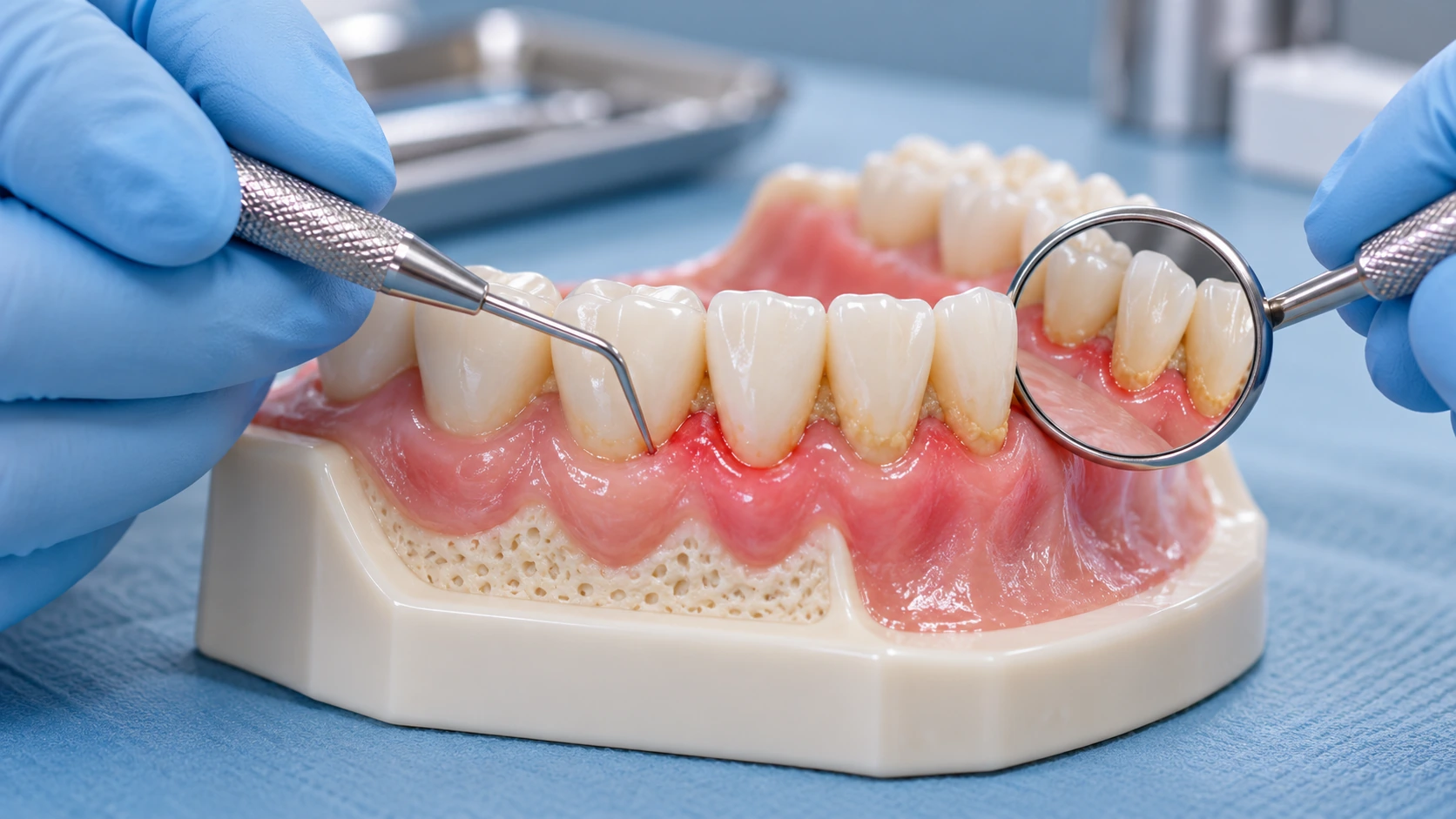
Gum Disease Treatment in Pondicherry: Causes, Stages and Care
Gum disease is a common oral health condition that can affect the tissues surrounding and supporting your teeth. It can begin with mild gum inflammation and, when left untreated, progress to a more advanced condition affecting the supporting bone.
Common warning signs include bleeding gums, redness, swelling, bad breath, gum recession and loose teeth. Early diagnosis and appropriate treatment can help control the condition and protect the supporting structures of the teeth.
If you are searching for gum disease treatment in Pondicherry, understanding the symptoms, causes, treatment options and preventive measures can help you make informed decisions about your oral health.
What Is Gum Disease?
Gum disease refers to inflammation and infection affecting the tissues around the teeth.
The two commonly discussed stages are:
- Gingivitis
- Periodontitis
Gingivitis generally affects the gums without the bone loss associated with periodontitis.
Periodontitis is more advanced and can damage the tissues and bone supporting the teeth.
What Causes Gum Disease?
The most common contributing factor is plaque buildup around the teeth.
Other risk factors can include:
- Poor oral hygiene
- Tartar buildup
- Smoking or tobacco use
- Diabetes
- Hormonal changes
- Certain medications
- Genetic susceptibility
- Teeth grinding
- Poorly fitting dental restorations
- Crowded teeth
- Infrequent dental visits
Gum disease usually develops through multiple contributing factors rather than one single cause.
Early Signs of Gum Disease
Recognizing early symptoms can encourage timely dental care.
Possible signs include:
- Bleeding while brushing
- Red gums
- Swollen gums
- Tender gums
- Persistent bad breath
- Changes in gum texture
- Increased sensitivity
- Plaque buildup
- Tartar deposits
Early gum inflammation may be easier to manage than advanced periodontal disease.
Advanced Signs of Gum Disease
More advanced periodontal problems may cause:
- Gum recession
- Deep gum pockets
- Pus around the gums
- Persistent bad breath
- Tooth mobility
- Changes in the bite
- Spaces developing between teeth
- Bone loss
- Tooth loss
These symptoms require professional dental evaluation.
Gingivitis vs Periodontitis
Gingivitis
Gingivitis is inflammation of the gums and commonly causes redness, swelling and bleeding.
At this stage, the supporting bone is not typically lost because of the gingivitis itself.
Periodontitis
Periodontitis involves inflammation and destruction of the tissues supporting the teeth.
It can result in:
- Periodontal pockets
- Bone loss
- Gum recession
- Tooth mobility
- Tooth loss
The treatment approach depends on the severity of the disease.
Why Do Gums Bleed?
Bleeding gums can occur when gum tissue becomes inflamed.
Common contributors include:
- Plaque
- Tartar
- Gingivitis
- Periodontitis
- Improper brushing
- Gum infection
- Hormonal changes
Repeated bleeding should not simply be ignored.
Gum Disease and Bad Breath
Persistent bad breath can occur alongside gum disease.
Bacteria and plaque around the teeth and gums can contribute to unpleasant odour.
If bad breath continues despite regular brushing and tongue cleaning, a dental examination can help identify the underlying cause.
Gum Disease and Gum Recession
Gum recession occurs when gum tissue moves away from the tooth surface.
It can expose the tooth root and may cause sensitivity.
Gum recession can be associated with:
- Periodontal disease
- Aggressive brushing
- Tooth position
- Trauma
- Other individual factors
Treatment depends on the underlying cause.
Gum Disease and Loose Teeth
Advanced periodontal disease can damage the structures supporting the teeth.
As supporting tissues and bone become compromised, teeth may become mobile.
Loose teeth accompanied by gum bleeding or swelling should be assessed promptly.
Gum Disease and Bone Loss
Periodontitis can damage the bone surrounding the teeth.
Bone loss may not be visible without appropriate examination and dental imaging.
For this reason, a periodontal assessment may include clinical measurements and X-rays when required.
How Is Gum Disease Diagnosed?
A dentist or periodontist may perform:
Gum Examination
The gums are checked for:
- Redness
- Swelling
- Bleeding
- Recession
- Pus
- Changes in tissue condition
Periodontal Pocket Measurement
A periodontal probe may be used to measure spaces around the teeth.
Tooth Mobility Assessment
The dentist checks whether teeth have abnormal movement.
Bite Assessment
The relationship between the upper and lower teeth may be evaluated.
Dental X-Rays
X-rays may be used to assess bone levels and other structures that cannot be seen directly.
Gum Disease Treatment in Pondicherry
Treatment depends on the stage and severity of the condition.
Possible treatments include:
- Professional dental cleaning
- Scaling
- Scaling and root planing
- Periodontal maintenance
- Improved oral hygiene
- Antibacterial treatment when clinically indicated
- Gum surgery
- Flap surgery
- Regenerative procedures
- Gum grafting
- Treatment of contributing dental problems
Pondicherry dental institutions currently provide both non-surgical periodontal treatment such as scaling and root planing and selected gum surgeries, including flap surgery and regenerative procedures. :chatgpt-content-reference{index="1"}
Professional Dental Cleaning
Professional cleaning removes plaque and tartar that cannot be completely removed through routine brushing.
It may be recommended for patients with:
- Plaque buildup
- Tartar
- Gingivitis
- Early gum inflammation
Regular professional cleaning can form part of an ongoing preventive care plan.
Scaling for Gum Disease
Scaling is a professional procedure used to remove plaque and calculus from tooth surfaces.
It can be performed using appropriate hand or powered instruments.
Scaling is commonly used for patients with plaque and tartar accumulation.
Scaling and Root Planing
Scaling and root planing is a deeper non-surgical periodontal procedure.
It involves removing deposits from affected tooth surfaces and below the gumline.
It may be recommended when periodontal pockets and subgingival deposits are present.
Pondicherry periodontal services currently advertise scaling and root planing as part of non-surgical periodontal treatment. :chatgpt-content-reference{index="2"}
Deep Cleaning for Gum Disease
Deep cleaning is commonly used to describe scaling and root planing.
It is different from routine tooth cleaning because treatment may extend below the gumline.
The number of areas or appointments required depends on the extent of periodontal disease.
Can Gum Disease Be Treated Without Surgery?
Yes.
Many cases can initially be managed with non-surgical periodontal treatment.
This can include:
- Scaling
- Root planing
- Plaque-control instruction
- Professional cleaning
- Periodontal monitoring
- Improved home care
Surgery may be considered when deeper periodontal defects remain after appropriate non-surgical treatment.
Gum Surgery for Periodontitis
Advanced periodontal disease may require surgical treatment in selected cases.
Possible procedures include:
- Flap surgery
- Pocket reduction
- Gum grafting
- Bone grafting
- Regenerative procedures
A periodontist determines whether surgery is appropriate based on the periodontal examination.
Apollo Dental's Puducherry periodontist services currently list scaling and root planing, gingivectomy, flap surgery, bone grafting, guided tissue regeneration and other periodontal procedures. :chatgpt-content-reference{index="3"}
Flap Surgery for Gum Disease
Flap surgery may be considered when periodontal pockets remain difficult to manage through non-surgical treatment.
The procedure allows the dentist or periodontist to access affected areas more directly.
Treatment is planned according to the location and severity of periodontal disease.
Gum Grafting
Gum grafting may be considered for selected cases of gum recession.
The objective can include:
- Protecting exposed root surfaces
- Improving gum coverage
- Reducing sensitivity
- Improving gum aesthetics
Not every case of recession requires surgery.
Bone Grafting for Gum Disease
Bone grafting may be considered for selected periodontal defects.
The suitability depends on:
- Amount of bone loss
- Defect shape
- Gum condition
- Tooth stability
- Overall periodontal health
A periodontal examination is required before treatment planning.
Regenerative Periodontal Treatment
Selected periodontal defects may be candidates for regenerative procedures.
Depending on the defect, treatment may use appropriate grafting or regenerative materials.
The goal is to improve the supporting tissues around affected teeth where clinically possible.
Laser Gum Treatment
Laser technology may be used as an adjunct in selected periodontal treatments.
However, laser treatment is not automatically required for every gum disease case.
The treatment should be selected based on periodontal diagnosis, disease severity and clinical requirements.
Gum Disease Treatment With Antibiotics
Antibiotics are not automatically necessary for every case of gum disease.
Periodontal treatment commonly focuses on controlling bacterial deposits and improving oral hygiene.
Antibiotics may be considered in selected situations based on the dentist's diagnosis.
Do not self-medicate with antibiotics for bleeding or swollen gums.
Can Gum Disease Be Cured?
Early gingivitis can often be brought under control when the cause is addressed and effective plaque control is maintained.
Periodontitis is generally considered a chronic condition that requires ongoing management.
Successful treatment does not mean that maintenance can be stopped.
Regular periodontal care helps monitor the condition over time.
Periodontal Maintenance
Patients with a history of periodontitis may require continuing maintenance.
A maintenance visit can include:
- Gum examination
- Pocket measurements
- Professional cleaning
- Plaque assessment
- Oral hygiene review
- Monitoring of tooth mobility
The appropriate maintenance schedule depends on individual risk and periodontal status.
How to Brush With Gum Disease
Use a soft-bristled toothbrush and gentle technique.
Focus on:
- Gumline cleaning
- All tooth surfaces
- Twice-daily brushing
- Appropriate fluoride toothpaste
- Gentle pressure
Ask your dentist or hygienist to demonstrate the correct technique.
Interdental Cleaning for Gum Health
Cleaning between teeth helps remove plaque from areas a toothbrush cannot reach effectively.
Depending on the spaces between your teeth, options may include:
- Dental floss
- Interdental brushes
- Water flossers
Your dentist can recommend the most suitable method.
Mouthwash for Gum Disease
Mouthwash may be recommended as an additional measure for selected patients.
It should not replace:
- Brushing
- Interdental cleaning
- Professional periodontal treatment
Some medicated mouthwashes are intended only for limited periods and should be used according to professional instructions.
Gum Disease and Smoking
Smoking and tobacco use are important risk factors for periodontal problems and can negatively affect treatment outcomes.
If you use tobacco and have gum disease, discuss cessation support with an appropriate healthcare professional.
Gum Disease and Diabetes
Diabetes and periodontal health can influence one another.
People with diabetes may have an increased risk of periodontal disease, particularly when blood glucose is poorly controlled.
Patients with diabetes should maintain regular dental and medical care.
Gum Disease During Pregnancy
Hormonal changes during pregnancy can make gums more susceptible to inflammation.
Pregnant patients should:
- Maintain good oral hygiene
- Clean between teeth
- Attend appropriate dental examinations
- Inform the dentist about pregnancy
Do not take dental medications without professional guidance.
Gum Disease in Children
Children can develop gum inflammation due to plaque accumulation and inadequate oral hygiene.
Possible signs include:
- Red gums
- Swelling
- Bleeding
- Bad breath
Persistent gum problems in children should be evaluated by a dental professional.
Gum Disease With Braces
Orthodontic appliances can create additional areas where plaque accumulates.
Patients with braces should pay particular attention to:
- Bracket cleaning
- Gumline cleaning
- Interdental cleaning
- Regular dental reviews
Bleeding around braces may indicate plaque-related inflammation.
Gum Disease Around Dental Implants
Inflammation can also occur around dental implants.
Patients with implants should maintain careful oral hygiene and attend recommended maintenance visits.
Bleeding or swelling around an implant should be professionally assessed.
Gum Disease Around Crowns and Bridges
Dental restorations can create areas where plaque accumulates.
If gums around a crown or bridge repeatedly bleed, the dentist may assess:
- Restoration margins
- Plaque levels
- Gum condition
- Bite
- Underlying tooth health
Professional cleaning and restoration adjustment may be necessary.
Gum Disease and Wisdom Teeth
Partially erupted wisdom teeth can create areas that are difficult to clean.
Plaque and food accumulation around these teeth can contribute to gum inflammation.
Depending on the position and symptoms, treatment may include cleaning, monitoring or removal.
Can Gum Disease Cause Tooth Loss?
Advanced periodontal disease can damage the bone and tissues supporting the teeth.
When support becomes severely compromised, teeth may become loose and eventually require removal.
Early periodontal treatment can help protect the supporting structures of the teeth.
Can Gum Disease Be Prevented?
Many risk factors can be managed through good oral care.
Helpful habits include:
- Brush twice daily
- Clean between teeth
- Use fluoride toothpaste
- Avoid tobacco
- Limit frequent sugary foods and drinks
- Attend regular dental examinations
- Have professional cleaning when recommended
- Manage conditions such as diabetes with your healthcare team
Prevention is particularly important for patients who have previously experienced periodontal disease.
Foods and Gum Health
A balanced diet supports general and oral health.
Include a variety of:
- Vegetables
- Fruits
- Whole grains
- Protein-rich foods
- Dairy or suitable alternatives
- Water
Limit frequent sugary snacks and drinks.
Diet alone cannot treat established periodontal disease.
How Long Does Gum Disease Treatment Take?
Treatment time varies according to disease severity.
Mild gingivitis may improve after professional cleaning and improved oral hygiene.
Moderate or advanced periodontitis may require:
- Multiple treatment sessions
- Periodontal reassessment
- Deep cleaning
- Surgical procedures in selected cases
- Long-term maintenance
Your dentist can provide a more accurate timeline after examination.
Is Gum Disease Treatment Painful?
The level of discomfort depends on the treatment.
Local anaesthesia may be used for procedures such as deep cleaning or periodontal surgery when appropriate.
Temporary sensitivity or soreness can occur after treatment.
Your dentist can explain expected recovery and pain-management measures before treatment.
Recovery After Gum Treatment
After periodontal treatment, follow the instructions provided by your dental team.
Depending on the procedure, you may be advised to:
- Maintain gentle oral hygiene
- Avoid certain foods temporarily
- Use prescribed products as instructed
- Attend follow-up appointments
- Avoid smoking or tobacco
- Monitor for unusual swelling or pain
Recovery varies by procedure.
Gum Disease Treatment for Older Adults
Older adults may be more likely to have multiple dental restorations or existing periodontal concerns.
Treatment planning may consider:
- Remaining teeth
- Gum condition
- Bone support
- Existing crowns or bridges
- Medical history
- Medications
- Ability to maintain oral hygiene
Age alone does not determine whether periodontal treatment is appropriate.
Gum Disease Treatment for Adults
Adults with persistent bleeding, recession, bad breath or tooth mobility should consider a periodontal examination.
Early treatment may reduce the risk of progression and help maintain natural teeth.
When Should You See a Dentist for Gum Disease?
Arrange a dental examination if you notice:
- Repeated gum bleeding
- Red or swollen gums
- Persistent bad breath
- Gum recession
- Pus around gums
- Loose teeth
- Pain while chewing
- Changes in tooth position
- Increasing tooth sensitivity
Prompt evaluation can help determine the stage of gum disease.
When Is Gum Disease an Emergency?
Gum disease itself often develops gradually, but some symptoms require urgent attention.
Seek urgent dental care for:
- Severe facial swelling
- Significant gum swelling
- Severe dental pain
- Uncontrolled bleeding
- Fever with oral swelling
- Difficulty swallowing
- Difficulty breathing
Difficulty breathing or swallowing with facial swelling requires urgent medical attention.
How Much Does Gum Disease Treatment Cost in Pondicherry?
There is no single fixed cost because gum disease treatment varies considerably.
The total cost may depend on:
- Consultation
- Periodontal examination
- X-rays
- Routine scaling
- Deep cleaning
- Scaling and root planing
- Number of affected areas
- Periodontal surgery
- Gum grafting
- Bone grafting
- Regenerative treatment
- Follow-up maintenance
Published 2026 Puducherry pricing guides give broad indicative ranges for scaling and root planing, but actual fees vary significantly by clinic, disease severity and treatment plan. :chatgpt-content-reference{index="4"}
Scaling and Root Planing Cost in Pondicherry
Published local estimates for scaling and root planing range broadly from approximately ₹1,300 to ₹17,000 per quadrant depending on provider type, severity and additional treatment. These figures are planning estimates rather than fixed clinic prices. :chatgpt-content-reference{index="5"}
Always request a written treatment estimate after examination.
Laser Gum Treatment Cost in Pondicherry
Laser periodontal treatment can vary significantly depending on the equipment, treatment area and whether it is combined with other periodontal procedures.
Published 2026 estimates range from several thousand rupees per quadrant to substantially higher amounts for advanced full-mouth protocols. These are indicative figures rather than guaranteed clinic prices. :chatgpt-content-reference{index="6"}
How to Choose a Gum Disease Dentist in Pondicherry
When selecting a dental clinic, consider whether it provides:
- Periodontal examination
- Scaling
- Root planing
- Deep cleaning
- Gum surgery
- Gum grafting
- Regenerative procedures
- Digital dental imaging
- Periodontal maintenance
- Comprehensive restorative care
Pondicherry currently has dental providers and institutions offering periodontal services, including dedicated periodontists and clinics categorized for periodontal care. :chatgpt-content-reference{index="7"}
Gum Disease Consultation in Pondicherry
During your consultation, tell the dentist:
- How long your gums have been bleeding
- Whether you have gum swelling
- Whether you have bad breath
- Whether your teeth feel loose
- Whether your gums have receded
- Whether you smoke or use tobacco
- Whether you have diabetes
- What medications you take
- When you last had professional cleaning
This information can help the dentist determine the appropriate examination.
What Happens During a Periodontal Consultation?
A typical evaluation may include:
1. Medical and dental history.
2. Gum examination.
3. Plaque and tartar assessment.
4. Periodontal pocket measurements.
5. Tooth mobility assessment.
6. Bite evaluation.
7. Dental X-rays when required.
8. Disease severity assessment.
9. Treatment planning.
10. Maintenance recommendations.
Can Gum Disease Affect Your Smile?
Yes.
Advanced gum disease can cause:
- Gum recession
- Longer-looking teeth
- Spaces between teeth
- Tooth movement
- Uneven gum levels
- Tooth loss
Treating periodontal disease can help protect oral health, while cosmetic procedures may be considered separately when appropriate.
Gum Disease and Cosmetic Gum Treatment
Some patients have aesthetic concerns involving gum shape or pigmentation in addition to periodontal disease.
Cosmetic gum procedures may include:
- Gum contouring
- Gum depigmentation
- Other aesthetic gum procedures
Health-related periodontal problems should be addressed before purely cosmetic treatment.
Pondicherry dental institutions currently list gum depigmentation and other gum surgeries among their services. :chatgpt-content-reference{index="8"}
Why Regular Periodontal Maintenance Matters
Gum disease can return or progress if plaque control and maintenance are neglected.
Regular maintenance allows the dentist to monitor:
- Gum pockets
- Bleeding
- Plaque accumulation
- Tooth mobility
- Bone-support changes
- Oral hygiene
The maintenance interval should be individualized according to periodontal risk.
Final Thoughts: Gum Disease Treatment in Pondicherry
Gum disease can range from mild gingivitis to advanced periodontitis.
Common warning signs include:
- Bleeding gums
- Redness
- Swelling
- Bad breath
- Gum recession
- Tooth sensitivity
- Loose teeth
Treatment may include professional cleaning, scaling, scaling and root planing, periodontal maintenance, gum surgery, regenerative procedures or gum grafting depending on the severity.
The earlier gum disease is identified, the easier it may be to control.
If you are looking for gum disease treatment in Pondicherry, schedule a periodontal examination when you notice persistent bleeding, swelling, recession, bad breath or tooth mobility. A dentist or periodontist can assess the condition and recommend a treatment plan based on your individual oral health.
Frequently Asked Questions
What is the best treatment for gum disease?
Treatment depends on the stage of gum disease. Options may include professional cleaning, scaling, scaling and root planing, periodontal maintenance, gum surgery or regenerative treatment.
Can gum disease be cured permanently?
Early gingivitis can often be controlled with appropriate treatment and good oral hygiene. Periodontitis generally requires long-term management and regular maintenance.
Can gum disease cause loose teeth?
Yes. Advanced periodontal disease can damage the bone and tissues supporting teeth and may result in tooth mobility.
Can gum disease cause bad breath?
Yes. Plaque, bacteria and periodontal inflammation can contribute to persistent bad breath.
Can scaling treat gum disease?
Scaling can remove plaque and tartar that contribute to gum inflammation. More advanced periodontal disease may require scaling and root planing or additional treatment.
Is deep cleaning the same as scaling?
Deep cleaning commonly refers to scaling and root planing, which involves cleaning affected tooth surfaces below the gumline.
Can gum disease be treated without surgery?
Yes. Many cases can initially be treated using non-surgical periodontal care such as scaling, root planing and improved plaque control.
Do I need antibiotics for gum disease?
Not necessarily. Antibiotics are not automatically required. The treatment depends on the diagnosis and severity of the periodontal condition.
Can gum recession be caused by gum disease?
Yes. Periodontal disease can contribute to gum recession, although recession can have several other causes as well.
Can gum disease cause bone loss?
Yes. Periodontitis can damage the bone supporting the teeth.
How long does gum disease treatment take?
Treatment time varies from relatively simple cleaning for mild inflammation to multiple appointments and long-term maintenance for advanced periodontal disease.
How much does gum disease treatment cost in Pondicherry?
Costs depend on the severity and required treatment. Scaling, root planing, periodontal surgery, gum grafting and regenerative procedures can have very different costs.
Where can I get gum disease treatment in Pondicherry?
Pondicherry has dental clinics and institutions providing periodontal care. Current local options include dedicated periodontal providers such as AG DENTAL CLINIC Multispeciality Root Canal & Implant Center | Dental clinic in Pondicherry, as well as other clinics offering gum disease treatment and professional cleaning.