


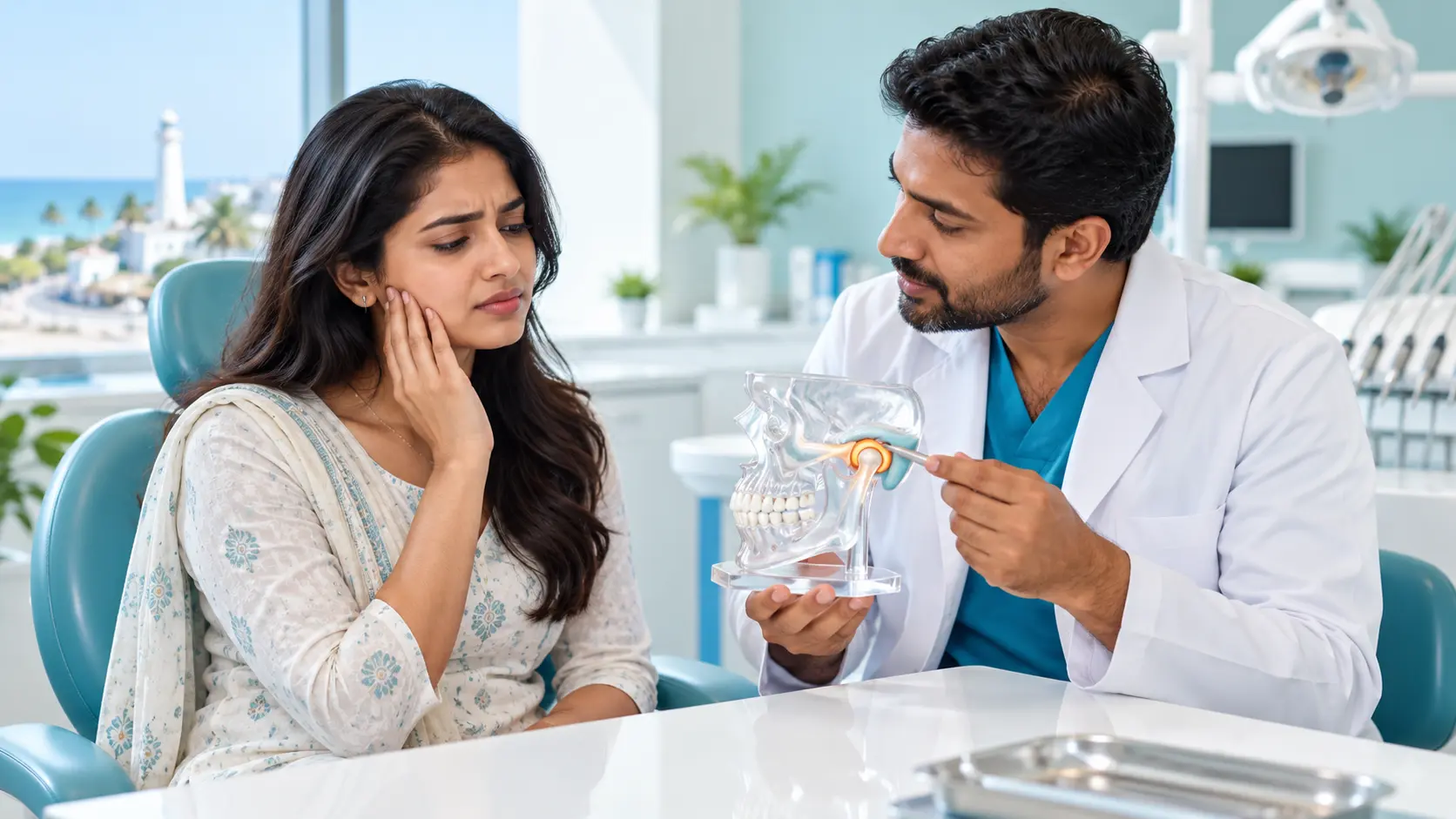
Jaw Pain Treatment in Pondicherry: Causes, Relief and Care
Jaw pain can affect eating, speaking, yawning and normal mouth movement. The discomfort may originate from a tooth, the jaw muscles, the temporomandibular joints, an injury or another health condition.
The temporomandibular joints, commonly called the TMJs, connect the lower jaw to the skull. Problems affecting these joints or the surrounding chewing muscles are called temporomandibular disorders, or TMDs.
Jaw pain should not be self-diagnosed because different conditions can produce similar symptoms. A dental examination can help identify the source of the discomfort and determine the appropriate jaw pain treatment in Pondicherry.
What Are the Common Causes of Jaw Pain?
Jaw pain can develop for several reasons. Some causes are dental, while others involve the jaw muscles, joints or nearby structures.
Common causes include:
- Tooth decay
- Dental abscess or infection
- Cracked or damaged teeth
- Gum infection
- Impacted or infected wisdom teeth
- Teeth grinding or clenching
- Temporomandibular disorders
- Overuse of the chewing muscles
- Jaw injury or trauma
- Arthritis affecting the jaw joint
- Frequent gum chewing
- Nail biting or chewing hard objects
- Opening the mouth excessively wide
- Stress-related jaw tension
- Poorly fitting dental appliances
Pain that feels like it is coming from the jaw may sometimes originate from the ear, sinuses, nerves or another medical condition. A professional assessment is important for determining the actual cause.
What Is a Temporomandibular Disorder?
A temporomandibular disorder is a condition affecting the jaw joints, chewing muscles or structures controlling jaw movement.
TMD symptoms may include:
- Pain around the jaw joints
- Tenderness in the chewing muscles
- Pain near the ears or temples
- Difficulty opening the mouth fully
- Pain while chewing
- Jaw stiffness
- Painful clicking or popping
- A jaw that temporarily locks
- Facial discomfort
- Headaches around the temples
- A change in how the teeth meet
- Pain spreading towards the face or neck
A clicking or popping sound without pain or restricted movement is common and may not require treatment. Painful clicking, jaw locking or limited movement should be professionally assessed.
Is Jaw Pain Always Caused by TMJ Problems?
No. Jaw pain is not always caused by a temporomandibular disorder.
Dental conditions that can produce jaw pain include:
- Deep tooth decay
- Tooth infection
- Gum disease
- Cracked teeth
- Wisdom-tooth problems
- Dental trauma
- Damaged fillings or crowns
Jaw discomfort may also be connected to teeth grinding, muscle tension, arthritis, injury, sleep-related problems or certain medical conditions.
A dentist may need to rule out dental infections and tooth damage before diagnosing a jaw-joint or muscle disorder.
How Is Jaw Pain Diagnosed?
The dentist begins by asking about your symptoms, medical history and dental history.
You may be asked:
- When did the pain begin?
- Is the pain constant or occasional?
- Does it become worse when chewing?
- Do you grind or clench your teeth?
- Does your jaw click, pop or lock?
- Have you recently experienced an injury?
- Do you wake with jaw tightness or headaches?
- Do you have tooth sensitivity or swelling?
- Are you taking any regular medicines?
- Is stress making the discomfort worse?
The clinical examination may include:
- Checking the teeth for decay, cracks and wear
- Examining the gums for signs of infection
- Checking wisdom teeth
- Feeling the jaw muscles for tenderness
- Assessing jaw movement
- Listening for joint sounds
- Checking how the teeth meet
- Examining existing dental restorations
Dental X-rays may be recommended when a tooth problem, bone condition, impacted tooth or injury is suspected. Complex cases may require additional imaging or referral to an appropriate specialist.
What Treatments Are Available for Jaw Pain?
Treatment depends on the underlying cause. There is no single treatment suitable for every patient with jaw pain.
Treatment for dental infection
If the pain is caused by tooth decay, an abscess or gum infection, treatment may involve:
- Removing the decay
- Dental filling
- Root canal treatment
- Gum treatment
- Tooth extraction when the tooth cannot be saved
- Medication when clinically required
Antibiotics are not appropriate for every toothache and should only be used when prescribed by a qualified healthcare professional.
Conservative care for jaw-joint pain
Many jaw-joint and muscle conditions may improve with conservative treatment.
The dentist may recommend:
- Eating softer foods temporarily
- Avoiding excessive mouth opening
- Reducing jaw clenching
- Avoiding chewing gum
- Applying heat or cold as advised
- Relaxing the jaw muscles
- Improving sleep habits
- Managing stress
- Gentle exercises under professional guidance
- Reviewing symptoms over time
Treatment should usually begin with simple, reversible approaches before considering procedures that permanently alter the teeth, bite or jaw joints.
Night guard for teeth grinding
If jaw pain is associated with teeth grinding or clenching, a customised dental night guard may be recommended.
A night guard may help:
- Protect the teeth from further wear
- Reduce direct tooth-to-tooth pressure
- Protect fillings and crowns
- Distribute biting forces
- Reduce damage caused by nighttime grinding
A night guard may protect the teeth, but it may not completely stop the grinding habit or cure every type of jaw pain.
Treatment for damaged teeth
If grinding or trauma has damaged the teeth, treatment may include:
- Dental bonding
- Fillings
- Crowns
- Treatment for sensitivity
- Replacement of damaged restorations
The cause of the damage should also be addressed to help protect the restored teeth.
Physiotherapy and specialist care
Persistent muscle or joint-related jaw pain may require referral for:
- Physiotherapy
- Jaw-movement guidance
- Pain-management support
- Behavioural therapy
- Sleep evaluation
- Oral and maxillofacial assessment
- Orofacial pain consultation
Surgery is rarely the first treatment for jaw pain. It is generally considered only for selected structural conditions after conservative options have been carefully evaluated.
How Can You Reduce Jaw Pain at Home?
Simple measures may help reduce mild jaw discomfort while you wait for a professional assessment.
- Eat soft foods temporarily
- Cut food into smaller pieces
- Avoid chewing gum
- Avoid hard, sticky and chewy foods
- Do not bite pens or fingernails
- Avoid opening your mouth excessively wide
- Support your jaw when yawning
- Keep your upper and lower teeth slightly apart when resting
- Relax your shoulders and jaw muscles
- Avoid resting your chin on your hand
- Maintain a regular sleep schedule
- Use relaxation techniques to manage stress
- Apply heat or cold only as professionally advised
Do not forcefully stretch, manipulate or attempt to reposition your jaw. Incorrect exercises may worsen certain conditions.
Ask a dentist, doctor or pharmacist before using pain medication, especially if you have allergies, stomach ulcers, kidney problems, take blood-thinning medication or have another medical condition.
When Should You See a Dentist for Jaw Pain?
Arrange a dental consultation if:
- Jaw pain lasts for more than a few days
- Pain repeatedly returns
- Chewing becomes uncomfortable
- Your jaw movement is limited
- The jaw clicks or pops with pain
- Your jaw temporarily locks
- You have tooth sensitivity
- You notice swelling near a tooth
- You wake with jaw tightness
- You frequently grind your teeth
- A tooth is cracked or damaged
- The discomfort affects sleep or daily activities
Early assessment can help identify dental problems before they become more serious.
When Is Jaw Pain an Emergency?
Seek urgent dental or medical care if you experience:
- Severe or rapidly increasing facial swelling
- Difficulty breathing or swallowing
- Swelling involving the mouth, throat or neck
- High fever with dental or facial swelling
- Heavy bleeding that does not stop
- Serious injury to the face or jaw
- Inability to open or close the mouth
- Severe pain that prevents eating or drinking
- Sudden numbness or weakness
- Vision changes following facial injury
Jaw discomfort can sometimes occur during a heart attack. Seek emergency medical help immediately if jaw pain occurs with chest pressure, shortness of breath, sweating, nausea, dizziness or pain spreading to the arm, shoulder, neck or back.
How Much Does Jaw Pain Treatment Cost in Pondicherry?
The cost of jaw pain treatment in Pondicherry depends on its cause and the treatment required.
Cost may be influenced by:
- Dental consultation
- Diagnostic X-rays or imaging
- Condition of the teeth and gums
- Presence of tooth infection
- Type of dental restoration required
- Custom night guard or splint
- Number of follow-up appointments
- Need for physiotherapy
- Need for specialist referral
An accurate estimate can only be provided after examining the teeth, gums, jaw muscles and joints.
Jaw Pain Treatment at Smile and Glow Dental Care
If you are experiencing jaw discomfort, Smile and Glow Dental Care can provide a detailed dental evaluation and personalised jaw pain treatment plan in Pondicherry.
During your consultation, the dentist may:
- Review your symptoms and medical history
- Examine the teeth and gums
- Check for infection or tooth damage
- Evaluate the jaw muscles and joints
- Assess jaw movement
- Check for signs of teeth grinding
- Review existing fillings and crowns
- Recommend suitable diagnostic tests
- Explain conservative treatment options
- Refer you to an appropriate specialist when required
Treatment recommendations will depend on the identified cause, severity of symptoms and overall oral health.
Frequently Asked Questions
What is the most common reason for jaw pain?
Jaw pain may result from dental decay, infection, teeth grinding, muscle tension, jaw-joint problems or injury. An examination is necessary because several conditions can produce similar symptoms.
Can teeth grinding cause jaw pain?
Yes. Repeated grinding or clenching can overload the chewing muscles and contribute to jaw tightness, morning discomfort, headaches and tooth wear.
Does jaw clicking require treatment?
Jaw clicking without pain or restricted movement is common and may not require treatment. Clicking accompanied by pain, locking or difficulty opening the mouth should be evaluated.
Can stress cause jaw pain?
Stress may increase jaw clenching and muscle tension in some people. Stress management can be helpful, but other dental or medical causes should still be considered.
Will a night guard cure jaw pain?
A night guard may protect the teeth and help some patients with grinding-related discomfort. However, it does not cure every cause of jaw pain and should be recommended after a dental evaluation.
Should I apply heat or ice for jaw pain?
Heat or cold may help some types of jaw discomfort. The appropriate method depends on the cause and stage of the condition. Use a wrapped pack for a limited period and follow professional advice.
Can a tooth infection cause jaw pain?
Yes. Tooth decay, dental abscesses, gum infections and wisdom-tooth problems can cause pain that spreads into the jaw. Swelling, fever, a bad taste or severe tooth pain requires prompt dental attention.
Where can I get jaw pain treatment in Pondicherry?
You can consult Smile and Glow Dental Care for a dental examination and jaw pain treatment in Pondicherry. The dentist will identify whether the pain is related to a tooth, jaw muscle, joint or another condition before recommending treatment.
Conclusion
Jaw pain can be caused by dental infection, teeth grinding, muscle tension, temporomandibular disorders, injury or another health condition. Because the symptoms can overlap, an accurate diagnosis is important before beginning treatment.
Many muscle and jaw-joint conditions can be managed with conservative care, while tooth-related problems may require restorative or infection-control treatment.
Consult Smile and Glow Dental Care for a professional evaluation and personalised jaw pain treatment plan in Pondicherry.
This article provides general educational information and is not a substitute for examination, diagnosis or personalised advice from a qualified dentist or healthcare professional.