


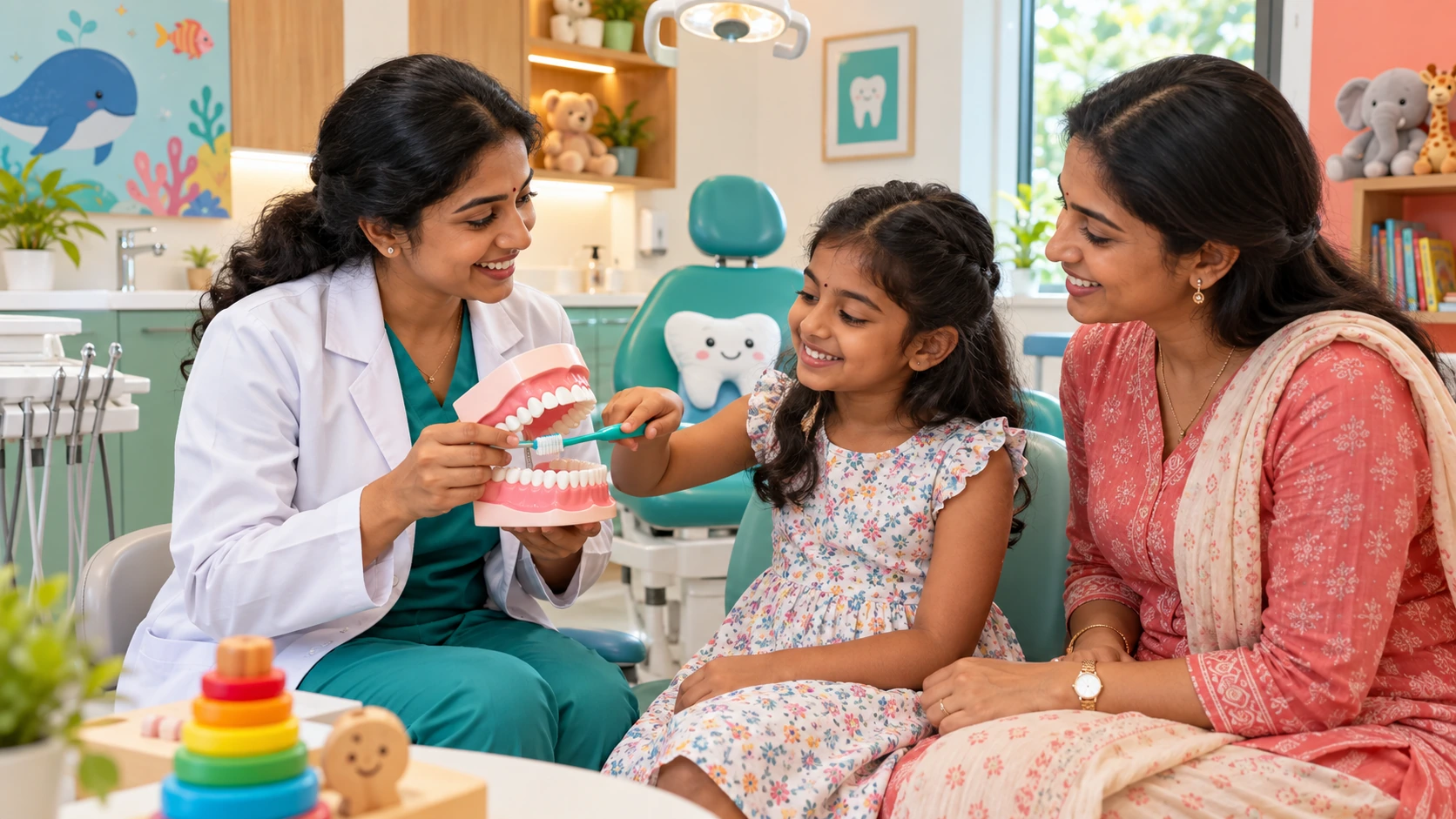
Pediatric Dental Care in Pondicherry: Complete Guide for Parents
Children's teeth need specialized care because their mouths are continuously developing. Primary teeth help children chew, speak, maintain space for permanent teeth, and develop healthy oral habits.
Pediatric dental care focuses on prevention, early diagnosis, treatment, oral hygiene education, and making dental visits comfortable for children.
If you are searching for pediatric dental care in Pondicherry, regular dental visits can help identify cavities, developing bite problems, gum concerns, and other dental issues at an earlier stage.
SmileKraft Dentaire provides pediatric dentistry in Puducherry and lists pediatric conscious sedation among its dental services. Its current website also includes children's dentistry as part of its comprehensive dental care. :chatgpt-content-reference{index="1"}
What Is Pediatric Dental Care?
Pediatric dental care is dental care designed around the oral health needs of children.
It can include:
- Routine dental examinations
- Cavity prevention
- Cavity treatment
- Fluoride care
- Oral hygiene education
- Monitoring primary teeth
- Monitoring permanent teeth
- Evaluation of developing teeth
- Dental trauma management
- Habit evaluation
- Preventive orthodontic assessment
- Behavior management
- Conscious sedation for selected cases
The exact treatment depends on the child's age, dental development, oral health, and individual needs.
Why Is Children's Dental Care Important?
Primary teeth are temporary, but they still play important roles in a child's development.
Healthy primary teeth help with:
- Chewing
- Speech development
- Maintaining space for permanent teeth
- Normal jaw development
- Comfortable eating
- Developing good oral hygiene habits
Untreated dental problems can cause pain and may interfere with eating, sleeping, or daily activities.
When Should a Child First Visit the Dentist?
Parents should discuss the appropriate timing of a child's first dental visit with a pediatric dentist or family dentist.
Early dental visits can help parents learn about:
- Brushing techniques
- Fluoride
- Diet
- Bottle and feeding habits
- Thumb sucking
- Pacifier use
- Teething
- Cavity prevention
- Dental development
The first visits can also help children become familiar with the dental environment.
How Often Should Children Visit the Dentist?
The appropriate recall interval depends on the child's oral health and individual risk factors.
Children with a history of cavities, orthodontic concerns, developmental issues, or other dental problems may require more frequent monitoring.
Routine examinations allow the dentist to identify problems before they become more complicated.
Common Dental Problems in Children
Children can experience many of the same dental problems as adults, along with conditions related to developing teeth.
Common concerns include:
- Tooth decay
- Tooth sensitivity
- Gum inflammation
- Dental trauma
- Chipped teeth
- Tooth discoloration
- Early tooth loss
- Delayed eruption
- Crowding
- Spacing
- Bite problems
- Thumb-sucking-related changes
- Dental anxiety
Early assessment can help determine the appropriate treatment.
Dental Cavities in Children
Tooth decay is one of the most common dental problems affecting children.
Cavities can develop when bacteria interact with sugars and carbohydrates in the mouth and produce acids that damage tooth structure.
Risk factors can include:
- Frequent sugary snacks
- Sugary drinks
- Poor brushing
- Inadequate fluoride exposure
- Night-time feeding habits
- Previous cavities
- Poor oral hygiene
A dentist can assess the child's individual cavity risk and recommend preventive measures.
How to Prevent Cavities in Children
Parents can help reduce the risk of childhood cavities by encouraging:
- Twice-daily brushing
- Appropriate fluoride toothpaste
- Cleaning between teeth when needed
- Limiting frequent sugary snacks
- Reducing sugary drinks
- Drinking water
- Regular dental examinations
- Professional preventive care
The specific amount of fluoride toothpaste should be appropriate for the child's age and should be discussed with the dentist.
Fluoride Treatment for Children
Fluoride can help strengthen tooth enamel and reduce the risk of cavities.
Depending on the child's age and cavity risk, a dentist may recommend professional fluoride treatment.
Fluoride recommendations should be individualized according to:
- Age
- Cavity risk
- Existing fluoride exposure
- Oral hygiene
- Diet
- Local water fluoride levels
Parents should follow the dentist's instructions regarding fluoride use.
Dental Sealants for Children
Dental sealants are protective coatings that may be applied to the grooves and pits of selected teeth.
They can be particularly useful for teeth with deep grooves that are difficult to clean effectively.
A dentist may recommend sealants based on:
- Tooth anatomy
- Cavity risk
- Age
- Oral hygiene
- Existing dental condition
Sealants are preventive treatment and do not replace brushing or regular dental examinations.
Children's Dental Cleaning
Professional dental cleaning may be recommended when plaque, calculus, or stains cannot be adequately controlled through routine home care.
A dental cleaning may help:
- Remove accumulated deposits
- Support gum health
- Improve oral hygiene
- Teach children effective brushing
- Identify early dental problems
The frequency of professional cleaning depends on individual oral health.
Children's Tooth Brushing
Parents play an important role in helping children develop good brushing habits.
A child's brushing routine should include:
- Brushing twice daily
- Using age-appropriate fluoride toothpaste
- Cleaning all tooth surfaces
- Brushing along the gumline
- Using a suitable toothbrush
- Supervising younger children
Young children may need parental assistance until they develop the coordination required to brush effectively.
When Should Children Start Flossing?
Flossing or interdental cleaning becomes important when adjacent teeth touch each other and a toothbrush cannot clean between them effectively.
Parents can help younger children with interdental cleaning.
The dentist can demonstrate the appropriate technique according to the child's dental development.
Dental Care During Teething
Teething can cause temporary gum discomfort as primary teeth erupt.
Parents can help by:
- Keeping the mouth clean
- Using appropriate teething aids
- Offering suitable cool items when recommended
- Maintaining normal oral hygiene
A persistent fever, significant swelling, or other concerning symptoms should not automatically be attributed to teething and should be evaluated appropriately.
Baby Bottle Tooth Decay
Frequent exposure of a child's teeth to sugary liquids can increase the risk of early childhood tooth decay.
Particular attention should be given to:
- Sweetened drinks
- Frequent milk or formula exposure
- Juice
- Night-time feeding
- Sugary snacks
Parents should discuss feeding and oral hygiene habits with their child's dentist.
Children's Dental Trauma
Children can experience dental injuries from:
- Falls
- Sports
- Playground accidents
- Bicycle accidents
- Contact activities
- Other trauma
A dental injury may involve:
- Chipped teeth
- Fractured teeth
- Loose teeth
- Displaced teeth
- Soft-tissue injuries
- Knocked-out teeth
Dental trauma should be evaluated promptly.
What Should You Do If a Child Chips a Tooth?
If a child chips a tooth:
1. Keep the child calm.
2. Rinse the mouth gently if necessary.
3. Look for bleeding or swelling.
4. Save any broken tooth fragment if possible.
5. Contact a dentist for evaluation.
6. Follow the dentist's instructions.
The urgency depends on the type and severity of the injury.
Knocked-Out Permanent Tooth in a Child
A knocked-out permanent tooth is a dental emergency.
Parents should seek urgent dental care.
The appropriate handling of the tooth depends on the child's age and the type of tooth involved.
Do not attempt to manage a serious dental injury without professional guidance.
Primary Teeth vs Permanent Teeth
Children have two main sets of teeth.
Primary Teeth
Primary teeth:
- Erupt during early childhood
- Help with chewing
- Support speech
- Maintain space
- Eventually fall out naturally
Permanent Teeth
Permanent teeth gradually replace primary teeth and are intended to serve the child throughout adulthood.
Protecting primary teeth helps support healthy oral development while permanent teeth are developing.
Why Are Baby Teeth Important?
It is a misconception that cavities in baby teeth can always be ignored because the teeth will eventually fall out.
Untreated cavities can cause:
- Pain
- Infection
- Difficulty eating
- Sleep disruption
- Premature tooth loss
- Space-related problems
The dentist should determine whether treatment is necessary.
Early Tooth Loss in Children
Premature loss of a primary tooth can sometimes affect the space available for the permanent tooth.
Depending on:
- Which tooth was lost
- Age of the child
- Dental development
- Position of neighboring teeth
the dentist may recommend monitoring or a space-maintaining approach.
Children's Orthodontic Assessment
Some children may benefit from an early orthodontic assessment.
A dentist or orthodontist may evaluate:
- Crowding
- Spacing
- Crossbite
- Open bite
- Overbite
- Underbite
- Jaw growth
- Tooth eruption
- Oral habits
Early evaluation does not necessarily mean that immediate braces are required.
Thumb Sucking and Dental Development
Thumb sucking and other prolonged oral habits can affect developing teeth and jaws in some children.
The effect depends on:
- Frequency
- Duration
- Intensity
- Age
- Individual dental development
Parents should discuss persistent habits with a dentist so that appropriate guidance can be provided.
Pacifier Use and Teeth
Pacifier use can be part of normal infancy.
However, prolonged use may affect dental development in some children.
Parents should discuss age-appropriate discontinuation with their dentist or pediatric healthcare professional.
Children's Dental Anxiety
Some children feel nervous about dental treatment.
Common reasons include:
- Fear of unfamiliar surroundings
- Previous unpleasant experiences
- Fear of dental instruments
- Fear of injections
- Fear of pain
- Anxiety from seeing another person receive treatment
A child-friendly approach can help make dental visits more comfortable.
How Can Parents Reduce Dental Anxiety?
Parents can help by:
- Speaking positively about dental visits
- Avoiding threatening language
- Explaining that the dentist checks the teeth
- Bringing the child for routine visits
- Avoiding sharing frightening dental stories
- Allowing the dentist to communicate directly with the child
- Following the clinic's behavior-management approach
Regular preventive visits can help children become familiar with dental care before urgent treatment is needed.
Pediatric Conscious Sedation
Some children may have difficulty cooperating during dental treatment because of age, anxiety, special needs, or the complexity of the procedure.
Conscious sedation may be considered for selected children when clinically appropriate.
SmileKraft Dentaire currently lists pediatric conscious sedation as one of its services and describes it as supporting young patients in receiving care in a calm setting. :chatgpt-content-reference{index="2"}
Sedation should only be considered after appropriate assessment and according to applicable clinical safety protocols.
Is Conscious Sedation Safe for Children?
Sedation is a medical procedure and should be planned carefully.
Before sedation, the dental team should consider:
- Child's age
- Medical history
- Current medications
- Allergies
- Fasting requirements
- Type of procedure
- Level of sedation
- Appropriate monitoring
- Recovery requirements
Parents should discuss the specific sedation method and safety protocol with the treating dental team.
Pediatric Dental Treatment for Special Needs
Some children may require additional support during dental visits.
Treatment planning may consider:
- Communication needs
- Sensory sensitivities
- Medical conditions
- Medications
- Previous dental experiences
- Ability to cooperate
- Caregiver involvement
The dental team can adapt the visit and treatment approach when appropriate.
Children's Dental X-Rays
Dental X-rays are not automatically required at every children's dental visit.
They may be recommended when clinically necessary to evaluate:
- Tooth decay between teeth
- Developing permanent teeth
- Dental trauma
- Delayed eruption
- Root or bone conditions
- Orthodontic concerns
The type and frequency of imaging should be determined according to the child's individual needs.
Pediatric Dental Fillings
If a child develops a cavity, the dentist may recommend a filling depending on the depth and location of the decay.
Treatment may involve:
- Examination
- Diagnostic imaging when needed
- Removal of damaged tooth structure
- Cleaning the area
- Placement of a suitable restoration
- Bite adjustment
The dentist will select the appropriate material and technique based on the child's tooth and clinical condition.
Pediatric Pulp Treatment
If decay reaches the pulp of a primary tooth, more extensive treatment may sometimes be necessary.
Depending on the condition, treatment may include a form of pulp therapy designed for primary teeth.
The purpose is to manage infection or inflammation while preserving the tooth when clinically appropriate.
Dental Crowns for Children
Some heavily damaged primary teeth may require a pediatric dental crown.
A crown may be considered when:
- A large portion of the tooth is damaged
- The tooth has received pulp treatment
- A conventional filling is unlikely to provide adequate protection
- The tooth needs full-coverage restoration
The dentist determines whether a crown is appropriate.
Children's Emergency Dental Care
Seek prompt dental care if a child experiences:
- Severe tooth pain
- Facial swelling
- Dental trauma
- A knocked-out permanent tooth
- Significant bleeding
- Broken teeth
- Signs of dental infection
If facial or oral swelling causes difficulty breathing or swallowing, urgent medical attention is required.
Dental Care for Children With Braces
Children undergoing orthodontic treatment need additional attention to oral hygiene.
Parents should encourage:
- Careful brushing
- Cleaning around brackets
- Interdental cleaning
- Limiting sticky sugary foods
- Regular orthodontic appointments
- Prompt reporting of broken appliances
Good oral hygiene helps reduce the risk of cavities during orthodontic treatment.
Pediatric Dental Care and Nutrition
Diet plays an important role in children's oral health.
Frequent exposure to sugary foods and drinks can increase cavity risk.
Parents can encourage:
- Water as a regular drink
- Balanced meals
- Fewer sugary snacks
- Limited sugary drinks
- Regular meal patterns
- Tooth-friendly snacks
Dietary advice should be appropriate for the child's age and overall nutritional needs.
Children's Dental Care and School
Dental problems can affect a child's daily routine.
Untreated dental pain may interfere with:
- Eating
- Sleeping
- Concentration
- School attendance
- Participation in activities
Regular preventive dental care can help identify problems before they become disruptive.
How to Prepare Your Child for a Dental Visit
Before the appointment:
- Explain that the dentist will check the teeth
- Avoid using frightening words
- Keep the explanation simple
- Bring familiar comfort items if permitted
- Arrive with enough time
- Inform the dentist about relevant medical history
- Tell the dental team about previous difficult dental experiences
Allowing the dental team to guide the child through the appointment can be helpful.
What Happens During a Pediatric Dental Checkup?
A routine visit may include:
Dental Examination
The dentist checks the teeth, gums, bite, and developing structures.
Oral Hygiene Assessment
Brushing and cleaning habits are reviewed.
Cavity Assessment
The dentist looks for signs of tooth decay.
Growth and Development
The eruption and position of teeth may be evaluated.
Preventive Advice
Parents may receive guidance about diet, fluoride, brushing, and oral habits.
Treatment Planning
If a dental problem is identified, appropriate treatment options are explained.
How Much Does Pediatric Dental Care Cost in Pondicherry?
There is no single cost for pediatric dental care.
The total cost depends on:
- Type of consultation
- Preventive treatment
- Fluoride treatment
- Dental cleaning
- Filling
- Pulp therapy
- Pediatric crown
- Dental trauma treatment
- Sedation requirements
- Imaging
- Orthodontic assessment
A dental examination is needed to determine the treatment required and its cost.
Does Pediatric Conscious Sedation Cost More?
Sedation can involve additional clinical planning, monitoring, medication, and recovery requirements.
Therefore, a sedated dental procedure may have a different cost from routine treatment.
Parents should ask the dental team for a complete estimate before treatment.
Why Choose SmileKraft Dentaire for Pediatric Dental Care?
SmileKraft Dentaire provides pediatric dentistry in Puducherry as part of its multispeciality dental services. Its current website lists pediatric dentistry and pediatric conscious sedation among its available services. :chatgpt-content-reference{index="3"}
The clinic states that its approach combines modern technology with personalized dental care and patient comfort. :chatgpt-content-reference{index="4"}
Its broader dental services include preventive, restorative, endodontic, orthodontic, cosmetic, implant, laser, and microscope-assisted dental care. :chatgpt-content-reference{index="5"}
Pediatric Dental Consultation in Pondicherry
A child's dental consultation can help parents understand the current condition of the teeth and what care may be required as the child grows.
The dentist may evaluate:
- Primary teeth
- Permanent teeth
- Gum health
- Tooth eruption
- Cavities
- Bite
- Oral habits
- Dental hygiene
- Previous dental treatment
Parents can also ask questions about brushing, fluoride, diet, teething, orthodontic development, and dental anxiety.
How Parents Can Maintain Their Child's Oral Health
Parents can encourage healthy habits by:
- Brushing the child's teeth twice daily
- Using age-appropriate fluoride toothpaste
- Supervising brushing when necessary
- Cleaning between teeth when appropriate
- Limiting frequent sugary snacks
- Encouraging water
- Avoiding using sugary drinks as comfort
- Attending routine dental examinations
- Addressing dental pain early
- Protecting teeth during sports where appropriate
Final Thoughts: Pediatric Dental Care in Pondicherry
Pediatric dental care is about more than treating cavities.
It includes prevention, oral hygiene, monitoring dental development, managing dental anxiety, treating childhood dental problems, and helping children develop healthy habits that can continue into adulthood.
Important areas of pediatric dental care include:
- Regular dental examinations
- Cavity prevention
- Fluoride care
- Dental sealants
- Oral hygiene education
- Dental trauma management
- Primary tooth treatment
- Monitoring permanent teeth
- Orthodontic assessment
- Dental anxiety management
- Conscious sedation for selected cases
Every child has different dental needs.
A professional dental examination can help determine the appropriate preventive and treatment plan for your child.
If you are looking for pediatric dental care in Pondicherry, consult a dental professional who can assess your child's oral health and provide age-appropriate guidance and treatment.
Frequently Asked Questions
What is pediatric dental care?
Pediatric dental care focuses on maintaining children's oral health through preventive care, examinations, cavity treatment, dental development monitoring, oral hygiene education, and appropriate treatment.
When should a child first visit the dentist?
Parents should discuss the appropriate timing with a pediatric dentist. Early dental visits can help establish preventive habits and allow the dentist to monitor dental development.
How often should children visit the dentist?
The appropriate interval depends on the child's oral health and individual risk factors. Regular examinations help identify dental problems early.
How can I prevent cavities in my child?
Encourage twice-daily brushing with age-appropriate fluoride toothpaste, limit frequent sugary snacks and drinks, maintain good oral hygiene, and attend regular dental checkups.
Are baby teeth important?
Yes. Primary teeth support chewing, speech, dental development, and space maintenance for permanent teeth.
Can children get dental fillings?
Yes. Cavities in primary or permanent teeth may be treated with fillings when clinically appropriate.
What should I do if my child chips a tooth?
Keep the child calm, check for bleeding or swelling, save any tooth fragment if possible, and contact a dentist for evaluation.
What is pediatric conscious sedation?
Pediatric conscious sedation is a technique that may help selected children remain calm and cooperative during dental treatment. Suitability and safety requirements must be assessed by the dental team.
Is conscious sedation suitable for every child?
No. The decision depends on the child's age, medical history, treatment needs, anxiety level, cooperation, and clinical assessment.
Can children receive fluoride treatment?
Yes. A dentist may recommend professional fluoride treatment based on the child's age, cavity risk, oral hygiene, and fluoride exposure.
Do children need dental X-rays?
Not necessarily at every visit. X-rays should be recommended when clinically necessary based on the child's dental condition and risk factors.
How much does pediatric dental care cost in Pondicherry?
The cost depends on the treatment required, such as examination, cleaning, fluoride care, fillings, pulp treatment, crowns, imaging, trauma treatment, or sedation.
Where can I get pediatric dental care in Pondicherry?
SmileKraft Dentaire provides pediatric dentistry and pediatric conscious sedation in Puducherry as part of its multispeciality dental services. :chatgpt-content-reference{index="6"}