


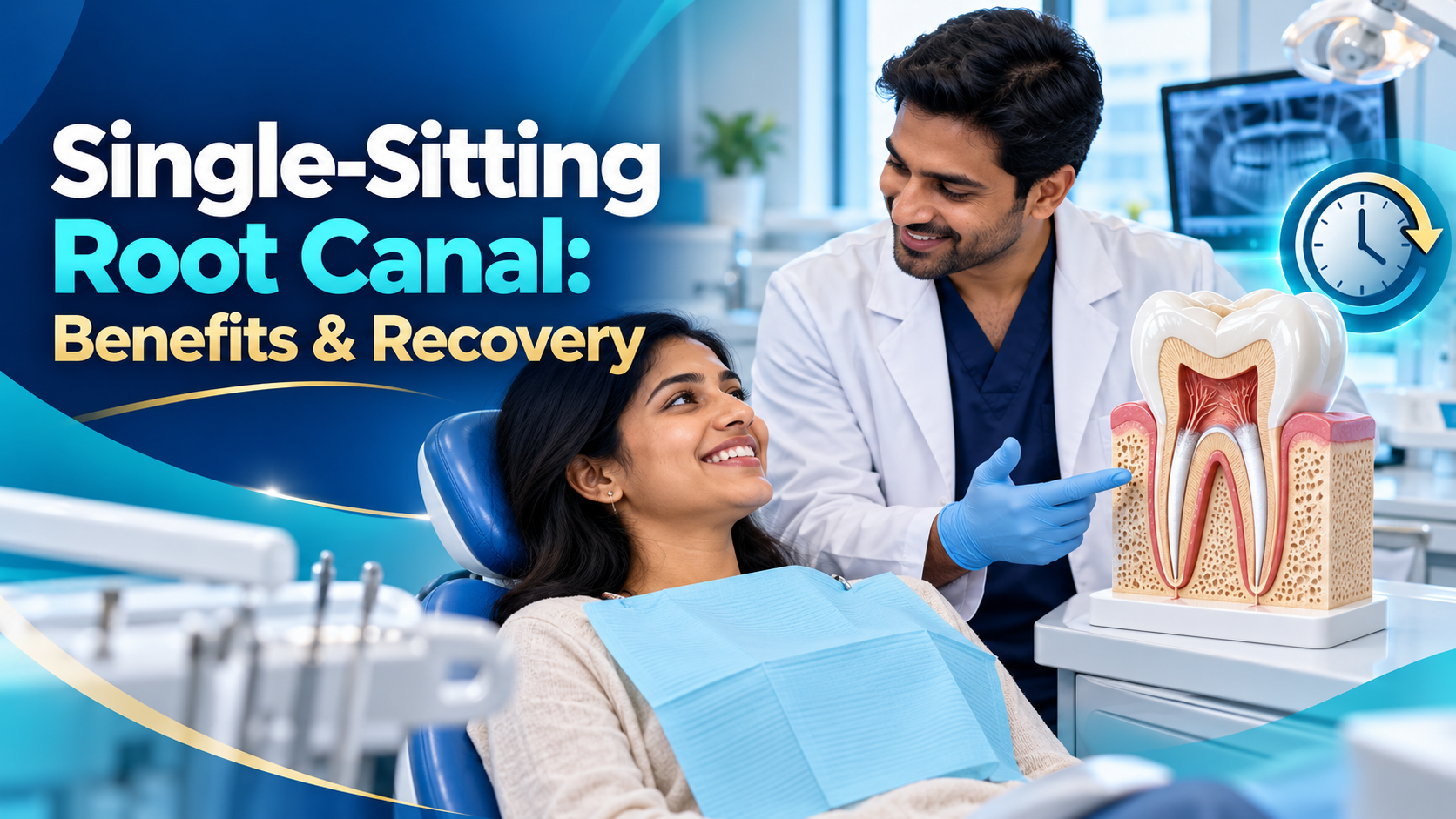
What Is Single-Sitting Root Canal Treatment?
Single-sitting root canal treatment is a procedure in which the infected or inflamed tissue inside a tooth is removed, the root canals are cleaned and disinfected, and the canal system is filled and sealed during one appointment.
Completing the root canal procedure in one sitting does not always mean that the permanent crown or final restoration will be placed during the same visit. A separate appointment may still be needed to protect and restore the treated tooth.
Why Is Root Canal Treatment Needed?
Root canal treatment may be recommended when the dental pulp inside a tooth becomes irreversibly inflamed, infected or damaged.
Common causes include:
- Deep tooth decay
- A cracked or chipped tooth
- Repeated dental procedures
- A damaged or leaking restoration
- Dental trauma
- Infection around the tooth root
The aim is to remove the affected pulp, disinfect the canal system, seal the tooth and preserve the natural tooth when possible.
How Is a Single-Sitting Root Canal Performed?
The exact procedure depends on the tooth and clinical condition. The usual steps include:
- Examining the tooth and taking dental X-rays
- Administering local anaesthesia
- Isolating the tooth with a protective rubber dam
- Creating an opening in the tooth
- Removing infected or inflamed pulp
- Cleaning and shaping the root canals
- Disinfecting the canal system
- Filling and sealing the root canals
- Placing a temporary or permanent restoration
A crown or another protective restoration may be recommended later, especially for a heavily damaged back tooth.
Benefits of Single-Sitting Root Canal Treatment
Fewer Dental Appointments
The cleaning, disinfection and filling stages are completed during one appointment. This can be convenient for patients with busy schedules or difficulty making repeated visits.
Reduced Need for Temporary Canal Dressings
When treatment is completed in one sitting, there may be less need for medication or temporary sealing inside the canals between appointments.
No Risk of Missing an Intermediate Appointment
Completing the procedure in one visit reduces the possibility of treatment being interrupted because a patient cannot return for the next stage.
Efficient Treatment for Suitable Cases
Modern imaging, magnification and root canal instruments can help dentists complete selected cases efficiently. Clinical suitability remains more important than speed.
Earlier Sealing of the Root Canals
The cleaned canal system is filled and sealed during the same appointment. The tooth must still receive an appropriate final restoration to protect it from leakage or fracture.
Preserves the Natural Tooth
Like conventional multi-visit treatment, the main purpose of single-sitting root canal treatment is to control infection and retain the natural tooth when it can be restored.
Is Single-Sitting Treatment Better Than Multiple Visits?
Current evidence does not establish that single-visit root canal treatment is universally more successful than treatment completed over multiple appointments.
Both approaches can be effective when properly selected and performed. Some evidence suggests that pain within the first week may occur more frequently after single-visit treatment, although findings vary across studies.
The dentist should choose the number of visits according to the condition of the tooth, infection, canal anatomy, treatment complexity and patient needs.
Who May Be Suitable?
Single-sitting root canal treatment may be considered when:
- The tooth can be adequately cleaned and sealed in one visit
- The canal anatomy can be managed during the available appointment
- There is no persistent drainage preventing completion
- The patient can tolerate a longer appointment
- The tooth has enough structure to be restored
- The dentist considers one-visit treatment clinically appropriate
A dental examination and X-ray are required before confirming suitability.
When Might Multiple Visits Be Recommended?
More than one appointment may be preferred when:
- The root canal anatomy is complex
- The canals are calcified or difficult to locate
- Persistent drainage is present
- The tooth requires retreatment
- Additional disinfection time is considered necessary
- The patient cannot tolerate a long appointment
- Swelling or other clinical factors affect treatment
- The dentist needs to reassess symptoms before sealing
Needing multiple visits does not mean that treatment is less advanced or less effective.
What to Expect After Treatment
The mouth may remain numb for several hours after local anaesthesia. Mild soreness, tenderness or sensitivity while biting can occur for a few days.
Follow the dentist’s specific instructions, which may include:
- Avoid eating until the numbness has worn off
- Avoid hard or sticky foods on the treated tooth
- Take prescribed or recommended medicines correctly
- Brush and floss carefully
- Attend the restoration and review appointments
- Do not delay the recommended permanent crown or filling
The treated tooth can remain vulnerable until it receives its final restoration.
How Long Does Recovery Take?
Many patients return to normal daily activities shortly after treatment. Mild tenderness usually improves gradually, although recovery differs between patients.
Contact the dentist if discomfort becomes severe, continues to worsen or does not improve as expected.
Warning Signs After a Root Canal
Contact your dentist if you experience:
- Severe or increasing pain
- Visible swelling inside or outside the mouth
- Fever or feeling unwell
- A persistent bad taste or discharge
- An uneven or painful bite
- Loss of a temporary filling
- Return of the original symptoms
- An allergic reaction to medication
Seek immediate medical care if swelling causes difficulty breathing, swallowing or speaking.
Single-Sitting Root Canal Treatment in Pondicherry
If you have tooth pain, prolonged sensitivity, swelling or pain while biting, schedule a dental examination in Pondicherry. The dentist will assess whether the tooth needs root canal treatment and whether it can be safely completed in one sitting.
Ask your dentist about:
- The diagnosis
- Why one or multiple visits are recommended
- Expected appointment duration
- Possible risks and alternatives
- Recovery instructions
- Need for a crown
- Complete treatment cost
Frequently Asked Questions
Can every root canal be completed in one sitting?
No. Suitability depends on the tooth, infection, canal anatomy, treatment complexity and the dentist’s clinical assessment.
Is a single-sitting root canal painful?
The tooth is numbed with local anaesthesia during treatment. Mild soreness or tenderness may occur afterward, but severe or worsening pain should be reported.
Will I need a crown after a single-sitting root canal?
A crown or another final restoration is often recommended to protect the treated tooth. The need depends on the tooth’s location, strength and remaining structure.
How soon can I eat after treatment?
Wait until the numbness has completely worn off. Avoid hard or sticky foods on the treated tooth until the dentist confirms that it is safely restored.
Choose the Right Root Canal Approach
Single-sitting root canal treatment can reduce the number of appointments and provide efficient care for suitable cases. Multiple visits may be safer or more predictable for complex conditions.
Book a root canal consultation in Pondicherry to receive a diagnosis and determine the most appropriate treatment plan for your tooth.