


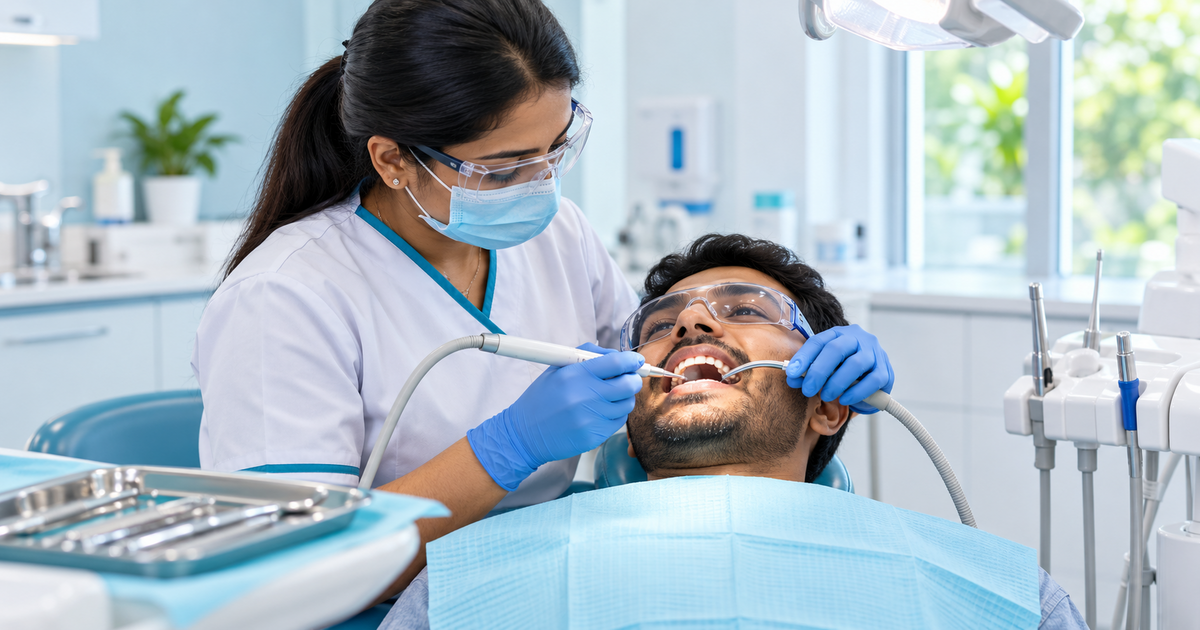
Teeth Cleaning and Scaling in Pondicherry – Complete Guide to Healthy Teeth and Gums
Healthy teeth and gums are essential for maintaining a confident smile and good oral health. Even with regular brushing and flossing, plaque can accumulate in difficult-to-reach areas of the mouth. Over time, plaque may harden into tartar, which cannot be removed through ordinary brushing.
If you are looking for **teeth cleaning and scaling in Pondicherry**, professional dental cleaning can help remove plaque and tartar, support healthier gums, and reduce the risk of certain oral health problems.
At **Smile and Glow Dental Care in Pondicherry**, patients can enquire about preventive dental examinations, professional cleaning, and appropriate care for gum-related concerns.
Understanding the dental scaling procedure, its benefits, and recommended aftercare can help you make informed decisions about maintaining your oral health.
What Is Teeth Cleaning and Scaling?
Teeth cleaning and scaling is a professional dental procedure used to remove plaque, tartar, and certain surface stains from the teeth.
Plaque is a sticky film containing bacteria that constantly forms on tooth surfaces. When plaque is not removed effectively, it can harden into tartar, also called dental calculus.
Once tartar forms, it usually requires professional dental instruments for removal.
What Is the Difference Between Plaque and Tartar?
**Dental Plaque:**
- A soft, sticky bacterial film.
- Forms naturally on teeth throughout the day.
- Can contribute to cavities and gum inflammation.
- Can be controlled through brushing and interdental cleaning.
**Dental Tartar:**
- Hardened plaque that has become mineralized.
- Often accumulates near the gumline and between teeth.
- Cannot be reliably removed using a regular toothbrush.
- Requires professional dental cleaning for removal.
Regular brushing and flossing remain essential, but they do not replace professional cleaning when tartar has accumulated.
Why Is Professional Teeth Cleaning Important?
Professional teeth cleaning helps maintain oral hygiene by removing bacterial deposits that are difficult to eliminate at home.
It also gives the dentist an opportunity to examine the gums, evaluate existing dental problems, and recommend preventive care.
Benefits of Teeth Cleaning and Scaling
- Removes plaque and tartar deposits.
- Helps reduce gum inflammation caused by plaque.
- Supports healthier gums.
- May improve bad breath when bacterial deposits are contributing factors.
- Removes some external tooth stains.
- Helps maintain oral hygiene.
- Supports periodontal disease prevention and management.
- Provides an opportunity for professional oral health assessment.
Professional cleaning is an important part of preventive dentistry, but it cannot replace daily brushing, flossing, or treatment for existing dental disease.
Signs You May Need Teeth Cleaning and Scaling
Many people benefit from professional cleaning even when they do not have obvious symptoms.
However, certain signs may indicate plaque accumulation or gum-related problems.
1. Yellow or Brown Deposits Near the Gums
Hardened tartar may appear as yellowish, brown, or darker deposits near the gumline.
These deposits are often noticeable behind the lower front teeth or in areas that are difficult to clean.
2. Bleeding Gums While Brushing
Bleeding gums may indicate gingivitis or another underlying oral health concern.
Plaque accumulation can contribute to gum inflammation, making the tissues more likely to bleed.
Persistent bleeding should be evaluated by a dentist rather than ignored.
3. Persistent Bad Breath
Bad breath can develop because of bacterial buildup, gum disease, dry mouth, tongue coating, or other conditions.
Professional cleaning may help when plaque and tartar are contributing to the problem.
However, persistent bad breath may require further dental or medical evaluation.
4. Red or Swollen Gums
Healthy gums generally do not appear persistently swollen or bleed easily.
Redness, swelling, tenderness, and inflammation may indicate a need for periodontal assessment.
5. Visible Stains on Teeth
Certain foods, beverages, and tobacco products can cause external staining.
Professional cleaning and polishing may remove some surface stains, although they do not change the natural internal color of teeth.
6. Gum Recession or Loose Teeth
Gum recession and loose permanent teeth may indicate more advanced periodontal problems.
These symptoms require a professional examination because routine cleaning alone may not be sufficient.
Types of Professional Dental Cleaning
The type of dental cleaning recommended depends on the patient's oral health and periodontal condition.
1. Routine Dental Scaling
Routine scaling removes plaque and tartar from accessible tooth surfaces and around the gumline.
It may be recommended as part of preventive dental care.
A dentist determines whether routine cleaning is sufficient after assessing gum health.
2. Ultrasonic Teeth Scaling
Ultrasonic scaling uses a dental instrument that vibrates at high frequency to loosen and remove tartar deposits.
Water is commonly used to cool the instrument and flush away loosened debris.
Benefits of Ultrasonic Scaling
- Helps remove hardened calculus deposits.
- Can support cleaning around the gumline.
- May improve the efficiency of tartar removal.
- Can be combined with hand instruments when appropriate.
Ultrasonic scaling is widely used in modern dentistry, but not every patient or procedure requires the same instruments.
Patients can confirm the available cleaning techniques with their chosen dental clinic.
3. Hand Scaling
Hand scaling involves specially designed dental instruments used to remove deposits from tooth surfaces.
Dentists may use hand scalers or curettes alone or alongside ultrasonic instruments.
The technique selected depends on the location of deposits, gum condition, and individual treatment needs.
4. Deep Cleaning – Scaling and Root Planing
Scaling and root planing is a therapeutic procedure used to manage periodontal disease.
Unlike routine preventive cleaning, deep cleaning focuses on plaque and calculus deposits beneath the gumline and around affected tooth roots.
It is usually recommended when periodontal examination findings indicate disease requiring more extensive treatment.
5. Dental Polishing
Dental polishing may be performed after scaling when appropriate.
Polishing can help remove certain external stains and leave treated tooth surfaces feeling smoother.
Polishing is not a substitute for scaling because it does not adequately remove hardened tartar.
What Happens During the Teeth Cleaning and Scaling Procedure?
Understanding the procedure can help patients feel more comfortable before visiting a dental clinic.
Step 1: Dental Examination
The dentist examines the teeth and gums to identify plaque, tartar, bleeding, inflammation, and other oral health concerns.
If there are signs of periodontal disease, additional gum measurements or dental X-rays may be recommended.
Step 2: Assessment of Tartar Deposits
The dentist identifies areas where tartar has accumulated.
Common areas include:
- Behind the lower front teeth.
- Around the gumline.
- Between closely positioned teeth.
- Around existing dental restorations.
- Areas that are difficult to reach during brushing.
Step 3: Professional Scaling
Dental instruments are used to remove plaque and calculus deposits.
Depending on the case, the dentist may use ultrasonic instruments, hand instruments, or a combination of both.
Step 4: Polishing When Appropriate
After scaling, polishing may be performed to remove some surface stains.
Not every patient requires the same polishing procedure.
Step 5: Oral Hygiene Guidance
The dental professional may explain:
- Proper brushing techniques.
- Suitable toothbrush selection.
- Interdental cleaning methods.
- Gum care recommendations.
- Whether additional periodontal treatment is necessary.
- Recommended follow-up intervals.
A personalized examination helps determine whether routine scaling is enough or further dental treatment is required.
Is Teeth Cleaning and Scaling Painful?
Routine dental scaling is generally well tolerated.
Some patients may experience temporary discomfort, especially if they have sensitive teeth, exposed roots, inflamed gums, or substantial tartar deposits.
What Might You Feel During Scaling?
- Mild vibration from ultrasonic instruments.
- Water spray or suction.
- Temporary sensitivity around certain teeth.
- Mild discomfort near inflamed gums.
- Occasional minor bleeding when the gums are already inflamed.
For deeper periodontal cleaning, local anesthesia may be recommended to improve comfort.
Patients should tell the dental team if they experience significant discomfort during treatment.
Does Teeth Scaling Damage Tooth Enamel?
Professional scaling performed correctly by trained dental professionals is designed to remove plaque and tartar without unnecessarily damaging healthy tooth structure.
Some patients notice that their teeth feel different after heavy tartar deposits have been removed.
Why Do Teeth Feel Different After Cleaning?
- Hardened deposits have been removed.
- Previously covered tooth surfaces are exposed.
- Existing gaps near the gums may become more noticeable.
- Temporary sensitivity may occur.
Scaling does not ordinarily create new gaps between healthy teeth.
However, previously accumulated tartar may have concealed spaces caused by gum recession or loss of periodontal support.
The dentist can explain any changes noticed after treatment.
Teeth Cleaning vs Deep Cleaning – What Is the Difference?
Routine cleaning and deep cleaning are not identical procedures.
Routine Teeth Cleaning
Routine cleaning generally focuses on removing plaque and tartar from tooth surfaces and around the gumline.
It is commonly part of preventive oral healthcare.
Deep Cleaning
Deep cleaning, also called scaling and root planing, is used to manage certain forms of periodontal disease.
It involves treating affected root surfaces beneath the gums and may require:
- Local anesthesia.
- Multiple appointments.
- Periodontal measurements.
- Follow-up examinations.
- Ongoing periodontal maintenance.
Which Type of Cleaning Do You Need?
The dentist decides based on:
- Gum inflammation.
- Periodontal pocket depth.
- Bleeding during examination.
- Amount and location of tartar.
- Clinical attachment loss.
- Supporting bone condition.
- Previous periodontal treatment history.
Not everyone with tartar buildup requires deep cleaning.
How Often Should You Get Teeth Cleaning and Scaling?
Many patients receive professional dental cleaning approximately every six months, but this is not a fixed schedule for everyone.
The appropriate interval depends on individual oral health and risk factors.
You May Need More Frequent Dental Cleaning If You Have:
- Active or previously treated periodontal disease.
- Repeated tartar accumulation.
- Persistent gum inflammation.
- Difficulty maintaining oral hygiene.
- Certain medical conditions affecting gum health.
- Tobacco use.
- Orthodontic appliances that make cleaning more difficult.
Some patients with healthy gums may be advised to follow a different schedule.
Your dentist should recommend the appropriate examination and cleaning intervals.
Is Teeth Cleaning Good for Bleeding Gums?
Professional cleaning may help reduce bleeding when the underlying cause is plaque-related gingivitis.
Removing bacterial deposits allows inflamed gum tissue to recover when combined with effective daily oral hygiene.
However, bleeding gums can have several causes.
When Is Further Gum Treatment Needed?
Additional assessment may be necessary if you experience:
- Persistent gum bleeding.
- Deep periodontal pockets.
- Gum recession.
- Tooth mobility.
- Significant bone loss.
- Swelling or recurring gum infection.
Patients with periodontitis may require scaling and root planing or other periodontal treatment rather than routine cleaning alone.
Can Teeth Cleaning Remove Yellow Stains?
Professional cleaning can remove some external stains caused by plaque, tartar, tobacco, and certain foods or beverages.
However, not every type of tooth discoloration can be removed through scaling.
Teeth Cleaning vs Teeth Whitening
**Teeth Cleaning:**
- Removes plaque and tartar.
- Helps maintain gum health.
- Removes certain surface stains.
- Does not chemically bleach teeth.
**Teeth Whitening:**
- Uses appropriate whitening agents.
- Aims to lighten the shade of natural teeth.
- Is primarily a cosmetic dental procedure.
- May not be suitable for every patient.
If your goal is to make your teeth visibly whiter, ask the dentist whether cleaning, whitening, or another treatment is appropriate.
Teeth Cleaning and Scaling for Children
Children may also accumulate plaque and tartar, particularly in areas that are difficult to brush.
A pediatric dental examination helps determine whether professional cleaning is needed.
Benefits of Preventive Dental Visits for Children
- Monitors tooth development.
- Helps identify cavities.
- Evaluates gum health.
- Encourages good brushing habits.
- Supports early preventive care.
- Allows parents to receive oral hygiene guidance.
Children should receive age-appropriate dental care based on professional recommendations.
Teeth Cleaning and Scaling for Senior Citizens
Older adults may experience gum recession, exposed tooth roots, dry mouth, and changes in oral hygiene ability.
Professional dental cleaning can be beneficial when indicated, but treatment should consider existing medical conditions and the condition of the teeth and gums.
Important Considerations for Elderly Patients
- Existing periodontal disease.
- Sensitive or exposed tooth roots.
- Dental crowns and bridges.
- Loose teeth.
- Medical history.
- Current medications.
- Ability to maintain daily oral hygiene.
Patients should inform the dentist about relevant medical conditions and medications before treatment.
Teeth Cleaning for Patients With Diabetes
People with diabetes, particularly those with poorly controlled blood glucose, have an increased risk of periodontal disease.
Regular dental examinations and appropriate professional cleaning are important parts of oral healthcare.
Dental Care Recommendations for Diabetic Patients
- Maintain daily brushing and interdental cleaning.
- Follow the prescribed diabetes management plan.
- Attend regular dental examinations.
- Seek treatment for bleeding or swollen gums.
- Inform the dentist about diabetes medications.
- Discuss any necessary precautions before invasive treatment.
Some patients with diabetes and periodontitis may require deep cleaning rather than routine scaling.
What to Do After Teeth Cleaning and Scaling
After routine cleaning, most patients can return to their usual activities.
However, temporary sensitivity or mild gum tenderness may occur.
Aftercare Tips Following Dental Scaling
- Follow the dentist's specific aftercare instructions.
- Brush gently using a soft-bristled toothbrush.
- Continue appropriate daily oral hygiene.
- Use fluoride toothpaste.
- Avoid foods or drinks that trigger sensitivity.
- Use desensitizing toothpaste if recommended.
- Avoid tobacco products.
- Attend follow-up appointments when advised.
If local anesthesia was used, avoid accidentally biting numb lips, cheeks, or the tongue until normal sensation returns.
When Should You Contact Your Dentist?
Contact a dental professional if you experience:
- Severe or worsening pain.
- Persistent heavy bleeding.
- Increasing swelling.
- Fever associated with oral symptoms.
- Unexpected or worsening discomfort.
Routine cleaning usually involves minimal recovery, but symptoms should be evaluated if they are unusual or persistent.
How Much Does Teeth Cleaning and Scaling Cost in Pondicherry?
The cost of teeth cleaning and scaling in Pondicherry depends on the patient's oral condition and the type of procedure required.
Factors Affecting Teeth Cleaning Cost
- Amount of plaque and tartar present.
- Whether routine or deep cleaning is required.
- Severity of gum inflammation.
- Number of affected areas.
- Need for periodontal evaluation.
- Additional diagnostic procedures.
- Number of treatment appointments.
- Follow-up care requirements.
Routine professional cleaning and scaling and root planing may have different fees.
For accurate pricing, contact the dental clinic and request an examination-based estimate.
How to Maintain Clean and Healthy Teeth Between Dental Visits
Professional cleaning is most effective when supported by good daily oral hygiene.
Daily Oral Care Recommendations
- Brush twice daily using fluoride toothpaste.
- Choose a soft-bristled toothbrush.
- Clean between teeth daily using floss or suitable interdental cleaners.
- Brush gently along the gumline.
- Clean your tongue regularly.
- Limit frequent sugary snacks and drinks.
- Drink sufficient water.
- Avoid smoking and chewing tobacco.
- Replace worn toothbrushes regularly.
- Attend dental examinations at recommended intervals.
Can Mouthwash Replace Dental Scaling?
No. Mouthwash cannot reliably remove hardened tartar.
Some mouth rinses may help manage specific oral conditions when recommended by a dentist, but they do not replace brushing, interdental cleaning, or professional treatment.
Can Tartar Be Removed at Home?
Once plaque has hardened into tartar, home brushing and flossing cannot reliably remove it.
Attempting to scrape tartar using sharp objects or household tools can injure the gums and damage teeth.
Professional dental cleaning is the appropriate way to remove hardened deposits.
Why Choose Smile and Glow Dental Care for a Dental Cleaning Consultation in Pondicherry?
**Smile and Glow Dental Care, also known as SMILEKRAFT DENTAIRE**, provides multispeciality dental care in Puducherry.
The clinic is co-founded by **Dr. Prasanna Kumar, an Endodontist, and Dr. Sruthi, an Oral Pathologist**.
Patients concerned about plaque, tartar, bleeding gums, bad breath, or tooth sensitivity can enquire about a dental examination and suitable preventive care.
Comprehensive Oral Health Assessment
Dental examinations can help identify plaque accumulation, cavities, gum inflammation, and other oral health problems.
Personalized Preventive Dental Advice
Patients can receive recommendations about brushing techniques, oral hygiene habits, and appropriate professional care.
Dental Treatment Planning
If the examination identifies gum disease or another dental condition, the dentist can discuss suitable treatment or specialist assessment.
Convenient Pondicherry Locations
The clinic lists locations around Bussy Street and the Mission Street–Aurobindo Street junction in central Puducherry.
Patients should confirm the availability of routine scaling, deep cleaning, and other periodontal procedures at the chosen branch before booking.
Teeth Cleaning and Scaling Near Bussy Street and Mission Street, Pondicherry
If you are searching for **teeth cleaning and scaling near me in Pondicherry**, Smile and Glow Dental Care has published clinic locations in central Puducherry.
Dental Clinic Near Bussy Street, Pondicherry
**Address:**
146, Bussy Street, Opposite Chinnamani Kundu, Chinnakadai, Near MG Road Junction, Puducherry – 605001.
This location may be convenient for patients travelling from Bussy Street, MG Road, Chinnakadai, and nearby areas.
Dental Clinic Near Mission Street, Pondicherry
**Address:**
39, Aurobindo Street, Junction of Mission Street, Puducherry – 605001.
Patients around Mission Street, Aurobindo Street, White Town, and surrounding neighborhoods can enquire about dental consultations.
Contact the clinic to confirm location details, appointment availability, and the required dental cleaning service.
Frequently Asked Questions About Teeth Cleaning and Scaling in Pondicherry
What is teeth cleaning and scaling?
Teeth cleaning and scaling is a professional dental procedure used to remove plaque, hardened tartar, and certain surface stains. It helps maintain oral hygiene and supports gum health.
Is teeth scaling painful?
Routine scaling is generally well tolerated. Some patients may experience mild sensitivity or discomfort, particularly when gums are inflamed or tooth roots are exposed. Local anesthesia may be used for deeper periodontal cleaning.
Does teeth cleaning damage enamel?
Professional scaling performed correctly is designed to remove dental deposits without unnecessarily damaging healthy enamel. It is safer than attempting to scrape tartar at home.
How often should teeth cleaning be done?
Many patients receive cleaning approximately every six months, but the ideal interval depends on gum health, tartar accumulation, oral hygiene, and individual risk factors. Follow your dentist's recommendation.
What is the difference between scaling and deep cleaning?
Routine scaling removes plaque and tartar from accessible tooth surfaces. Deep cleaning, or scaling and root planing, treats affected root surfaces beneath the gums in patients with certain forms of periodontal disease.
Can scaling remove yellow teeth stains?
Scaling and polishing can remove certain external stains caused by tartar, tobacco, food, and beverages. They do not chemically whiten the natural internal color of teeth.
Does scaling create gaps between teeth?
Scaling does not ordinarily create new gaps. Removing heavy tartar deposits may reveal spaces that were previously hidden, particularly when gum recession or periodontal damage already exists.
Can professional cleaning stop bleeding gums?
Professional cleaning may help reduce bleeding caused by plaque-related gingivitis. Persistent bleeding or advanced gum disease may require additional periodontal treatment.
How much does teeth cleaning and scaling cost in Pondicherry?
The cost depends on the amount of tartar, gum health, treatment complexity, and whether routine cleaning or deep cleaning is needed. Contact the clinic for an examination and personalized cost estimate.
Where can I book teeth cleaning and scaling in Pondicherry?
Patients can contact Smile and Glow Dental Care in Puducherry to enquire about professional dental cleaning and scaling appointments. Confirm the required procedure and its availability at the chosen branch before visiting.
Book a Teeth Cleaning and Scaling Consultation in Pondicherry
Regular professional dental care and good home oral hygiene work together to maintain healthy teeth and gums.
If you notice tartar buildup, bleeding gums, persistent bad breath, or tooth sensitivity, a dental examination can help identify the underlying cause.
At **Smile and Glow Dental Care in Pondicherry**, patients can enquire about preventive dental services and suitable gum care options.
**Website:** https://smileandglowdentalcare.com/
**Contact Number:** +91 77082 35717
**Clinic Locations:** Bussy Street and Mission Street, Puducherry.
**Take the Next Step Toward Healthier Teeth and Gums – Schedule Your Dental Consultation in Pondicherry.**
*Medical Disclaimer: This article is for general oral health education and does not replace professional dental diagnosis or personalized treatment advice. The type of dental cleaning, expected comfort, and follow-up requirements depend on individual oral health conditions.*