


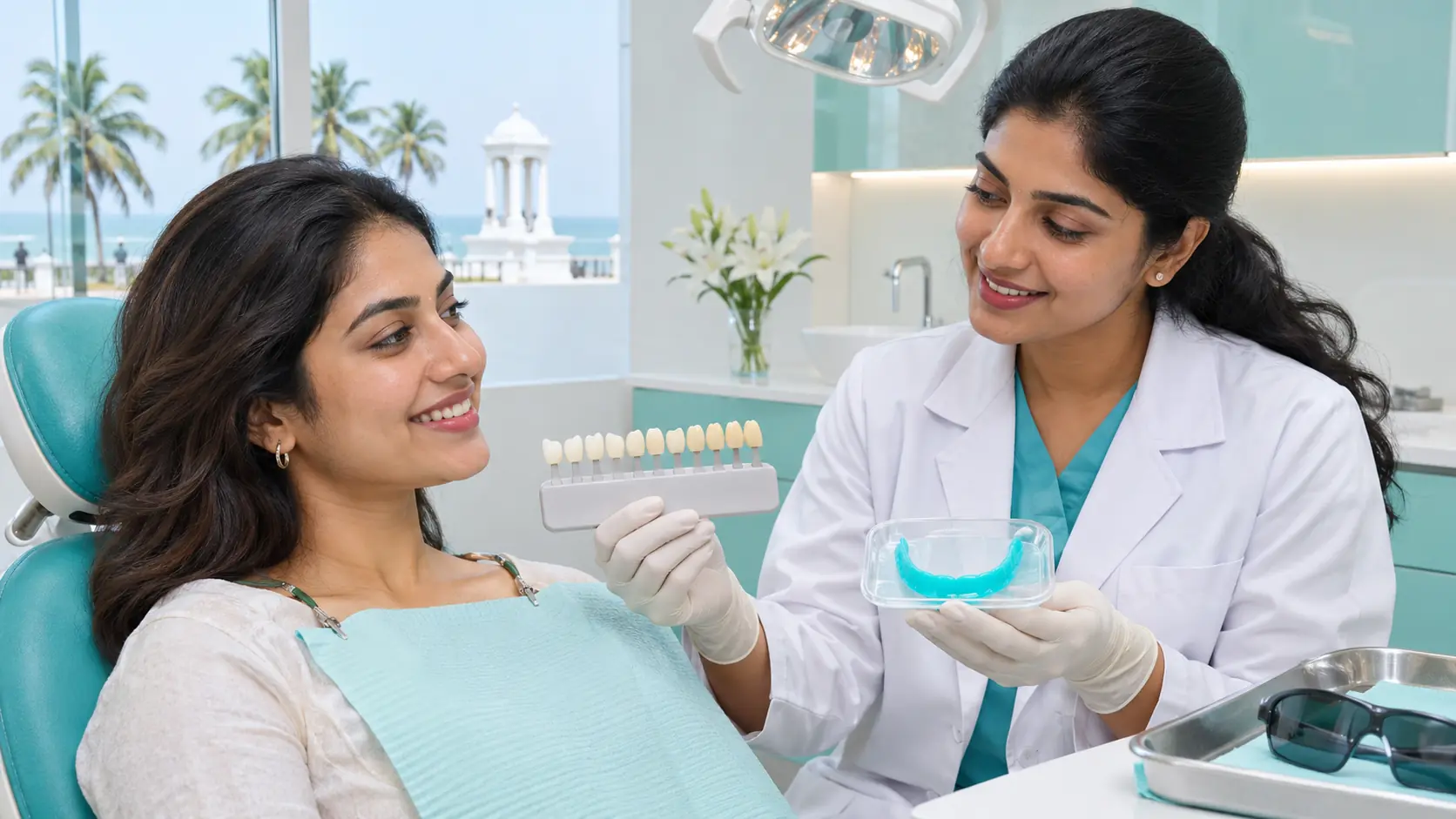
Teeth Whitening Safety and Side Effects in Pondicherry
Teeth whitening can lighten stains and improve the appearance of natural teeth. When performed or supervised by a qualified dentist after an oral examination, it is generally a conservative cosmetic option because it does not require cutting away healthy tooth structure.
However, whitening is not suitable for every patient or every type of discolouration. Incorrect products, excessive use or poorly fitting trays can cause sensitivity, gum irritation and uneven results.
Understanding teeth whitening safety and side effects in Pondicherry helps patients make an informed choice before beginning in-clinic, dentist-supervised home or over-the-counter treatment.
Quick Answer: Is Teeth Whitening Safe?
Teeth whitening is generally considered safe for suitable patients when:
- The teeth and gums are examined first
- Tooth decay and gum disease are treated
- An appropriate whitening product is selected
- The recommended concentration and application time are followed
- The gums are protected
- Treatment progress is monitored
- Whitening is stopped or adjusted if significant sensitivity develops
The most common side effects are temporary tooth sensitivity and gum irritation. Overusing whitening products can harm the teeth or gums.
How Does Teeth Whitening Work?
Most bleaching products use hydrogen peroxide or carbamide peroxide. These agents enter the tooth surface and break coloured compounds into smaller particles, making the teeth appear lighter.
Whitening primarily changes the shade of natural teeth. It does not remove tooth structure in the way that preparing a tooth for a veneer or crown may.
Whitening results vary according to:
- Original tooth colour
- Type and depth of staining
- Product concentration
- Contact time
- Number of applications
- Tooth condition
- Existing sensitivity
- Age-related changes
- Previous restorations
Whitening cannot guarantee a particular shade for every patient.
What Is the Difference Between Cleaning and Whitening?
Professional dental cleaning removes plaque, tartar and some external surface stains. It can make teeth look cleaner and brighter but does not chemically bleach their natural colour.
Whitening uses peroxide-based agents to lighten pigments within the tooth.
A patient with heavy tartar or external staining may first benefit from professional cleaning. The dentist can then assess whether additional whitening is necessary.
Types of Teeth Whitening
In-Clinic Teeth Whitening
In-clinic whitening is performed at the dental practice using a professionally selected bleaching material.
The dentist protects the gums and other soft tissues before applying the whitening agent. Depending on the system, a light may be used, although the bleaching agent is primarily responsible for the colour change.
Possible advantages include:
- Professional examination before treatment
- Protection of the gums
- Controlled application
- Monitoring of sensitivity
- Faster visible change than many home products
- Immediate management if irritation occurs
Results and sensitivity vary between patients.
Dentist-Supervised Home Whitening
The dentist may provide custom-fitted trays and whitening gel for use at home.
Custom trays can help distribute the gel more accurately and reduce unnecessary contact with the gums when used correctly.
Patients must follow instructions regarding:
- Amount of gel
- Wear time
- Number of treatment days
- Tray cleaning
- Product storage
- Sensitivity management
- Follow-up visits
Using more gel or wearing trays longer than advised does not guarantee better results and may increase side effects.
Over-the-Counter Whitening Products
Over-the-counter options may include whitening strips, gels, toothpastes and generic trays.
These products usually contain lower concentrations than professional in-clinic products, but misuse can still cause sensitivity or gum irritation.
Before selecting a product:
- Check the complete instructions
- Do not exceed the recommended duration
- Avoid unlabelled or unknown products
- Do not combine several whitening systems
- Stop using the product if severe irritation occurs
- Ask a dentist whether the product suits your teeth
Generic trays may not fit accurately, increasing the risk of gel contacting the gums.
Whitening Toothpaste
Whitening toothpaste generally removes external stains through polishing or mild abrasive action. Some products contain a low level of bleaching ingredients.
It cannot usually produce the same colour change as peroxide-based whitening treatment.
Excessively abrasive products or aggressive brushing may worsen sensitivity, exposed-root wear or enamel problems.
Internal Whitening for a Dark Root-Treated Tooth
A tooth that has undergone root canal treatment may darken differently from neighbouring teeth. External whitening may not produce an even result.
In selected cases, a dentist may place whitening material inside the root-treated tooth. This is known as internal or non-vital bleaching.
The tooth must first be examined to confirm that the root canal and restoration are satisfactory. Internal bleaching has specific risks and should be performed only by a qualified dental professional.
Who May Benefit From Teeth Whitening?
Whitening may be considered for suitable adults with:
- Age-related yellowing
- Tea or coffee staining
- Tobacco-related staining after appropriate cleaning
- Generalised natural-tooth discolouration
- Stains that respond to peroxide-based treatment
- Healthy teeth and gums
- Realistic expectations
Yellow-toned teeth may respond more predictably than some grey, brown or deeply discoloured teeth.
A dentist can explain whether whitening, cleaning, bonding, microabrasion, veneers or another approach is more appropriate.
Who Should Delay or Avoid Whitening?
Whitening may need to be delayed or avoided when a patient has:
- Untreated tooth decay
- Gum disease
- Cracked teeth
- Leaking or damaged fillings
- Severe tooth sensitivity
- Exposed tooth roots
- Significant enamel wear
- Unexplained tooth pain
- Oral ulcers or soft-tissue irritation
- Allergy to product ingredients
- Unrealistic expectations
- Extensive visible crowns, veneers or fillings
- Ongoing dental treatment that may change tooth appearance
Elective whitening is generally postponed during pregnancy and breastfeeding as a precaution. Children and adolescents require individual professional assessment, and routine cosmetic full-arch bleaching is generally avoided while primary and permanent teeth are mixed.
Why Is a Dental Examination Important Before Whitening?
A dental examination can identify conditions that may cause pain, poor results or complications.
The dentist may check for:
- Cavities
- Cracked teeth
- Gum recession
- Exposed dentine
- Enamel erosion
- Gum inflammation
- Faulty fillings
- Existing crowns and veneers
- Root-treated teeth
- Internal tooth discolouration
- Oral lesions
Dental X-rays may be recommended when there is unexplained discolouration, pain, trauma or concern about the tooth’s nerve or root.
Whitening should not be used to cover symptoms of disease.
Common Side Effect 1: Tooth Sensitivity
Temporary tooth sensitivity is the most commonly reported side effect of teeth whitening.
Sensitivity may be triggered by:
- Cold water
- Hot drinks
- Sweet foods
- Cold air
- Brushing
- Pressure on the tooth
Peroxide can pass through the enamel and dentine and temporarily irritate the tooth’s nerve. Sensitivity is often mild and short-lived, but its intensity varies.
Factors that may increase sensitivity include:
- Higher peroxide concentration
- Longer contact time
- Frequent whitening sessions
- Existing sensitivity
- Enamel wear
- Gum recession
- Cracks
- Exposed dentine
- Poorly fitting trays
How Is Whitening Sensitivity Managed?
The dentist may recommend:
- Temporarily pausing whitening
- Reducing the frequency of application
- Shortening wear time
- Using a lower concentration
- Desensitising toothpaste
- Fluoride or potassium-nitrate products
- Professional sensitivity treatment
- Treating an underlying crack, cavity or recession
Severe, spontaneous or persistent pain is not a normal whitening response and requires assessment.
Common Side Effect 2: Gum Irritation
Whitening gel can irritate the gums when it leaks from a tray or is applied excessively.
Possible signs include:
- Burning
- Redness
- Tenderness
- Soreness
- Temporary white patches on the gum
- Throat irritation if excess product is swallowed or spreads backward
Gum irritation is often temporary after the product is removed. Persistent pain, ulceration or swelling should be examined.
Professional gum barriers and properly fitting custom trays can help reduce unnecessary contact.
Common Side Effect 3: Uneven Whitening
Whitening may produce uneven colour when:
- Some teeth respond differently
- A single tooth is internally discoloured
- Crowns, veneers or fillings are visible
- White or brown enamel patches are present
- Plaque or tartar covers part of the tooth
- Whitening trays do not fit correctly
- Teeth have different types of staining
Some enamel spots may initially appear more noticeable because surrounding areas lighten at a different rate. The dentist can explain whether further whitening, monitoring or another treatment may improve the result.
Common Side Effect 4: Colour Mismatch With Restorations
Whitening changes the colour of natural teeth but does not whiten:
- Dental crowns
- Porcelain veneers
- Composite fillings
- Bridges
- Dentures
- Implant crowns
A restoration that matched before treatment may appear darker afterward.
When cosmetic restorations are planned, whitening is often completed first. The final shade can then be selected after the natural teeth have stabilised.
Healthy restorations should not be replaced only for colour without discussing the amount of natural tooth structure involved, cost and future maintenance.
Can Teeth Whitening Damage Enamel?
Whitening products used correctly under professional guidance are intended to lighten teeth safely. However, repeated misuse, excessive concentration or overuse can damage teeth or gums.
Greater concern may come from unverified home methods that combine strong acids or abrasive materials.
Avoid using:
- Lemon juice
- Vinegar
- Undiluted peroxide
- Bleaching chemicals not designed for oral use
- Abrasive powders
- Household cleaning agents
- Repeated baking-soda scrubbing
- Unregulated online gels
- Products without clear ingredients or instructions
Acidic substances may erode enamel, while aggressive abrasives may wear the tooth surface.
Are Charcoal Whitening Products Safe?
Evidence supporting charcoal-based whitening products is limited. Some may remove surface stains through abrasion but may not bleach the internal colour of teeth.
Highly abrasive charcoal powders may contribute to tooth wear, gum irritation or increased sensitivity when used excessively.
Charcoal products should not be assumed safe because they are described as natural.
Is Teeth Whitening Permanent?
No. Whitening results gradually change because teeth continue to be exposed to food, beverages, tobacco and natural ageing.
Factors that may shorten the result include:
- Tea
- Coffee
- Red wine
- Tobacco
- Darkly coloured foods
- Poor oral hygiene
- Frequent staining drinks
Maintenance whitening should be performed only at the interval recommended by a dentist. Repeated bleaching without supervision can increase sensitivity and irritation.
What Should You Do Before Whitening?
Before treatment:
- Complete a dental examination
- Treat tooth decay and gum disease
- Repair leaking or damaged restorations
- Discuss existing sensitivity
- Inform the dentist about allergies and medicines
- Identify crowns, veneers and fillings that will not whiten
- Complete professional cleaning when indicated
- Discuss the desired shade and realistic outcome
- Ask about treatment duration and possible side effects
Bring information about any whitening product previously used, especially if it caused pain or irritation.
Care During Whitening Treatment
Follow these safety measures:
- Use only the recommended amount of gel
- Follow the prescribed wear time
- Do not sleep with trays unless specifically instructed
- Remove excess gel from the gums
- Do not eat or drink while wearing trays
- Keep products away from children
- Store products according to instructions
- Do not share whitening trays
- Do not mix products
- Stop and contact the dentist if severe symptoms occur
More frequent or longer applications do not necessarily create a safer or more natural result.
Aftercare Following Teeth Whitening
After whitening:
- Brush gently with fluoride toothpaste
- Use desensitising toothpaste if advised
- Avoid smoking and tobacco
- Limit strongly staining food and drinks during the early period
- Rinse with water after tea or coffee
- Maintain regular brushing and interdental cleaning
- Attend dental reviews
- Follow the recommended maintenance schedule
Some temporary colour variation can occur immediately after treatment because the teeth may be dehydrated. The final shade should be assessed after it stabilises.
When Should You Stop Whitening?
Stop treatment and contact the dentist if you experience:
- Severe tooth pain
- Sensitivity that does not settle
- Gum burns or ulcers
- Persistent white patches on the gums
- Facial swelling
- Throat irritation
- Difficulty swallowing
- A cracked or broken tooth
- A filling becoming loose
- Uneven darkening of one tooth
Difficulty breathing or rapidly increasing facial or throat swelling requires urgent medical attention.
Alternatives When Whitening Is Not Suitable
Depending on the cause of discolouration, alternatives may include:
- Professional cleaning
- Stain-removal polishing
- Enamel microabrasion for selected surface marks
- Dental bonding
- Internal whitening of a root-treated tooth
- Veneers
- Crowns when significant structural restoration is required
- No treatment
Veneers and crowns usually require more intervention than bleaching and need future maintenance. They should not be presented as a simple whitening substitute without discussing tooth preparation and long-term care.
How Much Does Teeth Whitening Cost in Pondicherry?
The cost depends on:
- Type of whitening system
- In-clinic or dentist-supervised home treatment
- Number of teeth treated
- Custom-tray fabrication
- Number of treatment sessions
- Existing tooth and gum treatment
- Management of sensitivity
- Internal whitening for a single tooth
- Follow-up and maintenance
An examination is necessary before confirming suitability and providing an accurate estimate.
Teeth Whitening at Smile & Glow Dental Care
Smile & Glow Dental Care provides teeth-whitening assessment and personalised cosmetic dental planning in Pondicherry.
Care may include:
- Examination of teeth and gums
- Assessment of the cause of discolouration
- Professional cleaning when required
- In-clinic whitening evaluation
- Dentist-supervised home-whitening trays
- Sensitivity management
- Review of visible crowns, veneers and fillings
- Internal-whitening assessment for selected root-treated teeth
- Follow-up shade evaluation
The objective is to improve tooth colour while protecting the teeth, gums and existing dental restorations.
Frequently Asked Questions
Is Professional Teeth Whitening Safe?
Professional whitening is generally safe for suitable patients when the teeth and gums are examined first and the product is used according to dental instructions.
What Is the Most Common Side Effect of Whitening?
Temporary tooth sensitivity is the most common side effect. Gum irritation can also occur if whitening gel contacts the soft tissues.
How Long Does Whitening Sensitivity Last?
Sensitivity is usually temporary and may improve after pausing or completing treatment. Persistent, severe or spontaneous pain requires dental examination.
Will Whitening Damage Crowns or Veneers?
Whitening will not lighten crowns, veneers, fillings or implant restorations. It can create a colour mismatch between restorations and newly whitened natural teeth.
Can I Whiten My Teeth If I Have Cavities?
Untreated cavities should be assessed and managed before whitening. Whitening gel contacting damaged or exposed areas may cause pain and complications.
Is Teeth Whitening Safe During Pregnancy?
Elective teeth whitening is generally postponed during pregnancy and breastfeeding as a precaution. Individual dental concerns should be discussed with the dentist and medical practitioner.
Can Yellow Teeth Become Completely White?
Results vary. Yellow-toned natural teeth may respond well, but whitening cannot guarantee a specific shade. Grey, brown, medication-related or injury-related discolouration may respond differently.
How Often Can I Whiten My Teeth?
The safe interval depends on the product, concentration, previous sensitivity and tooth condition. Repeat treatment should follow a dentist’s advice rather than a fixed universal schedule.
Book a Teeth-Whitening Consultation in Pondicherry
Before using a whitening kit, schedule a dental assessment at Smile & Glow Dental Care in Pondicherry.
A professional examination can identify cavities, gum disease, exposed roots, enamel wear and restorations that may affect safety or results. You can then receive an appropriate whitening plan with realistic expectations and side-effect guidance.
This article provides general educational information and does not replace a clinical examination, diagnosis or personalised advice from a qualified dental professional.