


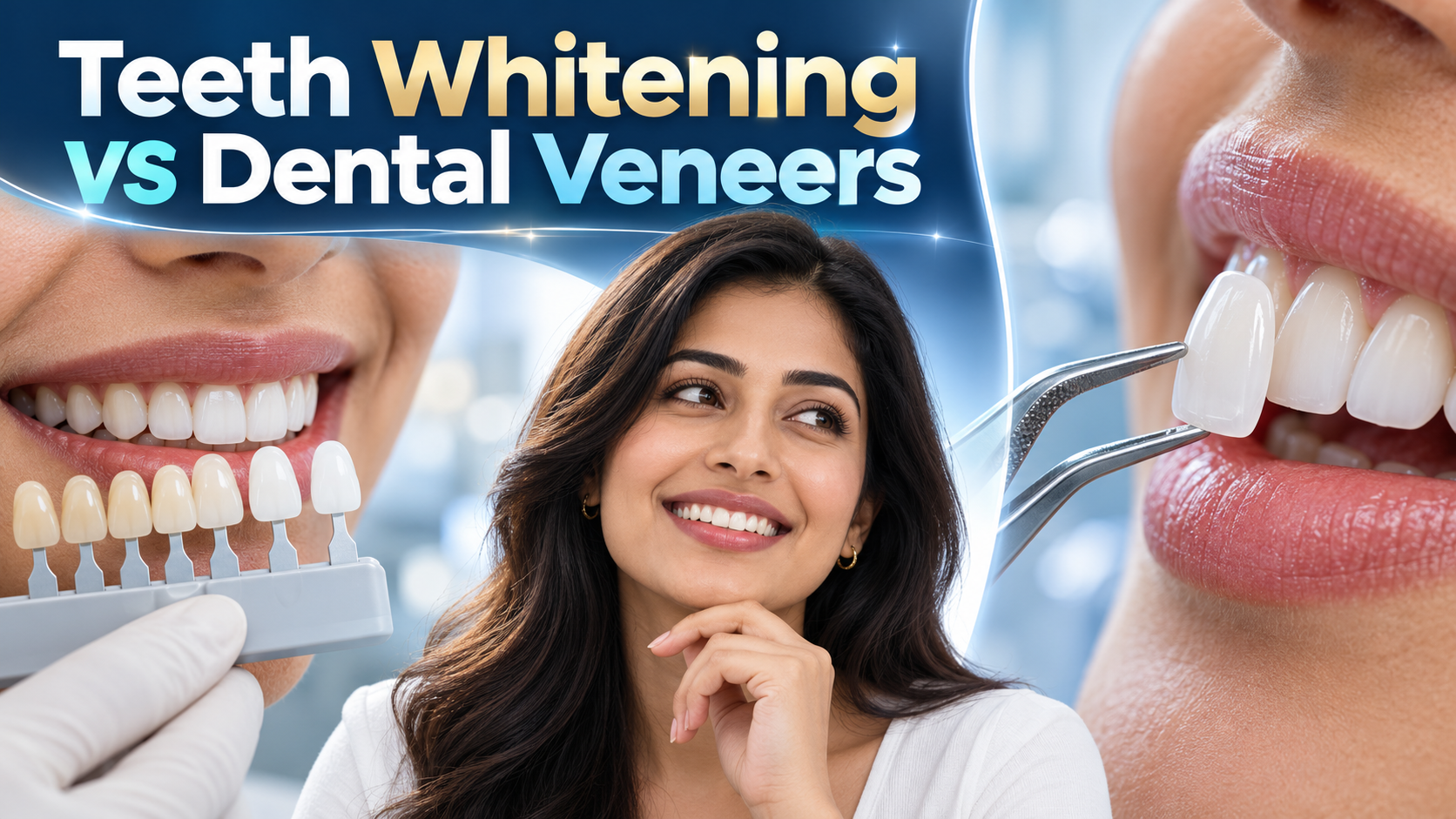
Teeth Whitening vs Dental Veneers
Teeth whitening and dental veneers can both improve the appearance of a smile, but they solve different cosmetic concerns.
Teeth whitening lightens the colour of natural teeth. Dental veneers cover the front surfaces of selected teeth to change their colour, shape, size or visible alignment.
The right option depends on the cause of discolouration, condition of your teeth, desired changes, budget and willingness to maintain the result.
What Is Professional Teeth Whitening?
Professional teeth whitening uses a bleaching agent to lighten stains and discolouration in natural teeth. Treatment may be performed at a dental clinic or through a dentist-supervised home whitening system.
Whitening may help improve discolouration associated with:
- Tea or coffee
- Certain foods and drinks
- Tobacco use
- Natural ageing
- General yellowing of teeth
Results vary because different types of stains respond differently to whitening.
What Are Dental Veneers?
Dental veneers are thin, customised coverings placed over the front surfaces of teeth. They are commonly used to improve the appearance of teeth that are stained, chipped, worn, misshapen or separated by small gaps.
The main types include:
Porcelain Veneers
Porcelain veneers are custom-made shells created to fit individual teeth. They can provide a natural appearance and resist staining, but placement commonly requires some enamel preparation.
Composite Veneers
Composite veneers are made using tooth-coloured resin applied and shaped directly on the teeth. They may require less enamel removal and fewer appointments, but they can stain or wear more easily than porcelain.
Main Difference Between Whitening and Veneers
Teeth whitening changes the shade of natural teeth without covering them. Veneers place a layer of dental material over the visible surface of selected teeth.
Whitening primarily addresses colour. Veneers can address several cosmetic concerns together, including:
- Resistant discolouration
- Uneven tooth shape
- Chipped or worn edges
- Minor visible gaps
- Mild irregularities
- Differences in tooth size
Neither procedure should begin until tooth decay, gum disease and other oral health concerns have been assessed.
When Is Teeth Whitening a Suitable Choice?
Professional teeth whitening may be considered when:
- Your teeth are healthy
- Your main concern is general staining
- You want a more conservative cosmetic option
- Most visible teeth are natural
- The type of discolouration is likely to respond
- You understand that future maintenance may be required
Whitening does not change the colour of crowns, fillings, implants or veneers. Existing restorations may appear different from the newly whitened natural teeth.
When Might Veneers Be Considered?
Dental veneers may be considered when:
- Discolouration does not respond adequately to whitening
- One or more teeth are chipped or worn
- Teeth have uneven shapes or sizes
- Small visible gaps are present
- Several cosmetic concerns need to be addressed together
- Existing tooth structure can support veneers
Veneers may not be suitable for patients with untreated decay, active gum disease, insufficient enamel or severe teeth grinding. A dentist must evaluate these factors before treatment.
Teeth Whitening vs Veneers: Procedure
Teeth Whitening Procedure
The dentist first examines your teeth and gums to determine whether whitening is appropriate. Professional treatment may then involve an in-clinic whitening procedure or customised trays for supervised home use.
Temporary tooth sensitivity or gum irritation can occur during or after whitening.
Dental Veneer Procedure
Veneer treatment usually begins with examination, smile planning and shade selection. Depending on the veneer type, a small amount of enamel may be removed before impressions or digital scans are taken.
The customised veneers are then fitted and bonded to the teeth. Porcelain veneer treatment is generally irreversible when enamel has been removed.
Appearance and Expected Results
Whitening can produce a brighter smile while preserving the natural shape and structure of the teeth. However, it may not completely remove every type of stain or create an identical shade across all teeth.
Veneers can provide greater control over colour, shape and visible symmetry. The final result depends on treatment planning, tooth preparation, material selection and oral care.
No cosmetic dental procedure can guarantee an exact shade or permanent result.
Maintenance and Longevity
Maintaining Whitening Results
Whitening results are not permanent. Their duration can be influenced by diet, tobacco use, oral hygiene and the original cause of staining.
To maintain the result:
- Brush and floss regularly
- Attend dental check-ups
- Limit strongly staining foods and drinks
- Avoid tobacco products
- Follow the dentist’s advice about touch-up treatment
Maintaining Dental Veneers
Veneers also require regular care and may eventually need repair or replacement.
To protect them:
- Maintain good oral hygiene
- Avoid biting hard objects
- Do not use teeth to open packages
- Attend regular dental reviews
- Use a night guard if recommended for teeth grinding
- Report chips, cracks or looseness promptly
Cost of Whitening and Veneers in Pondicherry
Professional teeth whitening generally has a lower initial cost because it does not involve individually manufactured restorations.
The cost of dental veneers in Pondicherry can vary based on:
- Number of teeth being treated
- Porcelain or composite material
- Amount of preparation required
- Need for preliminary dental treatment
- Laboratory and customisation requirements
- Follow-up and maintenance
Ask for a written treatment plan explaining the procedure, limitations, total estimated cost and future maintenance.
Can You Have Whitening Before Veneers?
In some smile treatment plans, the dentist may recommend whitening the natural teeth before selecting the final shade of veneers or other restorations.
This helps the dentist match the restorations to the planned tooth colour. Whitening cannot lighten veneers after they have been placed, so the order of treatment should be discussed in advance.
Frequently Asked Questions
Is teeth whitening better than veneers?
It depends on your concern. Whitening is generally more suitable for lightening responsive stains on healthy natural teeth. Veneers can address resistant discolouration, shape differences, chips and small gaps.
Does teeth whitening work on veneers or crowns?
No. Whitening products lighten natural teeth but do not change the colour of veneers, crowns, fillings or dental implants.
Are dental veneers permanent?
Veneers are not permanent for life and may eventually require repair or replacement. When enamel is removed for placement, the treatment is generally considered irreversible.
Can veneers stain?
Porcelain veneers resist staining better than natural teeth and composite veneers, but their appearance and margins still require regular professional care.
Choose the Right Cosmetic Dental Treatment
Choose teeth whitening when your primary concern is responsive staining and you want a conservative way to brighten natural teeth. Veneers may be considered when you want to change tooth colour, shape or visible proportions together.
Book a cosmetic dental consultation in Pondicherry to evaluate your teeth and gums and receive a personalised comparison of whitening, veneers and other suitable options.