


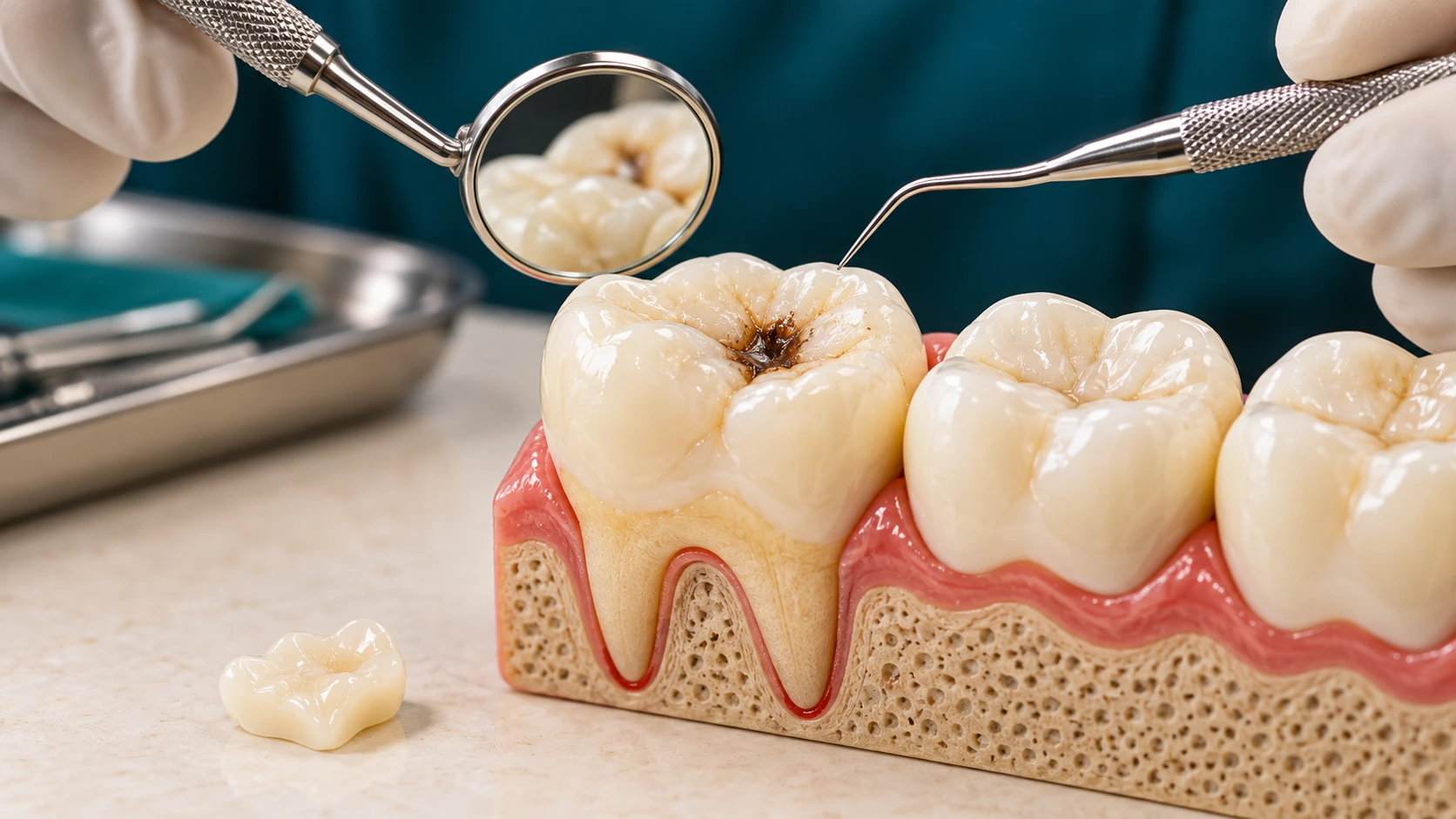
Tooth Decay Treatment in Pondicherry: Causes, Stages and Care
Tooth decay is one of the most common dental problems and can affect children, teenagers and adults. It develops when acids produced by bacteria gradually damage the tooth structure.
Early tooth decay may not cause noticeable symptoms. As decay progresses, it can lead to sensitivity, cavities, toothache, infection and, in severe cases, tooth loss.
If you are searching for tooth decay treatment in Pondicherry, early dental evaluation can help identify the stage of decay and determine whether the tooth can be treated with a simple restoration or requires more advanced care.
What Is Tooth Decay?
Tooth decay, also called dental caries or cavities, occurs when the hard tissues of a tooth are progressively damaged.
The process can affect:
- Enamel
- Dentine
- Dental pulp
- Root structure
Treatment depends on how far the decay has progressed.
What Causes Tooth Decay?
Tooth decay can develop when bacteria in dental plaque use sugars and produce acids that attack the tooth surface.
Common contributing factors include:
- Frequent sugary foods
- Sugary drinks
- Poor oral hygiene
- Plaque accumulation
- Inadequate fluoride exposure
- Frequent snacking
- Dry mouth
- Deep grooves in teeth
- Poorly cleaned dental restorations
- Irregular dental checkups
Early Signs of Tooth Decay
Early decay may have no obvious symptoms.
Possible signs include:
- White or chalky spots
- Brown or dark areas
- Mild sensitivity
- Food getting trapped
- Rough tooth surfaces
- Occasional discomfort
Regular dental examinations can help detect decay before it becomes painful.
Symptoms of Advanced Tooth Decay
As decay progresses, symptoms may include:
- Toothache
- Cold sensitivity
- Hot sensitivity
- Sweet sensitivity
- Pain while chewing
- Food getting stuck
- Bad taste
- Swelling
- Persistent pain
Severe symptoms can indicate that decay has reached deeper parts of the tooth.
Can Tooth Decay Be Treated?
Yes.
Treatment depends on the extent of damage.
Possible treatment options include:
- Preventive fluoride care
- Dental sealants
- Composite fillings
- Other restorations
- Inlays or onlays
- Root canal treatment
- Dental crowns
- Extraction for severely damaged teeth
Pondicherry dental institutions provide treatments for dental caries ranging from preventive and restorative procedures to root canal treatment for severely affected teeth. ([sbvu.ac.in](https://sbvu.ac.in/igids/ig-hospital-and-patient-care-dpt-of-conservative-dentistry-and-endodontics/?utm_source=chatgpt.com))
Can Early Tooth Decay Be Reversed?
Very early enamel changes may sometimes be managed through preventive measures before a physical cavity develops.
Depending on the individual situation, a dentist may recommend:
- Fluoride
- Improved brushing
- Better plaque control
- Dietary changes
- Regular monitoring
Once a substantial cavity has formed, the damaged tooth structure generally requires restorative treatment.
Tooth Decay and Cavities
A cavity is a damaged area that develops in the tooth as decay progresses.
A cavity can become larger if untreated.
It may eventually reach:
1. Enamel
2. Dentine
3. Pulp
4. Root and surrounding tissues
Early treatment can help prevent progression.
Tooth Decay in Enamel
Enamel is the hard outer layer of the tooth.
Early decay may begin within this layer.
At this stage, the dentist may recommend preventive or remineralization-focused care when appropriate.
If a cavity has already formed, restoration may be required.
Tooth Decay in Dentine
Once decay passes through enamel and reaches dentine, the tooth may become more sensitive.
Possible symptoms include:
- Cold sensitivity
- Sweet sensitivity
- Food sensitivity
- Occasional toothache
A filling or another restoration may be required depending on the amount of tooth structure affected.
Deep Tooth Decay
Deep decay can approach or reach the dental pulp.
Possible symptoms include:
- Severe toothache
- Lingering sensitivity
- Spontaneous pain
- Night pain
- Pain when biting
- Swelling
Deep decay requires prompt dental evaluation.
Tooth Decay and Dental Pulp Infection
The pulp contains nerves and blood vessels inside the tooth.
If bacteria reach the pulp because of advanced decay, the tissue can become inflamed or infected.
Root canal treatment may be considered when the tooth remains restorable.
Pondicherry dental providers describe root canal treatment as a way to treat damaged or infected pulp and preserve a natural tooth when clinically appropriate. ([smileandglowdentalcare.com](https://smileandglowdentalcare.com/root-canal-services-pondicherry?utm_source=chatgpt.com))
Tooth Decay and Toothache
Toothache can have several causes, and decay is one of them.
Pain may be:
- Mild
- Sharp
- Throbbing
- Triggered by cold
- Triggered by sweets
- Triggered by chewing
- Persistent
A dentist should identify the cause rather than relying only on pain medication.
Tooth Decay and Tooth Sensitivity
Decay can expose dentine and make the tooth sensitive.
Sensitivity may occur with:
- Cold water
- Hot drinks
- Sweets
- Acidic foods
- Brushing
Persistent sensitivity should be examined because it can also have other causes.
Tooth Decay and Bad Breath
Advanced decay can sometimes contribute to an unpleasant taste or bad breath.
However, persistent bad breath can have several causes, including gum disease and other oral conditions.
A dental examination can help determine the source.
Tooth Decay and Swelling
Swelling around a decayed tooth can indicate infection.
Possible associated symptoms include:
- Severe toothache
- Gum swelling
- Facial swelling
- Pus
- Bad taste
- Fever
Dental infection requires prompt professional assessment.
How Is Tooth Decay Diagnosed?
A dental examination may include:
Visual Examination
The dentist checks for:
- Cavities
- Discoloration
- Broken tooth structure
- Visible plaque
- Existing restorations
Dental Probing
The dentist may assess suspicious tooth surfaces using appropriate clinical techniques.
X-Rays
Dental X-rays can help identify decay that is not clearly visible from the outside.
Pulp Testing
If decay is deep, the dentist may assess the condition of the dental pulp.
The diagnosis determines the appropriate treatment.
Tooth Decay Treatment in Pondicherry
Treatment depends on the stage of decay.
Common approaches include:
- Preventive care
- Fluoride treatment
- Dental fillings
- Composite restorations
- Inlays or onlays
- Root canal treatment
- Dental crowns
- Extraction when a tooth cannot be restored
Pondicherry providers currently advertise general dentistry, fillings and root canal treatment, while local dental institutions also provide restorative and endodontic care. ([theposhhospital.in](https://www.theposhhospital.in/departments/dental.html?utm_source=chatgpt.com))
Fluoride Treatment for Early Decay
Fluoride can help strengthen tooth enamel and reduce the risk of progression in suitable situations.
A dentist may recommend professional fluoride treatment when appropriate.
Fluoride treatment does not replace good daily oral hygiene.
Dental Fillings for Tooth Decay
A filling is commonly used when decay has created a cavity but the tooth remains suitable for restoration.
The dentist may:
1. Examine the tooth.
2. Remove decayed tissue.
3. Prepare the cavity.
4. Place the filling material.
5. Shape the restoration.
6. Check the bite.
7. Polish the restoration.
Tooth-coloured composite fillings are commonly used for suitable cavities.
Composite Fillings for Cavities
Composite fillings use tooth-coloured restorative material.
They can be used for selected cavities in front and back teeth.
Potential advantages include:
- Natural appearance
- Conservative tooth preparation
- Direct placement
- Tooth-coloured finish
The dentist determines whether composite is appropriate for the individual tooth.
Inlays and Onlays for Tooth Decay
For larger cavities where a conventional filling may not provide sufficient support, an inlay or onlay may sometimes be considered.
These restorations can be fabricated outside the mouth and bonded to the tooth.
The choice depends on:
- Amount of remaining tooth structure
- Tooth location
- Bite forces
- Size of the cavity
- Restoration requirements
Root Canal Treatment for Tooth Decay
When decay reaches the pulp and causes significant inflammation or infection, root canal treatment may be recommended if the tooth can be saved.
The procedure generally involves:
1. Diagnosis
2. Local anaesthesia
3. Accessing the tooth
4. Removing affected pulp
5. Cleaning the canals
6. Shaping and disinfecting the canals
7. Filling and sealing the canals
8. Restoring the tooth
Some severely decayed teeth can be preserved with root canal treatment followed by appropriate restoration. ([sbvu.ac.in](https://sbvu.ac.in/igids/ig-hospital-and-patient-care-dpt-of-conservative-dentistry-and-endodontics/?utm_source=chatgpt.com))
Single-Sitting Root Canal for Deep Decay
Selected root canal cases may be completed in a single appointment.
However, not every tooth is suitable for single-sitting treatment.
The number of appointments depends on:
- Infection
- Canal anatomy
- Tooth condition
- Treatment complexity
- Dentist's assessment
Dental Crown After Deep Tooth Decay
A tooth with extensive structural damage may require additional protection after treatment.
A crown can cover and protect a substantially weakened tooth.
Crowns may be considered after root canal treatment or when extensive decay has compromised the remaining tooth structure.
Can a Decayed Tooth Be Saved?
Many decayed teeth can be treated when sufficient healthy tooth structure remains.
The possibility of saving the tooth depends on:
- Depth of decay
- Pulp condition
- Root condition
- Remaining tooth structure
- Gum health
- Bone support
- Presence of cracks
- Overall restorability
A dentist should evaluate the tooth before deciding whether extraction is necessary.
When Does Tooth Decay Require Extraction?
Extraction may be considered when a tooth is too severely damaged to restore predictably.
Possible reasons include:
- Extensive structural destruction
- Severe root fracture
- Decay extending significantly below the gumline
- Non-restorable tooth structure
- Severe supporting-tissue problems
When a tooth is extracted, replacement options may include an implant, bridge or denture when appropriate.
Tooth Replacement After Decay
If severe decay results in tooth loss, replacement options can include:
- Dental implant
- Dental bridge
- Partial denture
- Implant-supported restoration
The appropriate option depends on the number and location of missing teeth and the condition of the surrounding tissues.
Tooth Decay in Front Teeth
Decay can affect front teeth as well as molars.
Treatment may involve:
- Composite filling
- Cosmetic restoration
- Veneer in selected cases
- Crown
- Root canal treatment
The dentist will consider both function and appearance.
Tooth Decay in Back Teeth
Molars and premolars are exposed to significant chewing forces.
Decay in these teeth may require:
- Filling
- Inlay
- Onlay
- Crown
- Root canal treatment
The choice depends on the extent of structural damage.
Tooth Decay in Wisdom Teeth
Wisdom teeth can be difficult to clean because of their location.
Decay may develop when plaque and food accumulate around partially erupted or poorly positioned wisdom teeth.
Treatment can involve restoration or extraction depending on the tooth's position, condition and long-term usefulness.
Tooth Decay in Children
Children can develop cavities in both primary and permanent teeth.
Common risk factors include:
- Frequent sugary foods
- Sugary drinks
- Poor brushing
- Night-time bottle feeding
- Deep tooth grooves
- Inadequate fluoride exposure
Children should receive age-appropriate dental examinations.
Baby Teeth and Tooth Decay
Primary teeth are important for:
- Eating
- Speech
- Maintaining space
- Supporting normal dental development
A decayed baby tooth may still require treatment even if it will eventually fall out.
The dentist will determine the appropriate approach according to the child's age and tooth development.
Tooth Decay Prevention for Children
Preventive measures can include:
- Twice-daily brushing
- Fluoride toothpaste appropriate for age
- Limiting sugary snacks
- Avoiding frequent sugary drinks
- Dental sealants when appropriate
- Regular dental visits
Early prevention can reduce the risk of extensive dental treatment.
Tooth Decay During Pregnancy
Pregnancy can change dietary habits and oral health routines.
Pregnant patients should maintain good oral hygiene and tell their dentist about the pregnancy.
Necessary dental treatment should not be unnecessarily delayed.
Treatment and medication choices should be determined by the dental and medical team.
Tooth Decay and Diabetes
People with diabetes may have increased risk of certain oral health problems.
Maintaining good oral hygiene and appropriate medical care can support overall oral health.
Patients with diabetes should inform their dentist about their condition and medications.
Tooth Decay and Dry Mouth
Saliva helps protect teeth.
Reduced saliva flow can increase the risk of tooth decay.
Dry mouth may be associated with:
- Certain medications
- Dehydration
- Some medical conditions
- Mouth breathing
- Other factors
Patients with persistent dry mouth should discuss it with a healthcare professional and dentist.
Tooth Decay and Sugar
Frequent exposure to sugary foods and drinks can increase the risk of tooth decay.
Instead of focusing only on the amount of sugar consumed, reducing frequent exposure can also be important.
Helpful habits include:
- Limiting sugary snacks
- Reducing sugary drinks
- Drinking water
- Avoiding constant snacking
- Brushing with fluoride toothpaste
Foods That Increase Cavity Risk
Frequent consumption of:
- Sweets
- Cakes
- Biscuits
- Sugary drinks
- Sticky candies
- Sweetened beverages
can increase exposure to decay-promoting sugars.
A balanced diet and good oral hygiene remain important.
How to Prevent Tooth Decay
Important preventive habits include:
- Brush twice daily
- Use fluoride toothpaste
- Clean between teeth
- Limit frequent sugary foods
- Drink water
- Avoid tobacco
- Attend regular dental checkups
- Treat early cavities promptly
Professional preventive care may also include fluoride treatment and dental sealants when appropriate.
Dental Sealants for Preventing Tooth Decay
Dental sealants are protective materials placed into selected grooves and pits of teeth.
They can help protect areas that are difficult to clean.
Sealants may be particularly useful for selected children and adolescents, although suitability depends on the individual tooth.
How Often Should You Visit a Dentist?
Dental examination frequency depends on individual oral health and risk.
Some people may require more frequent visits because of:
- Previous cavities
- Gum disease
- Orthodontic treatment
- High cavity risk
- Dry mouth
- Other dental conditions
Your dentist can recommend an appropriate schedule.
Can Tooth Decay Be Prevented Completely?
No prevention strategy can guarantee that a person will never develop a cavity.
However, the risk can be reduced through:
- Fluoride
- Good brushing
- Interdental cleaning
- Healthy dietary habits
- Regular dental examinations
- Early treatment
What Not to Do for a Decayed Tooth
Avoid:
- Ignoring persistent pain
- Delaying treatment for swelling
- Applying chemicals directly to the tooth
- Placing aspirin directly on the gum
- Taking antibiotics without professional advice
- Trying to remove a cavity yourself
- Using temporary home remedies as a replacement for dental treatment
Home care cannot remove established dental decay.
Is Tooth Decay an Emergency?
A small cavity without pain may not require emergency treatment.
However, urgent dental care is important when decay is associated with:
- Severe toothache
- Facial swelling
- Gum swelling
- Fever
- Pus
- Difficulty swallowing
- Difficulty breathing
- Rapidly worsening symptoms
Pondicherry dental facilities currently advertise emergency dental care for dental pain, trauma, infections and other oral emergencies. ([theposhhospital.in](https://www.theposhhospital.in/departments/dental.html?utm_source=chatgpt.com))
How Long Can You Leave Tooth Decay Untreated?
It is better not to delay treatment.
Untreated decay can progress from enamel to dentine and eventually toward the pulp.
As the damage becomes more extensive, treatment may become more complicated.
Early diagnosis can help preserve more natural tooth structure.
Does Tooth Decay Always Hurt?
No.
Early decay may be completely painless.
This is one reason regular dental examinations are important.
A cavity can sometimes be detected before significant pain develops.
Can Tooth Decay Spread to Other Teeth?
Tooth decay is associated with bacterial activity and dietary factors rather than behaving like a simple contagious infection between teeth.
However, the same plaque, diet and oral environment can increase decay risk across multiple teeth.
If several teeth have cavities, the underlying risk factors should be addressed.
Digital Dentistry for Tooth Decay
Modern dental clinics may use digital technologies to support diagnosis and treatment planning.
These may include:
- Digital X-rays
- Intraoral photography
- Intraoral scanning
- Digital treatment planning
- CAD/CAM restorations
The appropriate technology depends on the clinical situation.
Microscope Dentistry for Deep Decay
Dental microscopes provide enhanced magnification and illumination.
They can be useful for selected complex restorative and endodontic procedures.
Microscopic dentistry may assist with:
- Fine canal structures
- Deep cavities
- Root canal treatment
- Detailed restorative procedures
It does not mean every cavity requires microscope treatment.
How Much Does Tooth Decay Treatment Cost in Pondicherry?
There is no single cost because treatment depends on the stage of decay.
Possible costs can involve:
- Dental consultation
- X-rays
- Fluoride treatment
- Composite filling
- Inlay or onlay
- Root canal treatment
- Dental crown
- Extraction
- Tooth replacement
Current published Puducherry pricing guides give indicative private-clinic ranges of approximately ₹450–₹4,300 for composite fillings and ₹1,700–₹6,900 for root canal treatment, before any additional crown or other treatment costs. These are estimates rather than fixed prices. ([teeth.in](https://teeth.in/dentists/pondicherry/?utm_source=chatgpt.com))
Tooth Filling Cost in Pondicherry
Published local estimates place composite fillings broadly around ₹450–₹4,300 per tooth.
Actual charges can vary according to:
- Cavity size
- Tooth location
- Filling material
- Number of surfaces
- Clinic
- Additional diagnostic requirements
A written estimate after examination is more reliable.
Root Canal Cost for Tooth Decay in Pondicherry
Published local estimates place root canal treatment broadly around ₹1,700–₹6,900 per tooth, before the cost of a crown where one is required. ([teeth.in](https://teeth.in/dentists/pondicherry/?utm_source=chatgpt.com))
Individual clinics may charge differently.
For example, Dr Mugilan's Dental Clinic currently publishes root canal treatment from ₹3,000 and composite fillings from ₹900–₹1,200. ([drmugilandentistry.com](https://drmugilandentistry.com/fees?utm_source=chatgpt.com))
How to Choose a Tooth Decay Dentist in Pondicherry
When choosing a dental clinic, consider whether it provides:
- Dental examinations
- Digital X-rays
- Cavity diagnosis
- Composite fillings
- Preventive dentistry
- Root canal treatment
- Dental crowns
- Emergency dental care
- Pediatric dental care
- Long-term follow-up
Current Pondicherry providers advertise combinations of fillings, root canal treatment, preventive care and emergency dental services. ([theposhhospital.in](https://www.theposhhospital.in/departments/dental.html?utm_source=chatgpt.com))
Tooth Decay Consultation in Pondicherry
During your consultation, tell the dentist:
- When the symptoms began
- Whether you have pain
- What triggers the pain
- Whether you have sensitivity
- Whether you have swelling
- Whether the tooth has been previously filled
- Whether you have had dental treatment recently
- Whether you have a history of frequent cavities
This information can help the dentist plan the examination.
What Happens During a Cavity Examination?
The dentist may:
1. Examine the affected tooth.
2. Check for visible decay.
3. Assess sensitivity.
4. Check the surrounding gums.
5. Evaluate the bite.
6. Take X-rays when necessary.
7. Determine the depth of the cavity.
8. Assess the pulp when required.
9. Explain treatment options.
Can a Cavity Be Filled in One Visit?
Many straightforward cavities can be restored in one appointment.
However, additional visits may be required when the tooth needs:
- Root canal treatment
- A crown
- An inlay or onlay
- Extensive restoration
- Additional diagnostic evaluation
Treatment time depends on the complexity of the case.
Final Thoughts: Tooth Decay Treatment in Pondicherry
Tooth decay can range from an early enamel change to a deep cavity affecting the dental pulp.
Treatment may include:
- Preventive fluoride care
- Dental fillings
- Composite restorations
- Inlays or onlays
- Root canal treatment
- Dental crowns
- Extraction when the tooth cannot be predictably restored
The earlier decay is detected, the more conservative treatment may be possible.
If you are searching for tooth decay treatment in Pondicherry, arrange a dental examination if you notice sensitivity, toothache, visible discoloration, food trapping or any other change in your teeth.
Frequently Asked Questions
What is the best treatment for tooth decay?
The treatment depends on how advanced the decay is. Early decay may be managed preventively, while cavities may require fillings and deep decay may require root canal treatment and a crown.
Can tooth decay be reversed?
Very early enamel changes may sometimes be managed with preventive and remineralization-focused care. A formed cavity generally requires restoration.
Does a cavity always need a filling?
Not necessarily. Very early non-cavitated lesions may sometimes be managed without a filling, while an established cavity usually requires restorative treatment.
Does tooth decay always cause pain?
No. Early cavities can be painless. Pain often develops as decay progresses or affects deeper tooth structures.
Can a decayed tooth be saved?
Many decayed teeth can be saved if enough healthy tooth structure remains. Deep decay may require root canal treatment followed by restoration.
Does deep tooth decay require a root canal?
Not always. Root canal treatment may be required when the pulp has significant inflammation or infection. The dentist must evaluate the tooth first.
Can tooth decay cause swelling?
Yes. Advanced decay can lead to infection and swelling around the tooth.
Can children get tooth decay?
Yes. Children can develop cavities in both primary and permanent teeth. Preventive dental care and age-appropriate fluoride use can help reduce the risk.
How can I prevent tooth decay?
Brush twice daily with fluoride toothpaste, clean between teeth, limit frequent sugary foods and drinks, drink water and attend regular dental examinations.
How much does tooth decay treatment cost in Pondicherry?
The cost depends on whether you need a filling, root canal, crown, extraction or another treatment. Published local estimates provide broad ranges, but the final cost depends on the individual case.
Can a decayed tooth be treated in one visit?
Some cavities can be filled in one appointment. More advanced cases involving root canal treatment, crowns or extensive restoration may require multiple visits.
When should I see a dentist for tooth decay?
See a dentist when you notice tooth sensitivity, pain, visible discoloration, a cavity, food trapping or swelling. Severe pain, facial swelling or difficulty swallowing or breathing requires urgent care.
Where can I get tooth decay treatment in Pondicherry?
Pondicherry has dental clinics and institutions providing cavity diagnosis, fillings, root canal treatment and restorative care. Local options include AG DENTAL CLINIC Multispeciality Root Canal & Implant Center | Dental clinic in Pondicherry, Dr Mugilan's Dental Clinic and Implant center, and other established dental providers.