


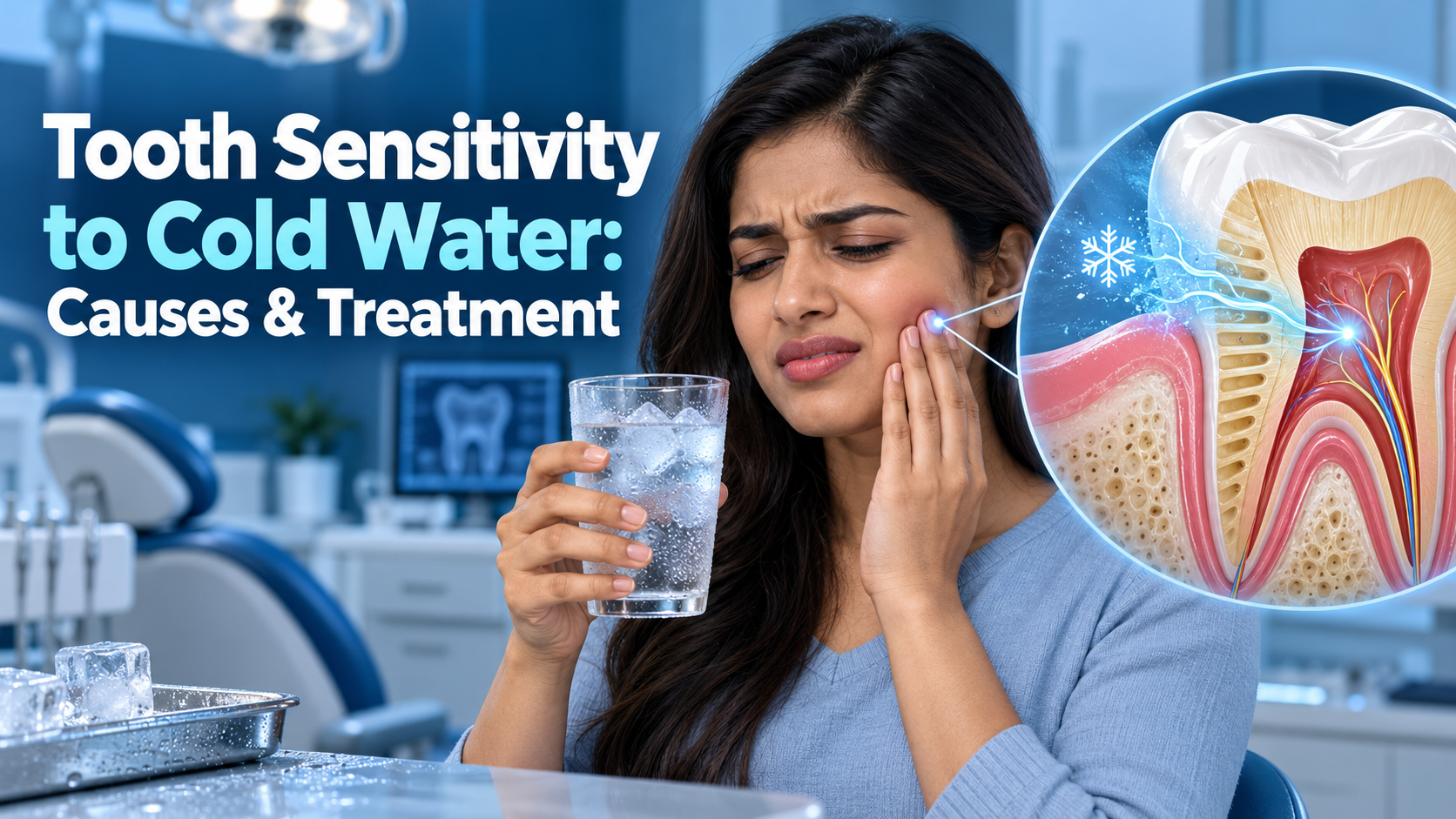
Why Are My Teeth Sensitive to Cold Water?
Tooth sensitivity to cold water usually occurs when the protective enamel becomes worn or when the tooth root is exposed. Cold temperatures can then reach the sensitive inner layer of the tooth and trigger a short, sharp pain.
Sensitivity can also be caused by tooth decay, a cracked tooth, a worn filling, gum disease or inflammation inside the tooth. The correct treatment depends on identifying the underlying cause.
Common Causes of Tooth Sensitivity to Cold Water
1. Worn Tooth Enamel
Enamel protects the outer surface of a tooth. Aggressive brushing, tooth grinding and frequent exposure to acidic foods or drinks can gradually wear it down.
When the enamel becomes thin, the tooth may react more strongly to cold water, air, sweets or acidic foods.
2. Gum Recession and Exposed Roots
Gums can pull away from the teeth because of gum disease, ageing, aggressive brushing or other factors. This exposes the tooth roots, which are not protected by the same thick enamel covering as the crowns of the teeth.
Exposed roots can become sensitive to cold water, touch and changes in temperature.
3. Tooth Decay
A cavity damages the tooth’s outer structure. As decay progresses deeper, cold water may cause sharp pain or lingering sensitivity.
Early tooth decay may not produce obvious symptoms. A dental examination and X-ray may be required to identify decay between teeth or beneath an existing restoration.
4. Cracked or Chipped Teeth
A crack or chip can expose sensitive tooth layers or irritate the dental pulp. Sensitivity may be accompanied by pain while biting or chewing.
Some cracks are too small to see without a professional examination. Avoid chewing hard foods on the affected side until the tooth has been assessed.
5. Worn, Loose or Damaged Fillings
A filling may become worn, cracked or loose over time. This can create a gap where cold water, food particles and bacteria reach the sensitive areas beneath the restoration.
The dentist may recommend repairing or replacing the filling depending on the condition of the tooth.
6. Gum Disease
Gum disease can cause inflammation, gum recession and exposure of the tooth roots. Other signs may include bleeding gums, swelling, persistent bad breath or loose teeth.
Professional gum treatment and consistent oral hygiene may be required to control the condition.
7. Teeth Grinding or Clenching
Grinding or clenching can wear enamel, create small cracks and place excessive pressure on the teeth. Some people grind their teeth during sleep without realising it.
Possible signs include:
- Flattened or worn tooth surfaces
- Chipped teeth
- Morning jaw discomfort
- Facial muscle tiredness
- Headaches
- Increased sensitivity
A dentist may recommend a customised night guard when appropriate.
8. Recent Dental Treatment
Temporary sensitivity can occur after procedures such as professional cleaning, fillings, crowns or teeth whitening. This sensitivity often settles, but persistent or worsening pain should be reported to the dentist.
Is Cold Sensitivity Normal or Serious?
A brief, mild sensation that stops immediately after the cold stimulus is removed may be related to exposed dentine or mild enamel wear.
Arrange a dental examination if the sensitivity:
- Affects only one tooth
- Persists after the cold water is removed
- Becomes stronger over time
- Causes pain while biting
- Interrupts sleep
- Occurs without a clear trigger
- Is accompanied by swelling or fever
- Develops after a tooth injury
Lingering sensitivity can sometimes indicate deeper inflammation inside the tooth.
How Is Tooth Sensitivity Diagnosed?
A dentist may diagnose the cause by:
- Asking when the sensitivity began
- Checking which teeth are affected
- Examining for decay, cracks and worn fillings
- Assessing the gums and exposed roots
- Testing the tooth’s response to temperature
- Checking the bite
- Taking dental X-rays when necessary
Because different dental conditions can produce similar symptoms, diagnosis should come before treatment.
Treatment for Tooth Sensitivity to Cold Water
Desensitising Toothpaste
Desensitising toothpaste contains ingredients that help reduce the transmission of sensation from the tooth surface to the nerve. It usually requires repeated use before improvement is noticed.
Use the product according to your dentist’s advice and the manufacturer’s instructions.
Fluoride Treatment
A dentist may apply fluoride gel or varnish to strengthen vulnerable tooth surfaces and reduce sensitivity.
Dental Bonding or Protective Coating
A tooth-coloured bonding material or protective coating may be applied to cover exposed or sensitive areas.
Filling or Crown
When sensitivity is caused by decay, a damaged filling or significant tooth damage, the dentist may recommend a filling, inlay, onlay or crown.
Gum Treatment
If gum disease or recession is responsible, treatment may include professional cleaning, gum care or another periodontal procedure. Certain cases may require a gum graft to cover an exposed root.
Root Canal Treatment
Root canal treatment may be considered when severe or persistent sensitivity is caused by irreversible inflammation or infection inside the tooth. Not every sensitive tooth requires a root canal.
Night Guard
A customised night guard may be recommended when grinding or clenching contributes to enamel wear, cracks or sensitivity.
Home Care for Sensitive Teeth
These habits may help reduce discomfort and protect your teeth:
- Brush gently with a soft-bristled toothbrush
- Use fluoride toothpaste
- Try a dentist-recommended desensitising toothpaste
- Avoid aggressive side-to-side brushing
- Limit frequent acidic and sugary foods or drinks
- Do not chew ice or other hard objects
- Clean between your teeth daily
- Attend regular dental examinations
- Follow professional advice after dental treatment
Home care may reduce symptoms, but it cannot repair a cavity, cracked tooth, infected pulp or damaged filling.
When Does Sensitivity Need Urgent Care?
Contact a dentist promptly if sensitivity occurs with:
- Severe or persistent toothache
- Facial or jaw swelling
- Fever
- A bad taste or pus discharge
- Red or swollen gums
- Difficulty opening the mouth
- Dental trauma
- Pain lasting more than two days
Seek immediate emergency medical care if swelling makes it difficult to breathe, swallow or speak.
Tooth Sensitivity Treatment in Pondicherry
If cold water repeatedly causes tooth pain, a dentist in Pondicherry can identify whether the cause is exposed dentine, enamel wear, decay, gum recession, a crack or a pulp problem.
Early diagnosis may allow simpler treatment and help prevent the condition from worsening.
Frequently Asked Questions
Why does cold water cause a sharp pain in my tooth?
Cold water can trigger pain when enamel is worn, the tooth root is exposed or decay, a crack or a damaged filling allows temperature changes to reach sensitive tooth tissues.
Can sensitive toothpaste cure tooth sensitivity?
Desensitising toothpaste may reduce sensitivity caused by exposed dentine. It cannot repair decay, cracks, damaged fillings or dental infections.
Does cold sensitivity mean I need root canal treatment?
No. Many conditions can cause cold sensitivity. Root canal treatment may be considered only when examination and testing show significant inflammation or infection inside the tooth.
When should I see a dentist for cold sensitivity?
See a dentist if sensitivity persists, worsens, affects one tooth, lingers after the cold stimulus is removed or occurs with pain, swelling, fever or discomfort while biting.
Treat the Cause of Cold Tooth Sensitivity
Tooth sensitivity to cold water is a symptom rather than a diagnosis. Desensitising products may help in some cases, but lasting relief depends on treating the actual cause.
Book a dental consultation in Pondicherry for an examination and a personalised tooth sensitivity treatment plan.